NAfME BLOG
A Few of Our Favorite Things
Primary Sources Related to The Sound of Music
By Deb Fiscella and Cait Miller
This article was first published in the September 2026 issue of Music Educators Journal.
In 1959, composer Richard Rodgers and lyricist Oscar Hammerstein II wrote and produced their final collaboration, The Sound of Music, which became a theatrical chestnut both on stage and on screen. The treasured musical tells the story of postulant Maria Rainer, who discovers that her true vocation lies not within the walls of the abbey but in her love for the widowed Captain von Trapp and his children. Together with book writers Howard Lindsay and Russel Crouse, Rodgers and Hammerstein began work in January 1959 and, ten months later, attended the show’s Broadway premiere, starring Mary Martin as Maria, on November 16, 1959.
Now, the Library of Congress and the national touring company of The Sound of Music have created a first-of-its-kind collaboration: “Inside the Vault,” with traveling and virtual displays that provide a rare look at the creation of one of the most beloved musicals of all time. Drawn from the Library’s unparalleled collections, “Inside the Vault” features facsimiles of music and lyric sketches, correspondence, and papers from Rodgers, Hammerstein, and others whose work shaped the musical. These materials also reflect the personal relationships and artistic collaboration that defined the making of The Sound of Music and can serve as powerful teaching tools.
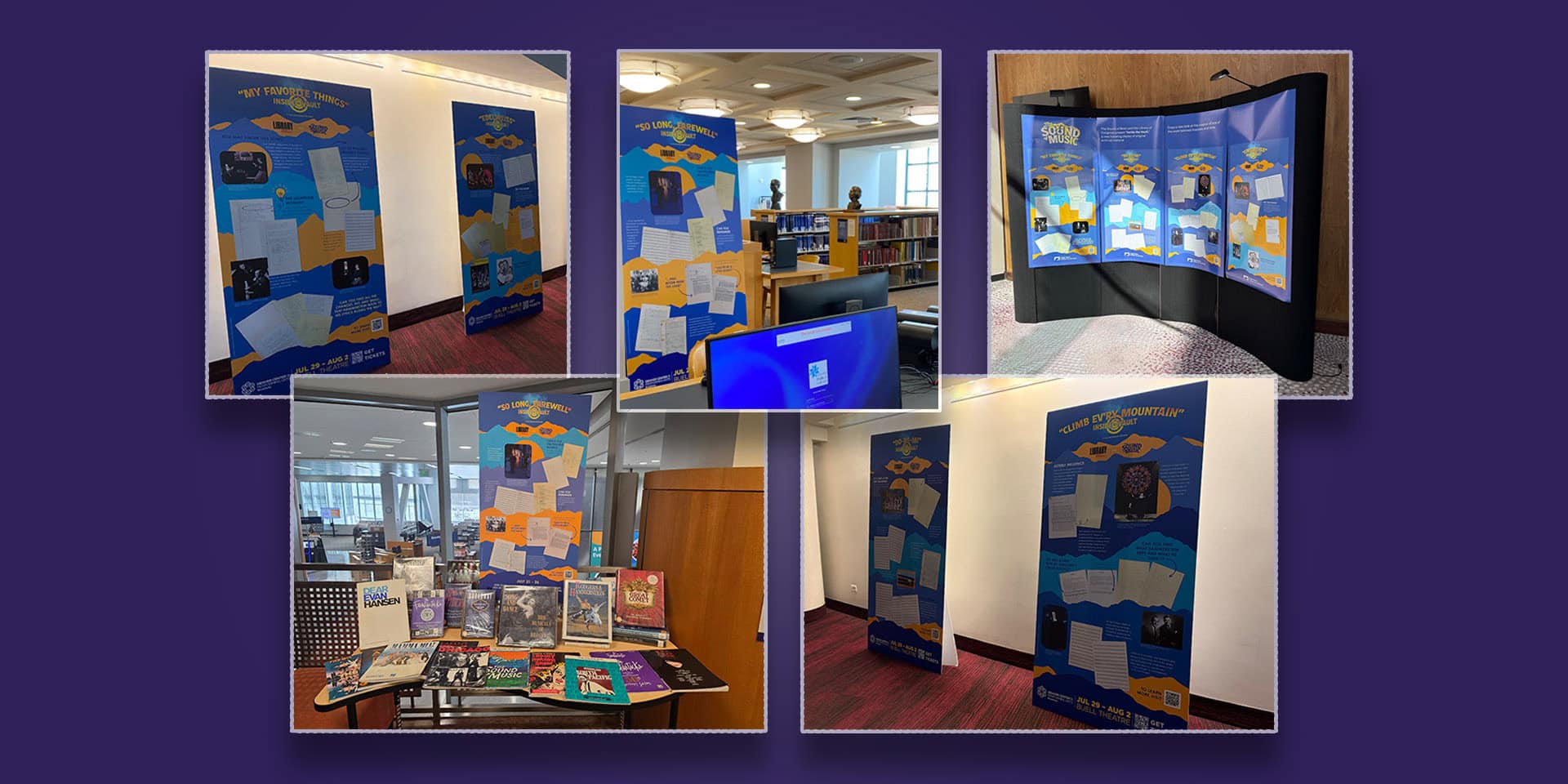
“Inside the Vault” invites audiences to explore original archival materials that reveal how the show’s iconic songs were conceived, developed, and brought to life. A rich multimedia experience—including video, printed banners, and digital resources—highlights the creative process behind six legendary musical numbers: “Climb Ev’ry Mountain,” “Do-Re-Mi,” “Edelweiss,” “My Favorite Things,” “So Long, Farewell,” and “The Sound of Music.” The materials are being made available to audiences through dozens of theaters nationwide during the touring engagements, with lobby displays that provide an educational experience for patrons before and after performances (Figures 1 and 2). The national tour of The Sound of Music is also partnering with local schools and libraries to present the display ahead of the tour’s arrival (Figures 3 and 4).
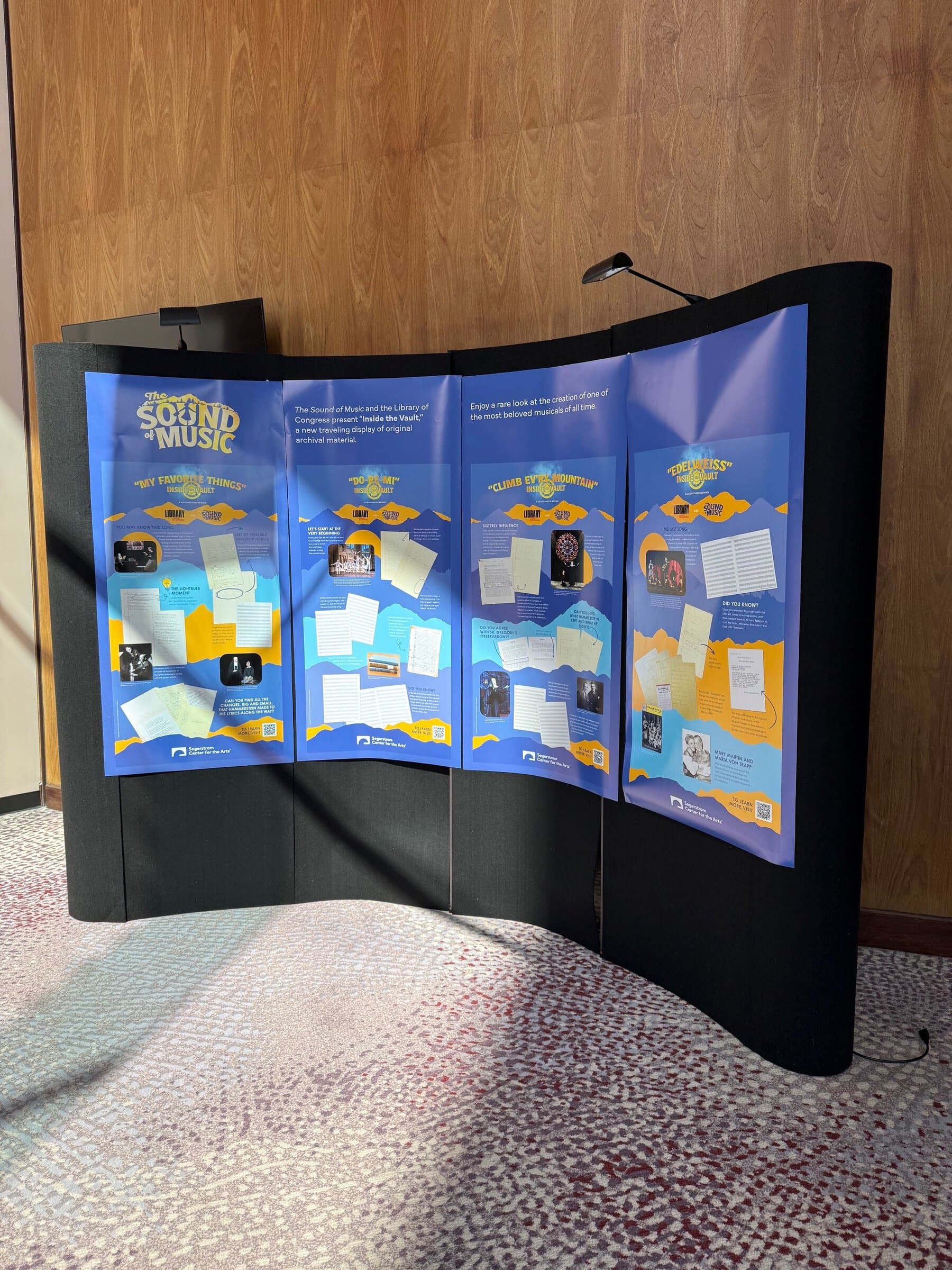
Figure 1. Lobby display at the Segerstrom Center for the Arts, Costa Mesa, California. Photo courtesy of The Sound of Music National Tour.
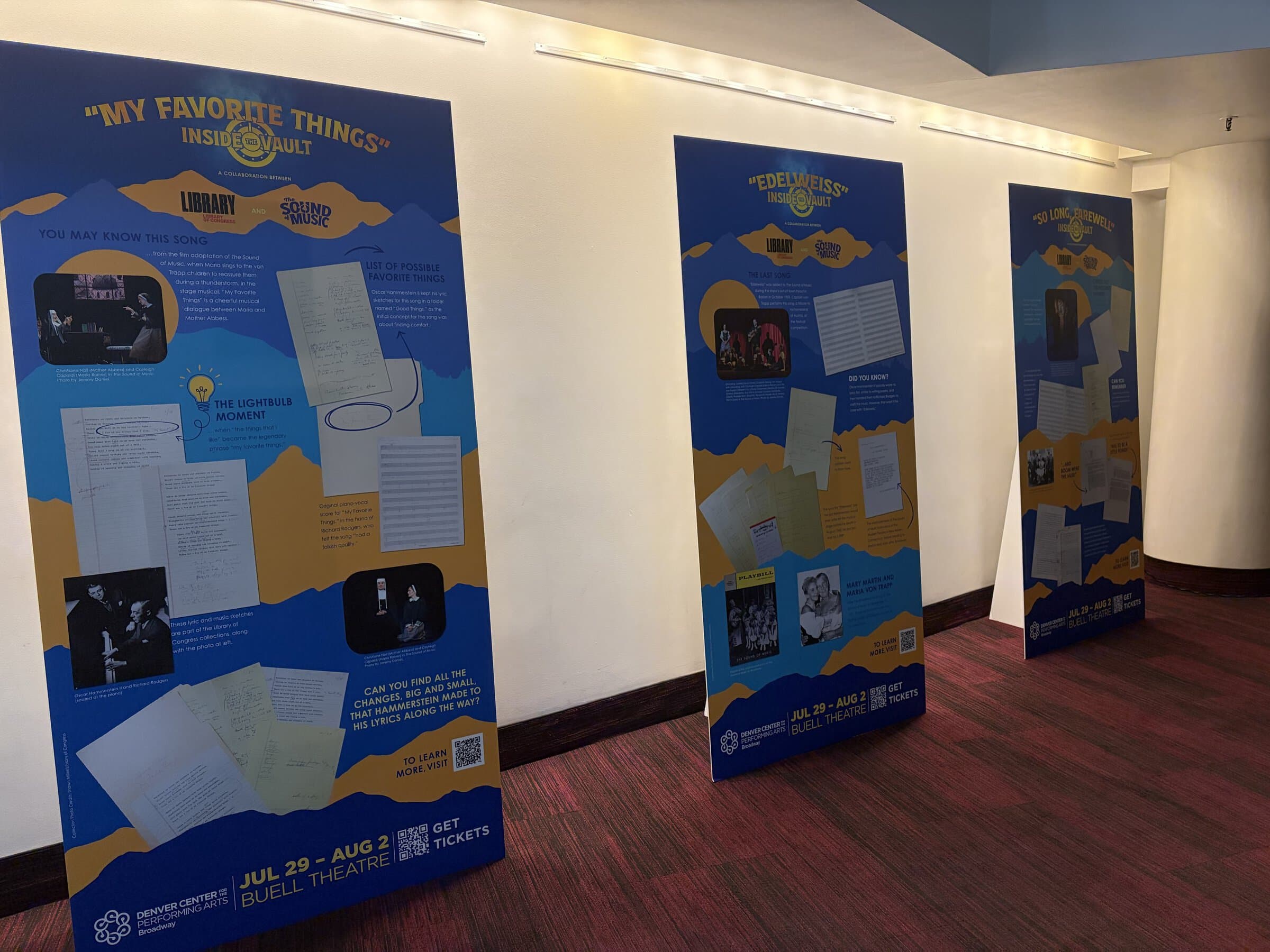
Figure 2. Lobby display at the Denver Center for the Performing Arts, Denver, Colorado. Photo courtesy of The Sound of Music National Tour.
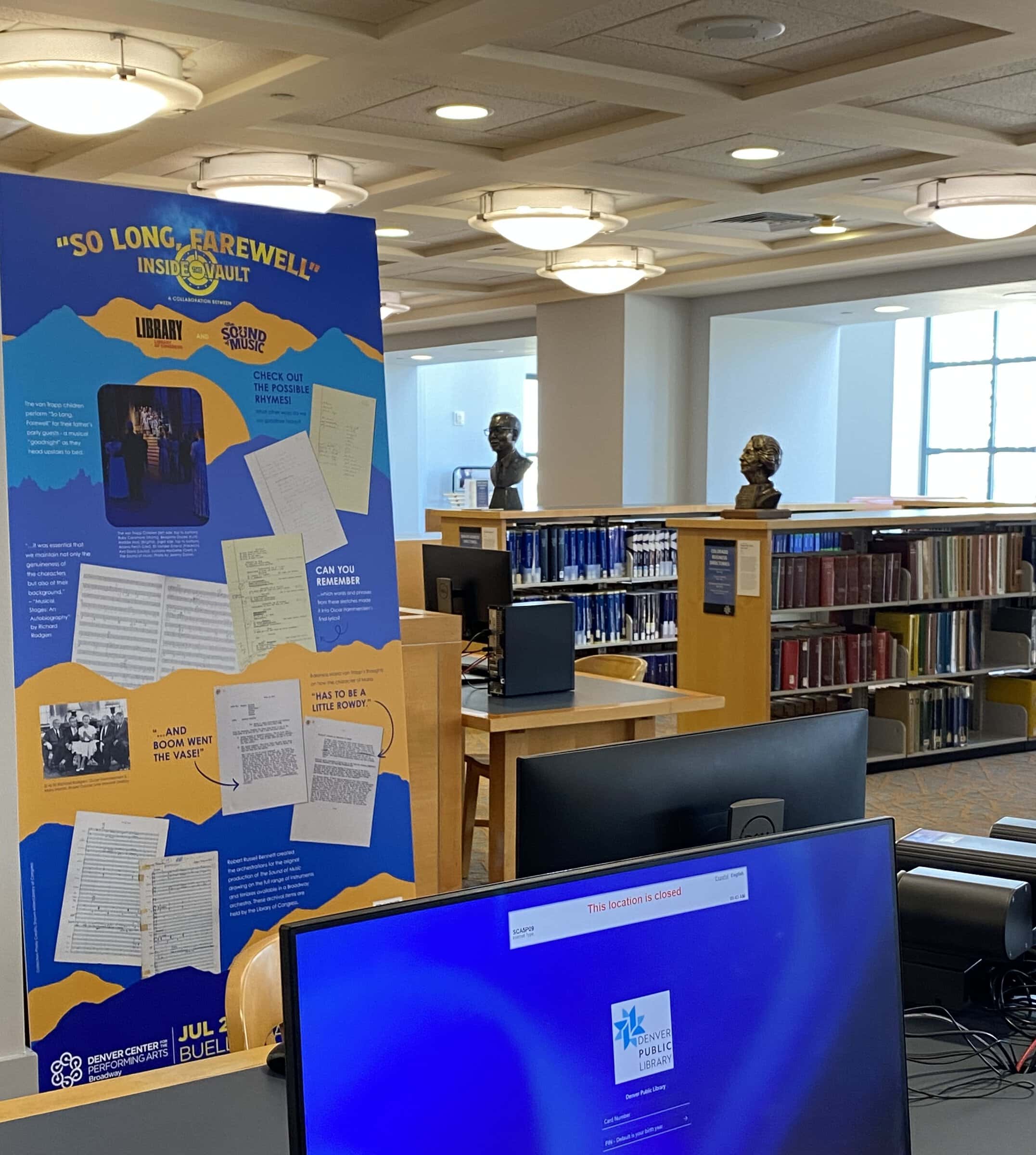
Figure 3. Display at the Denver Public Library, Denver, Colorado. Photo courtesy of The Sound of Music National Tour.
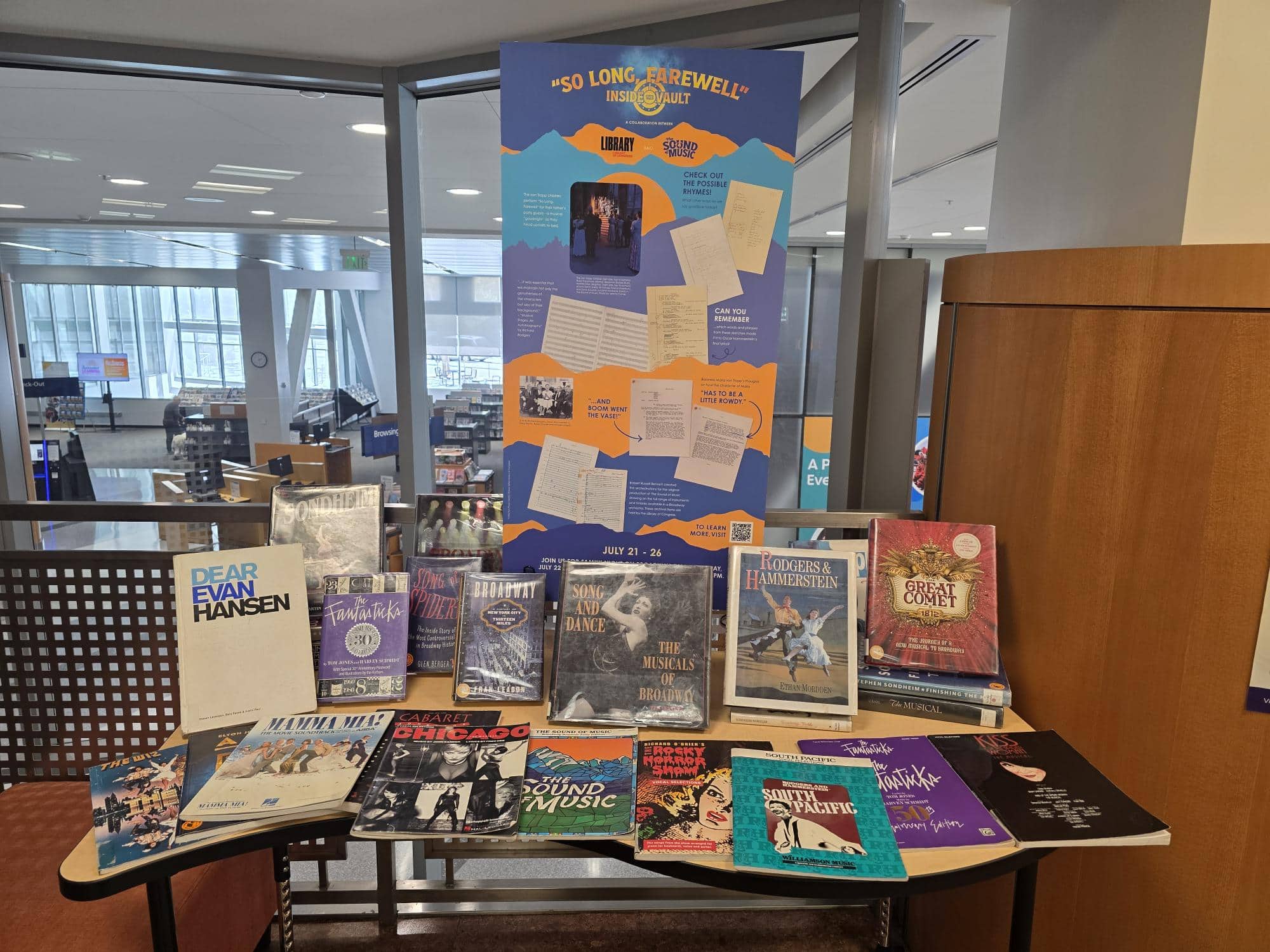
Figure 4. Display at the San Jose Public Library, San Jose, California. Photo courtesy of The Sound of Music National Tour.
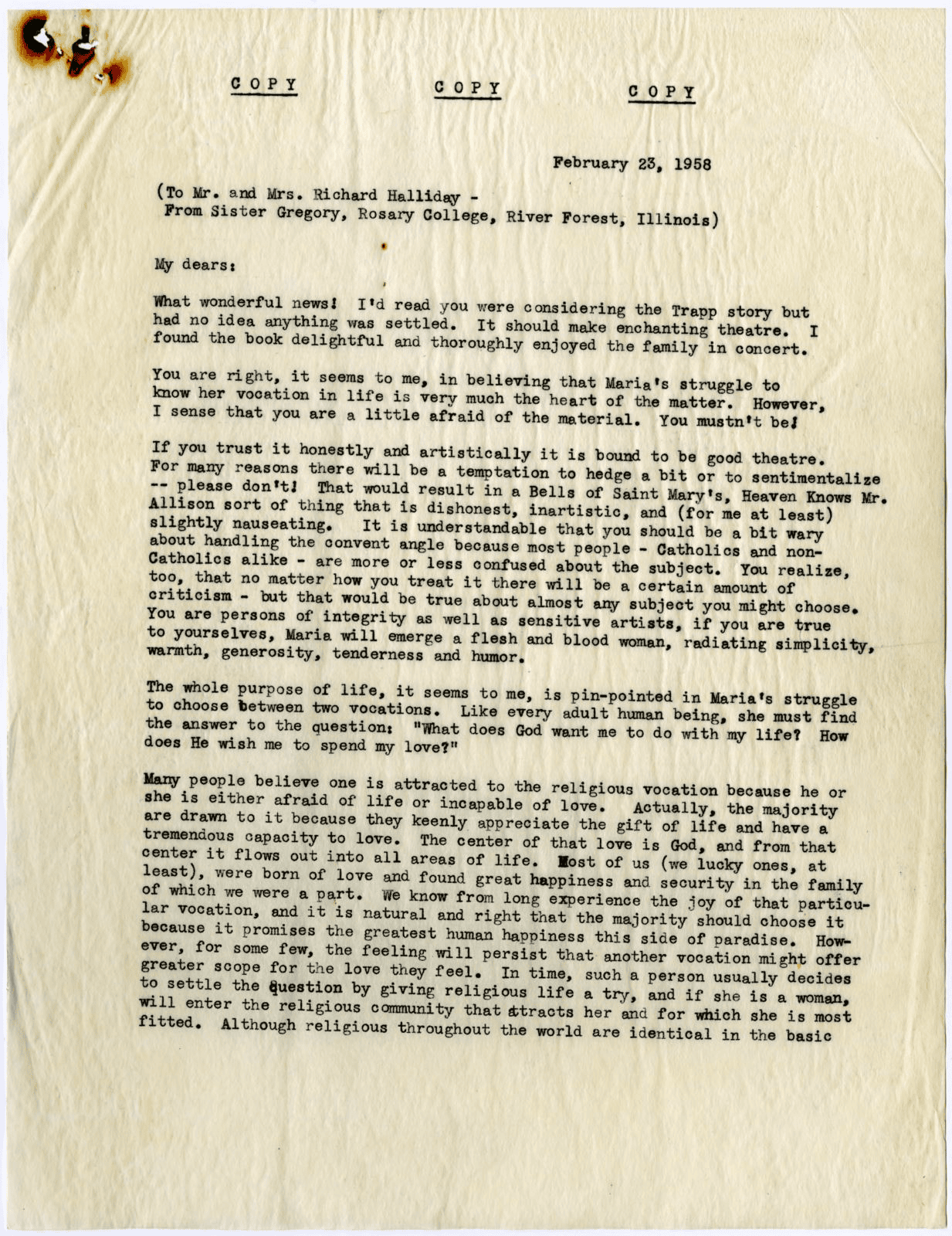
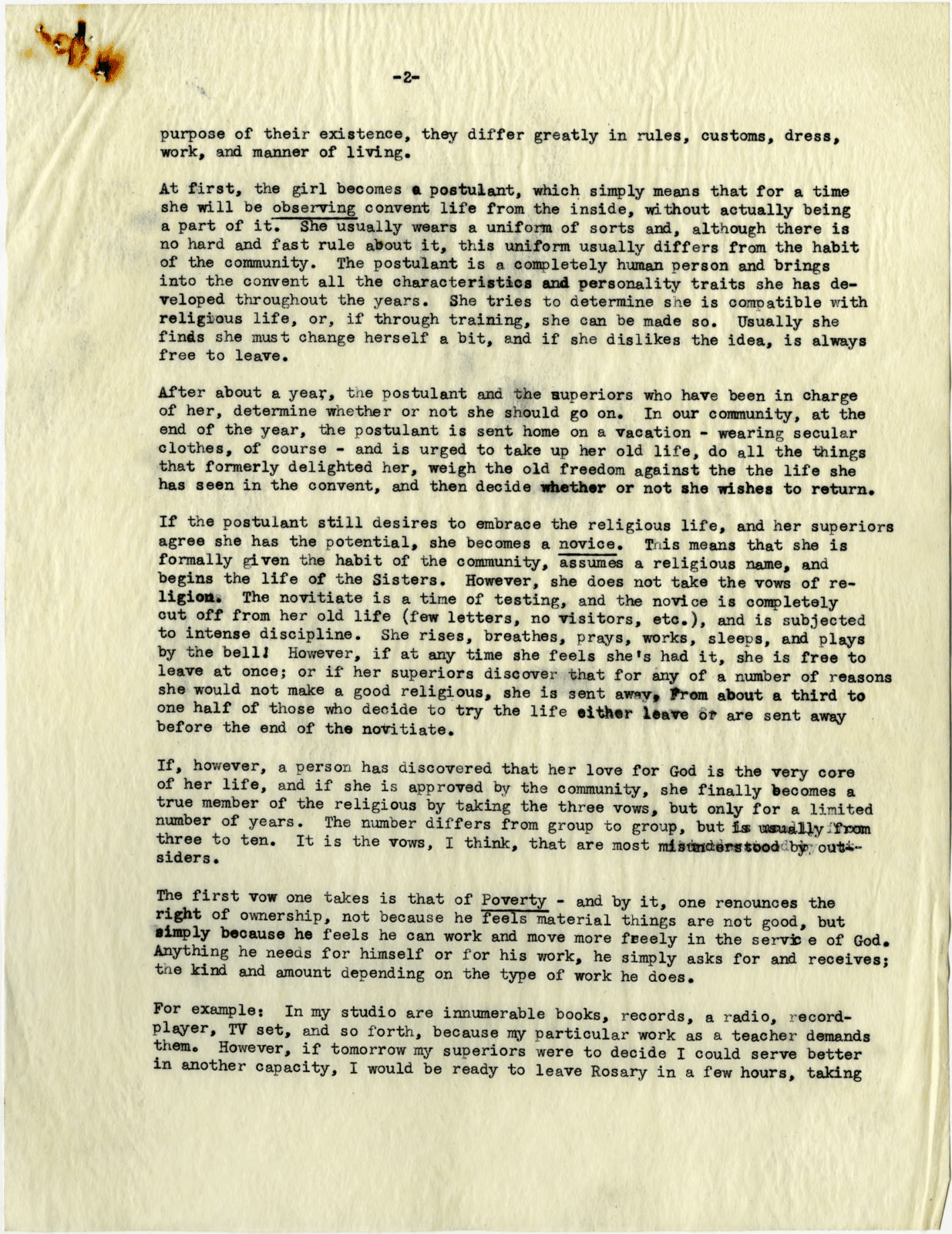
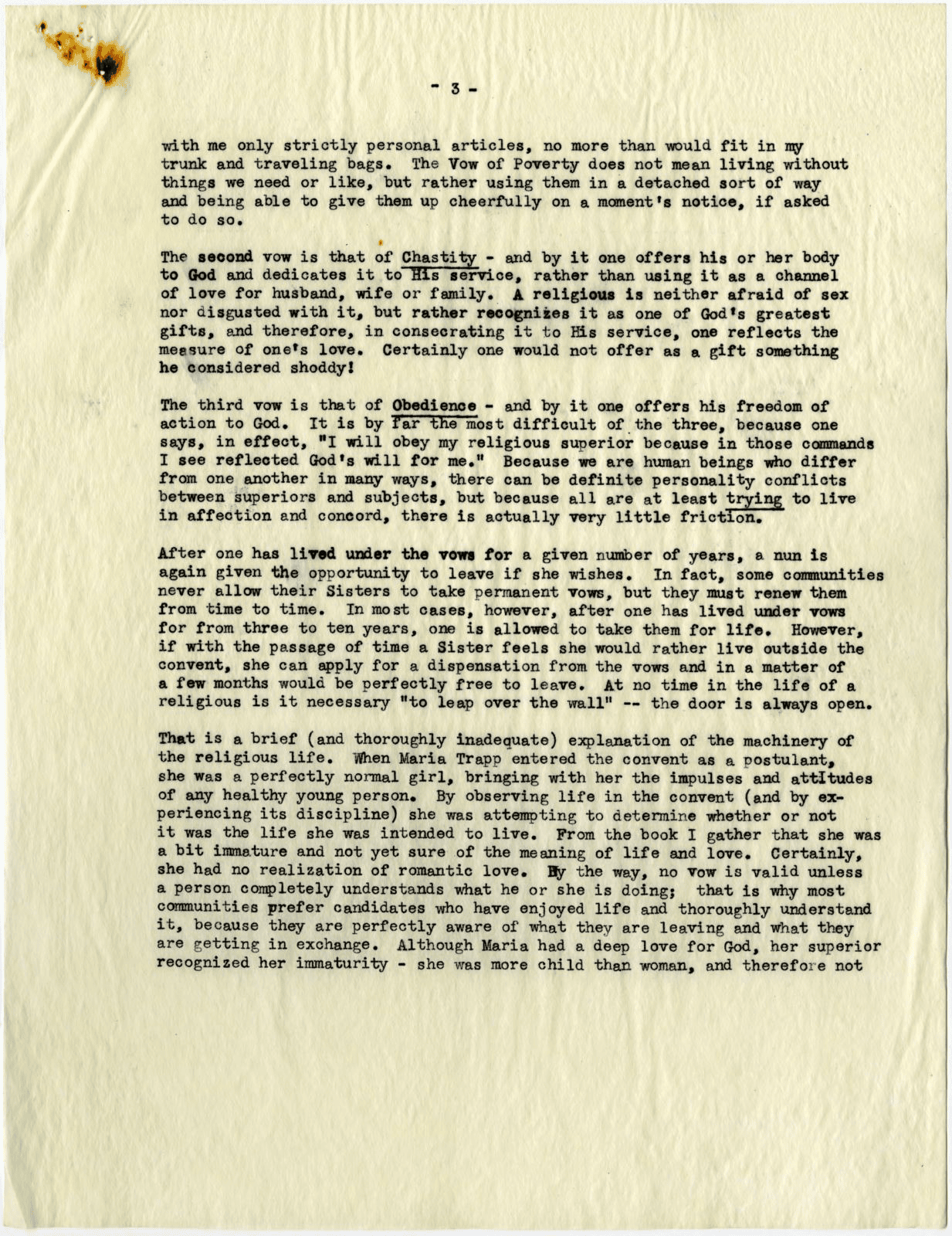
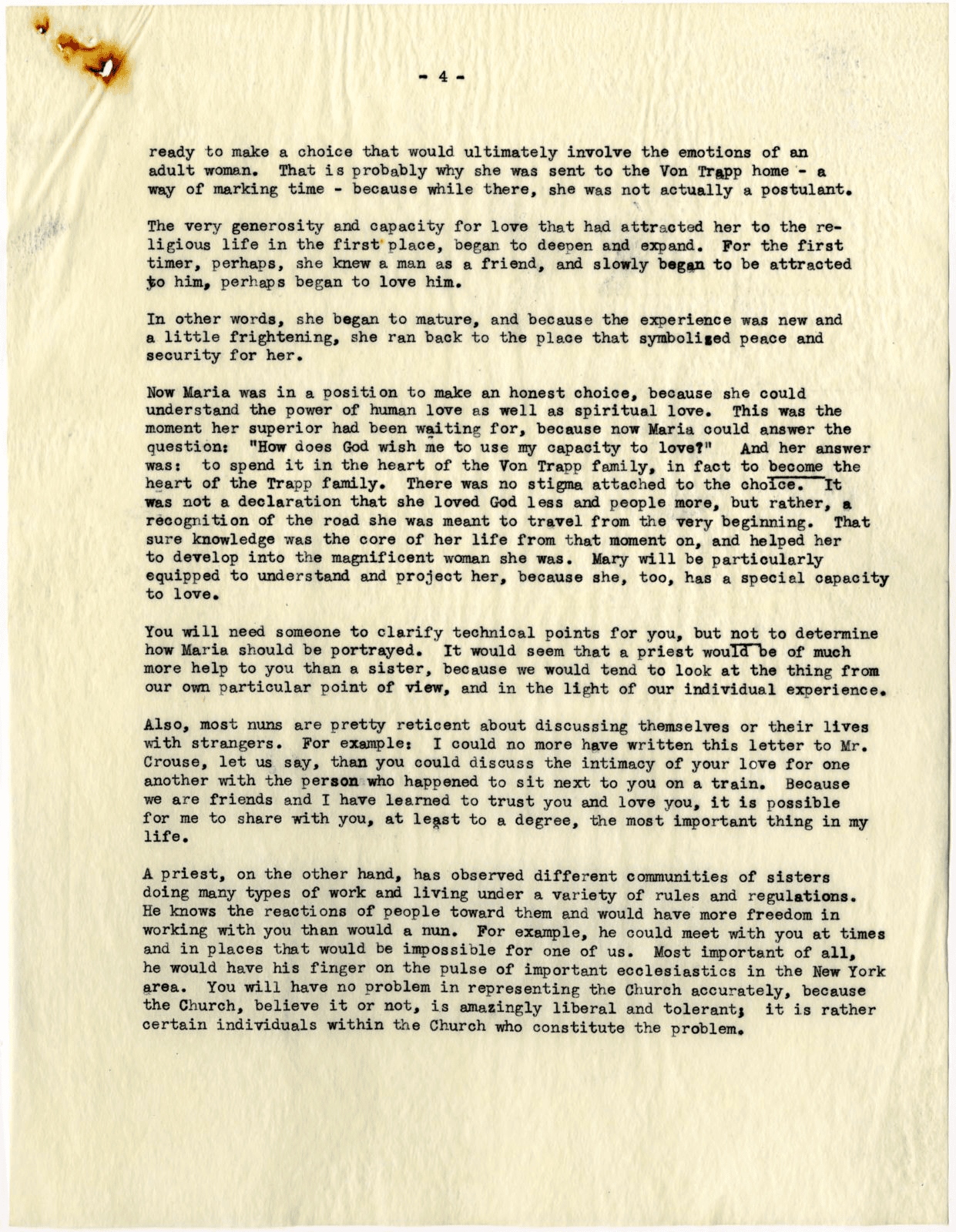
A panel on the “Inside the Vault” website and a seven-minute video on the Library’s YouTube channel explore a fascinating example of song development for “Climb Ev’ry Mountain.” Mother Abbess sings this inspirational song to Maria to help her discover what’s most important to her. Martin introduced Sister Gregory, an exuberant Dominican nun and theater professor at Rosary College in Illinois, to The Sound of Music creative team as an adviser on religious life. In the five-page February 23, 1958, letter to Martin and her producer husband Richard Halliday featured in Figure 5, Sister Gregory muses on Maria’s struggle to choose her life path: “Like every adult human being, she must find the answer to the question: ‘What does God want me to do with my life? How does He wish me to spend my love?’” A year and a half later, Halliday shared a copy of this letter with Hammerstein. When he approached writing lyrics for a new song on August 18, 1959 (originally titled “Face Life”), Hammerstein clearly had this letter in hand, as he copied her questions in pencil, word for word.
 |
 |
 |
 |
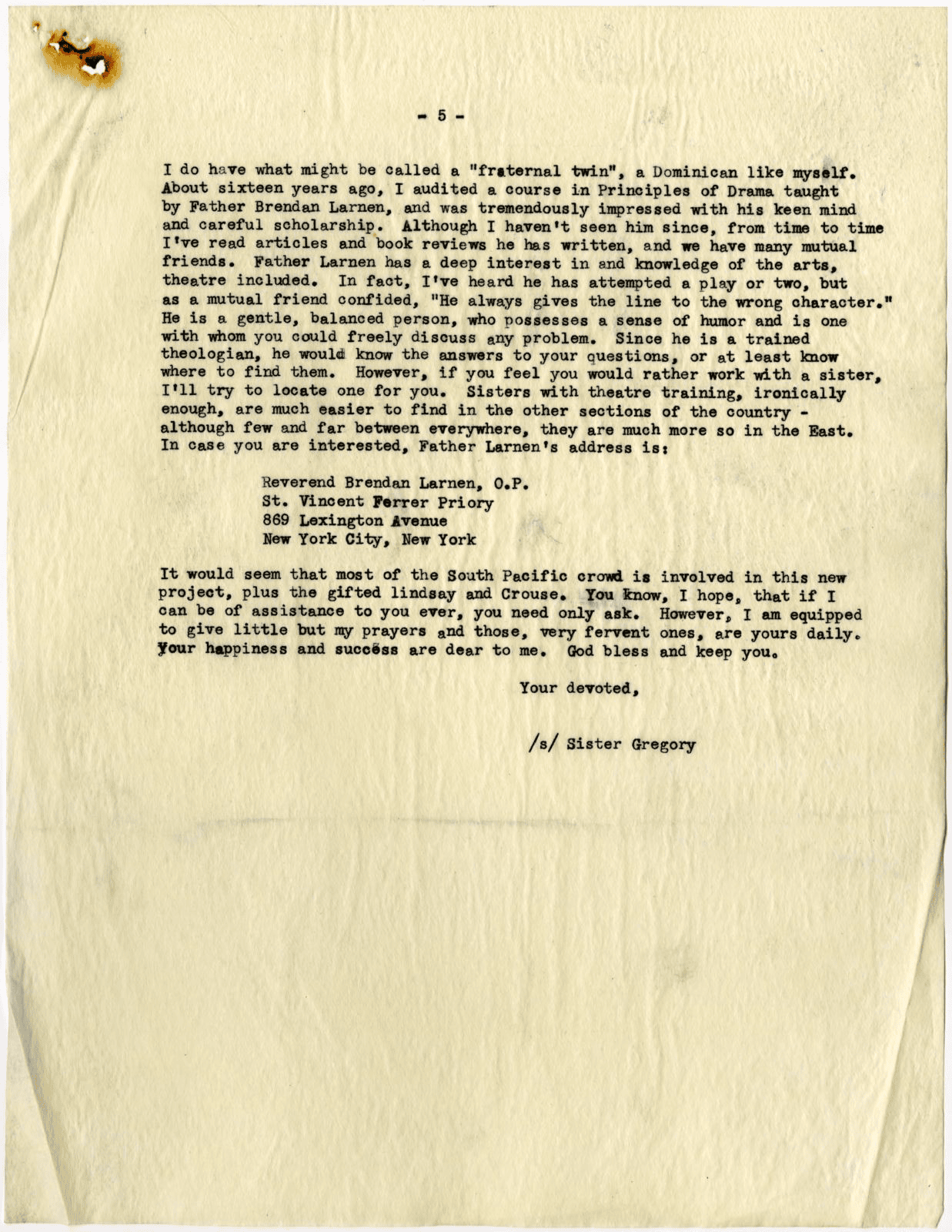 |
Figure 5. Letter from Sister Gregory to Mary Martin and Richard Halliday, February 23, 1958. Oscar Hammerstein Collection, Library of Congress Music Division.
That September, Rodgers and Hammerstein mailed copies of the music for the show to Sister Gregory. An eight-performance tryout in New Haven’s Shubert Theatre would start in October before a run in Boston and the November premiere on Broadway. She sent rave reviews to Martin and Halliday, beginning with praise for “Climb Ev’ry Mountain.” In a September 17 letter, Sister Gregory wrote: “As usual, Mr. Rodgers has done a beautiful job. However, it was the lyric that sent me to the Chapel. Hammerstein lyrics . . . are a unique combination of simplicity, sincerity, a sort of humorous tenderness, and exquisite imagery.”
The national touring company of The Sound of Music viewed these letters and more and heard from music specialists about the collection items when they visited the Library at the beginning of their tour in September 2025. A short highlight video from this visit is available on the Library’s YouTube channel. Exploring these primary sources gave the company members new insights into their characters and the history behind the musical’s enduring score. By developing a way to share them more widely, the tour and the Library have given The Sound of Music audiences the opportunity to experience the show more deeply. Students can consider the creative process, the importance of rough drafts, and the value of word choice. The video focused on “My Favorite Things,” available on the “Inside the Vault” website, does all this in three and a half minutes!
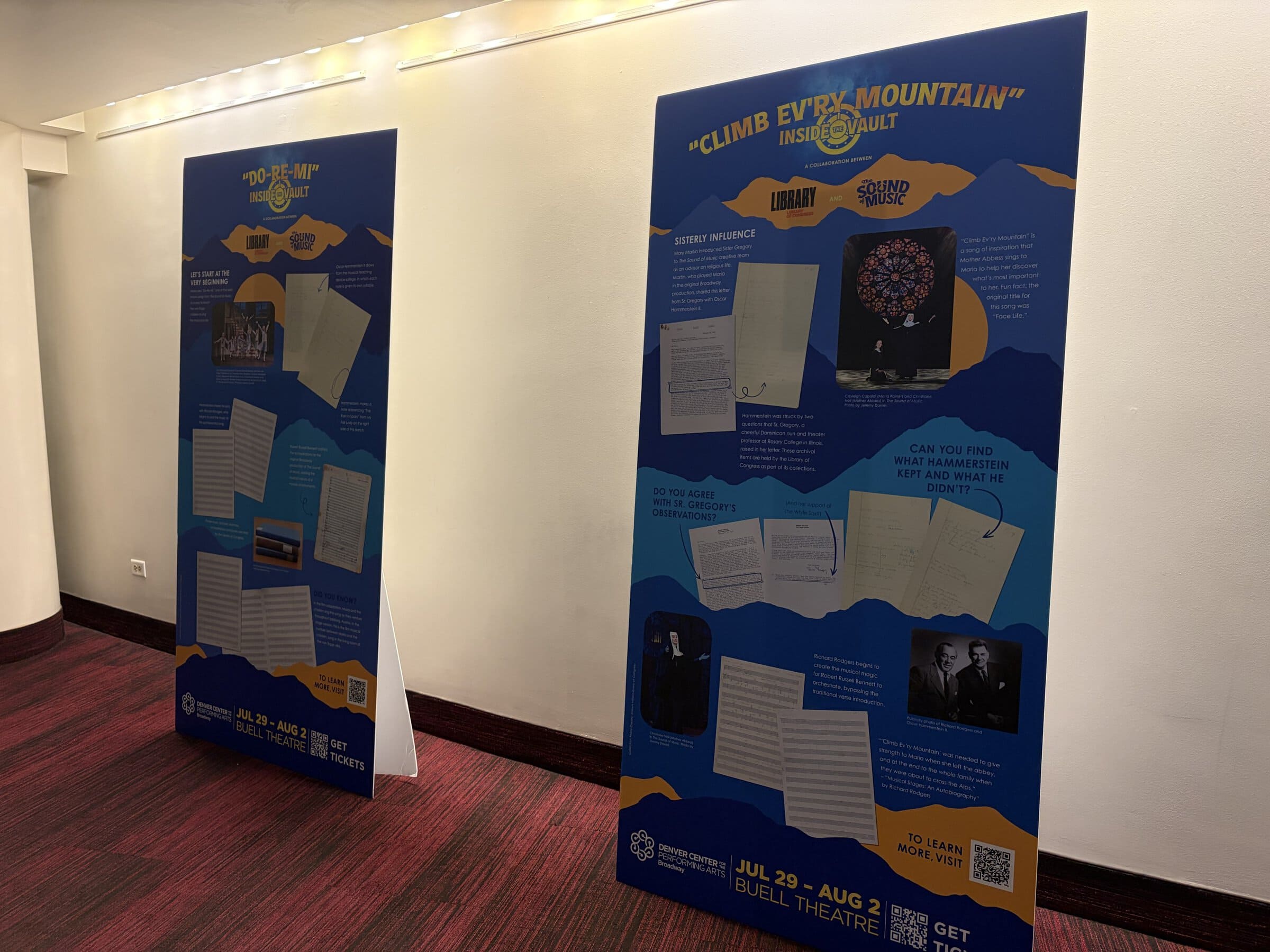
Lobby display at Buell Theatre at the Denver Center for the Performing Arts. Photo courtesy of The Sound of Music National Tour.
Invite your students to view the videos and explore the online collections. As time allows, challenge them to conduct research on Rodgers and Hammerstein’s other collaborations and share their findings with the class.
Resources
- Explore the Richard Rodgers Collection.
- Explore the Oscar Hammerstein II Collection.
- Learn more about the national tour of The Sound of Music.
About the Authors
Deb Fiscella (dfiscella@loc.gov) is a public affairs specialist in the Office of Communications, and Cait Miller (cmill@loc.gov) is a senior music reference specialist in the Music Division at the Library of Congress in Washington, DC.
Did this blog spur new ideas for your music program? Share them on Connect! Interested in reprinting this article? Please review the reprint guidelines.
The National Association for Music Education (NAfME) provides a number of forums for the sharing of information and opinion, including blogs and postings on our website, articles and columns in our magazines and journals, and postings to our Connect member portal. Unless specifically noted, the views expressed in these media do not necessarily represent the policy or views of the Association, its officers, or its employees.