NAfME BLOG
Adaptations in Action

Eight Tips to Consider
By NAfME Member Rachael Fleischaker
With every child I meet in my music classroom, I must re-evaluate my understanding of how to teach music. Attending professional development is a great way for me to gain new ideas and insights on what is happening in music rooms around the country. I always leave with something more to think about. In the next few paragraphs, I will share some of the insights from my research and from experiences in my own classroom that have informed my teaching. These are my “tried and true tips.” However, I don’t have all the answers, and I don’t know your individual situations. I hope you gain some new ideas or points to ponder. If nothing that I write is new to you, then I hope you get some affirmation of what you are already doing.
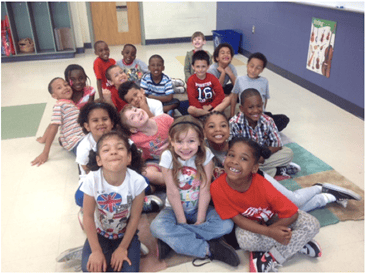
Photo courtesy of the author
Tip #1: Students with disabilities are not broken!
It is so very important to understand that all students bring their best to your classroom. Don’t focus on what students can’t do. Try to shift your focus by tailoring lessons to the students’ strengths. This can be difficult in music classes when a performance is looming, or a contest is near, but strong, creative educators produce strong, creative students—not the other way around. If we all had “perfect” students, then we would be out of a job!
Tip #2: Adapt Your Attitude
When working with students with disabilities, it is important to reflect on your own attitude about music and music-making. What inspired you to become a music educator? What were some of your best memories in music class, band, or choir (could be as a student or as a teacher)? Why were they good moments?
There is a reason that you became so involved in making music. Perhaps it was an area where you excelled. Maybe you had an experience that made you feel strong and confident. Was it that sense of accomplishment? Maybe you had a band or choir director who inspired you. What about the friends you made and that sense of belonging that you had? We all have reasons that we decided to become music educators. Think about those and remember that all of your students deserve to have those special moments too.
Tip #3: Adapt Your Instructional Strategies
When working with students with disabilities, three conditions are important to facilitate learning: repetition, response time, and student choice (Gerrity, Hourigan, & Horton, 2013). Repeating instructions in a calm and intentional manner helps to keep students on track. Do not repeat out of frustration. Keep giving gentle reminders. Response time refers to the amount of time that teachers give students to respond to a verbal direction or question.
As teachers, we have limited time with our students, so it is easy to be impatient. Sometimes we need to slow down our pacing and to allow our students time to process the information and formulate how they will respond. This research also showed that giving students choice in the lesson promoted engagement. A few examples of student choice could be allowing students to choose the instrument that they want to play, letting the student decide where they would like to sit or stand, or permitting the student to pick the order of the songs for the day. Including these elements is linked to increased retention of the material and to increased participation.
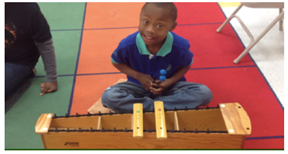
Photo courtesy of the author
Tip #4: Build Strong Student-Teacher Relationships
Over the years, I have learned to attribute positive intent to students. I believe that students come to my room with the best they have at that moment. I also know that I am human. Some students try my patience. However, I do my best to make every day a new beginning. We do not have any control over what happens to students in their home, on the bus ride to school, or in the cafeteria. Students, especially those with disabilities, carry a lot of baggage with them. Not every day will be perfect, but we need to stay positive. Allow every music class or every rehearsal to be a chance for student success.
Communication is a key to building relationships. Students with disabilities may not be able to articulate their ideas and preferences verbally. Are you watching and listening for other ways that a child expresses himself/herself? Are you communicating with other teachers? Knowing the student’s goals in their Individualized Education Programs (IEPs) can shed insight into their particular needs and can also give you ideas for how to motivate them. Are you communicating with the family? All parents, especially those who have children who think, act, and behave outside of traditional educational models, appreciate knowing that you care and have their student’s best interests at heart. You can work together with parents to help the child reach his/her potential.
All means ALL. Students come in all shapes and sizes and with all sorts of abilities. The five most common categories of impairment are cognitive function, communication, behavioral/emotional, physical, and sensory. What does your classroom look like? Knowing who is in your room and how it can best meet the needs of every student is a crucial step for building strong relationships. Some students are diagnosed children who have legally mandated accommodations while others are undiagnosed, but still need special considerations. Some students may have complex needs or diagnoses. For example, a child may have a particular physical or emotional need but also have high cognitive function. Understanding each student will help you to design lessons that are engaging and inclusive of all the students in your room.
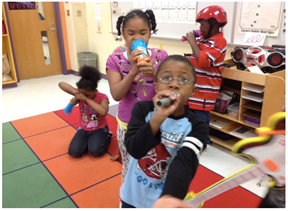
Photo courtesy of the author
Tip #5: Know Your Legal Responsibilities
When working with students who have identified disabilities, it is important to know your responsibilities as an educator. An IEP is a written statement of the educational program designed to meet a child’s individual needs. Every child who receives special education services must have an IEP. Music teachers can request to be involved in a student’s IEP meeting and in planning the specific accommodations. Any teacher who gives direct instruction to a student with an IEP should receive notice of where the IEP is kept and must be allowed to read the IEP.
Another legally binding document for students with disabilities is a 504 Plan. This type of plan is developed to ensure that a child who has a disability identified under the law and is attending an elementary or secondary educational institution receives accommodations that will ensure their academic success and suitable access to the learning environment.
Accommodations must be given to any child with an IEP or a 504 plan. The teacher is responsible for knowing the language used on the plans. Some plans have specific accommodations that must be met in any situation. Other plans have recommendations for accommodations on an “as needed” basis. Music educators must be aware of the plans and are legally responsible for providing accommodations. This might sound intimidating, but the special education staff in your school district are well versed in the language and can help you decide how to best meet the needs of each student.
Tip #6: Create a Support Network
Speaking of special education staff . . . it is a good idea to know who can help. Most schools are full of people who will help you to serve your students. Classroom aides are sometimes assigned to specific students. You can give them specific jobs while in music class. Be sure to build a partnership with the primary special education teacher. He/she spends hours every day with the student and is a very valuable resource. Principals and counselors can be very helpful. Invite them into the music room so they can be a part of what happens. Does your school district have a special education department? If so, do they know your needs? Often, they have different funding sources and may be able to help with specialized equipment needs. Also, remember that parents are an incredible resource. Do you invite them to class? Do you reach out to them for ideas?
Finally, who takes care of your emotional needs? Working with students with disabilities can be the most rewarding experience, but it can also be emotionally and physically exhausting. Make sure that you have time to rejuvenate.
Photo courtesy of the author
Tip #7: Tailor Instruction for Specific Students
(Adapted from Anderson & Lawrence, 2014)
The following tips are a summary from the text, Integrating Music into the Elementary Classroom (9th ed.) by Anderson and Lawrence. I list them here in the form of questions to ask yourself when planning instruction for your students. While every student is unique, these suggestions are starting points to consider.
Students with Physical Disabilities
- Is there physical space in your classroom for wheelchairs, walkers, etc.? Are students included in the group or set off to the side?
- What are alternative ways of responding to music? If a student cannot march, what else can happen?
- Is your equipment accommodating? (large handles for mallets, instruments fastened to wheelchair, music and visuals in a comfortable position)
- Do you allow the student to make suggestions about accommodating?
- Do you seek the advice of a P/T or the classroom teacher?
Students with Visual Impairments
- What is the extent of the impairment?
- Do you enlarge music and visuals?
- Do you keep the physical set-up (room arrangement) consistent in the classroom?
- Do you give clear directional moves when using movement exercises? (Often visually impaired students can learn dances quickly if the steps are well articulated)
- Do you encourage the visually impaired child to take a lead in ear-training games?
Students with Hearing Impairments
- Is the classroom arranged so the students have a full view of the teacher?
- Can you use earphones to aid in listening to recorded music?
- Is it possible to hold music in a room with a wooden floor such as a gym so that the vibrations can be felt?
- Can you have the student feel the vibration of a drum or percussion instrument to develop a feeling of beat?
Students Identified as Gifted
- Are you moving at a pace that challenges them without being overwhelming?
- Do the vocal pieces have a wide range?
- Can you give the student an accompaniment instrument?
- Do you challenge the student verbally by using activities that build on their large vocabulary (activities such as rewriting song lyrics)?
- Do you encourage the student to extend and elaborate on the material or subject matter?
- Do you include differentiation (possible activities such as adding sign language, improvisation, creative movement, harmonies, etc.)?
Students with Cognitive Disorders
- Are you reinforcing and revisiting concepts and skills? Students affected by cognitive disorders need much repetition and need familiar patterns.
- Does the repertoire have a limited range and move in stepwise patterns?
- Are you observing natural and spontaneous reactions that the child has to the music?
- Are the activities appropriate to their specific needs, which may include difficulty with motor coordination, a need for immediate feedback, a short attention span, and low tolerance for frustration?
Students with Autism Spectrum Disorders
- Are you providing a stable and predictable physical environment and activity sequence?
- Have you considered the student’s seating position (are they by familiar people or other students who can respond appropriately to their needs)?
- Have you consulted the student’s parent or classroom teacher about appropriate ways to respond to outburst? Do you model appropriate responses to the child’s behaviors?
- Is the child overstimulated? What can you do to minimize the stimulation?
- Do you have peer models to help the child stay on task and initiate social interaction?
Tip #8: ASK QUESTIONS
If you are not sure what to do, ASK. My students have been my best teachers. Ask them for suggestions on how to make the activities more accessible, or ask what ways they are comfortable participating. It is okay to make yourself a little vulnerable. Remember that your students may feel that way too.
References and Excellent Resources:
Anderson, W. M., & Lawrence, J. E. (2014). Integrating Music into the Elementary Classroom (9th ed.). Boston, MA: Schirmer Cengage Learning.
Campbell, P. S., & Scott-Kassner, C. (2014). Music in childhood: From preschool through the elementary grades (4th ed.). Boston, MA: Schirmer Cengage Learning.
Edyburn, D. (2009). RTI and UDL Interventions. Journal of Special Education Technology, 24(2), 46-47.
Edyburn, D. (2010). Would you recognize universal design for learning if you saw it? Ten propositions for new directions for the second decades of UDL. Learning Disability Quarterly, 33(1), 33-41.
Gerrity, K. W., Hourigan, R. M., & Horton, P. W. (2013). Conditions that facilitate music learning among students with special needs: A mixed-methods inquiry. Journal of Research in Music Education, 61(2), 144-159.
Hammel, A., & Hourigan, R. (2011). Teaching music to students with special needs: A label-free approach. New York, NY: Oxford University Press.
Iseminger, S. K. (2013). How can music educators best serve the needs of the self-contained special education class? Teaching Music, 21(3), 34-39.
Novak, K. (2016). UDL now! A teacher’s guide to applying Universal Design for Learning in today’s classrooms. Wakefield, MA: CAST Professional Publishing.
Rose, D. H., Meyer, A., & Hitchcock, C. (Eds.). (2006). A Practical Reader in Universal Design for Learning. Cambridge, MA: Harvard Education Press.
About the author:
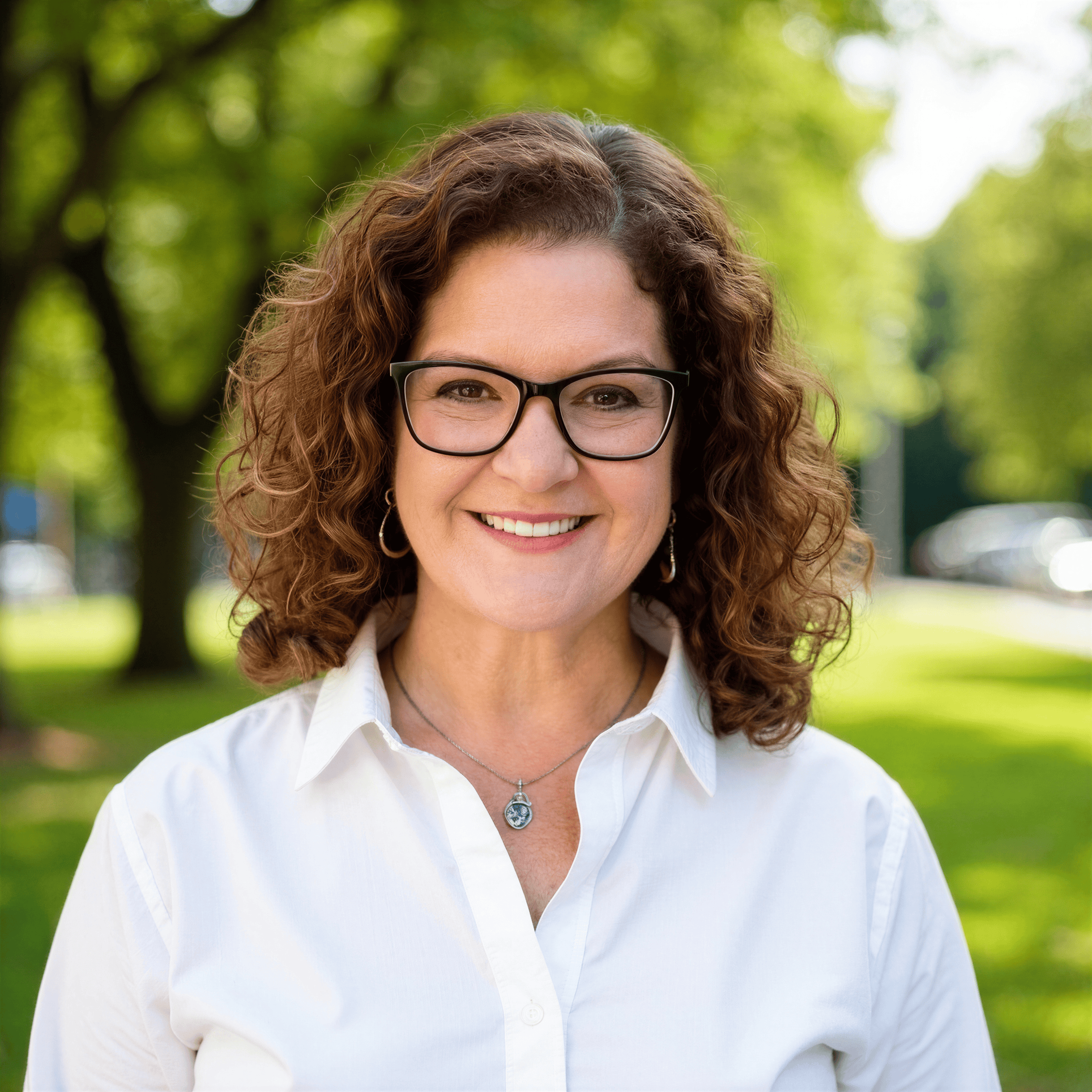 NAfME member Dr. Rachael Fleischaker earned her Ph.D. in music education from Kent State University. She holds a BME from The College of Wooster (1995) and a ME in Curriculum and Instruction with an Emphasis on Urban Education from Kent State University (2002). Rachael has taught elementary and middle school band and vocal music in the public schools for 31 years with the past 29 years in the Canton City Schools, Canton, Ohio. Rachael is also an adjunct professor of music education at Kent State and has taught courses for the College of Wooster, Baldwin Wallace Conservatory of Music, and The Ohio State University. Her research interests include culturally responsive music education, social justice in music education, curriculum development, assessment strategies, and adaptive strategies for music students with disabilities.
Did this blog spur new ideas for your music program? Share them on Connect! Interested in reprinting this article? Please review the reprint guidelines.
The National Association for Music Education (NAfME) provides a number of forums for the sharing of information and opinion, including blogs and postings on our website, articles and columns in our magazines and journals, and postings to our Connect member portal. Unless specifically noted, the views expressed in these media do not necessarily represent the policy or views of the Association, its officers, or its employees.