NAfME BLOG
Leave, Carry, Change

Leave, Carry, Change
By NAfME Member Lisa Martin, Music Educators Journal Academic Editor
This article first appeared in the September 2025 issue of Music Educators Journal.
The way the timeline of publication works, I generally work on this column three to four months ahead of when it appears in print. This practice proves to be challenging when attempting to write something relevant and relatable because the gauntlet of day-to-day news renders the act of foreseeing relevance rather futile, and my magic eightball is on a continuous loop of “cannot predict now.”
But for the moment, my headspace is easing into summer mode. I am sitting at home in my comfy pants, fresh off finishing final grades for the semester, anticipating my next adventure. My passion for traipsing about this earth is perhaps best realized in one of my favorite pastimes, backpacking, and I will be deep in the Smoky Mountains in just a few days.
I love plunging into the details of planning for a backpacking trip—determining distances, water sources, elevation gain and loss, caloric needs, pack weight, weather, safety, and not to be overlooked, which knitting project will accompany me on the journey. On the trip itself, I love disconnecting from the emails, the scrolling, and the sounds of everyday life, trading those in for a tapestry of birdsongs and raindrops hitting my tent. To be fully responsible for oneself—getting from Point A to B unharmed and reasonably hydrated—is both meditative and empowering. I savor the moments of being one of the precious few who experience a specific space and place. All through the process, I am alone with my thoughts. And sometimes my very best thoughts introduce themselves to me, and we become friends. And oftentimes, I let those very best thoughts live only in those sacred spaces on the trail. I tuck them away on the in-betweens and revisit them the next time I find myself in the woods with twenty-five pounds of need on my back.
I promise this is related to music education; hang with me.
At the end of every backpacking trip, I jot down a few notes about what worked—and what did not—so I have an idea of how to tweak the next experience. More specifically, I spend some time considering, in terms of both practices and physical items, what I will leave behind, what I will carry forward, and what I might change about my process: “Next time, I’ll leave behind those binoculars; they weren’t worth the extra weight. Getting on the trail at sunrise seemed to work well for my overall energy, so I’ll carry that practice forward. I noticed my spirits always seem to dip on day four, so let me anticipate that need and change my approach so I have the energy to attend to my mind and heart.” These refinements are remarkably free of judgment because the ensuing adjustments are made only to make my experience better, to make me feel more whole. There is softness, sincerity, and clarity within the process. It is a gift I give to myself. Leave. Carry. Change.
These three practices are also embedded in the teaching reflective process: “Oof, that strategy seemed to fall flat—maybe I won’t keep that one in the toolbelt”; or “Yay, the students really responded well to that prompt—let me keep that example for the future”; or “Wow, my conducting gesture must be unclear there, given how the students performed—let me change that up for the next rehearsal.” These adjustments are common in refining professional practices, working in concert to help provide a better experience in our classrooms.

Photo: Caia Image / Collection: Mix Subjects via Getty Images
Music education is a giving profession, and in addition to how we adapt for our students in the classroom, we often adjust in support of others. “I’ll cover the technology teacher’s lunch duty so she can pump. The principal needs the stage today for another event, so I’ll move rehearsal to the flex space. The choir teacher could use an extra body for this Saturday’s field trip, so I’m on board.” In many ways, we are constantly adapting to respond to others’ needs. These adjustments might even be so second nature that they become our default. Adjusting in response to our own needs, however, often seems to take the back seat. The gifts I am so quick to give myself in the backcountry—those small changes that make all the difference for my mind, body, and spirit—feel harder to offer myself in everyday life.
For example, like countless other music teachers, I often invited students down to the rehearsal room during lunch for extra help. This practice became routine far before I realized how much I physically needed those twenty-four minutes to myself to regroup and recharge. I had set the precedent, and I felt helpless in reclaiming that time through self-advocating, even though I would have celebrated any one of my students asserting their own needs if the roles were reversed. Or like many of my colleagues, I found myself driven to make myself unfailingly available by email at any time, on any day, until I realized the mental tax of being perpetually on call in that manner. Changing this habit felt similarly impossible because it involved choosing myself and my own well-being over the needs of others.
It has been a growing process, learning to assert my needs1 in my professional world and making changes to ensure they are met, especially once I really considered how varied my needs can be and how they extend quite far beyond boundary setting. Indeed, teachers’ needs reflect many dimensions. For example, when we consider Maslow’s hierarchy of needs2 in the educational context, we typically situate the framework around students; however, it is just as applicable when considering our own needs as teachers. Are we feeling safe and supported by our administration? Do we feel a sense of belonging and connection with our colleagues? Do we feel empowered to make independent choices in our classroom? Each of these questions points to an essential aspect of our work life that is foundational to our overall well-being and satisfaction. If or when the answer is no to any of these questions, how do we seek and effect change for ourselves? And do we pursue that change with the same tenacity as we do the changes we make for others?
It is rather telling that, somehow it feels easy to identify reasons why we cannot or should not enact changes that will support ourselves. In many ways, this circumstance is reflective of the teacher-as-martyr narrative that seems to dominate societal expectations. In fact, the changes that support our own selves are what ought to be brought to the fore. And while, indeed, one cannot serve from an empty vessel, it is not for others’ benefit that we ought to care for ourselves—equally as worthy is our own claim to balance and feeling whole.
When I was an undergraduate music education student at the University of Illinois, I completed some of my practicum requirements with Marian Kuethe Wyatt, the choir teacher at Centennial High School in Champaign, Illinois. I remember her sharing with me the importance of teachers “finding a way to yes,” not just in how a yes might serve others but also in how a yes might nurture our own selves. This is a mindset I have strived to center, to keep my own needs in mind in the face of the mutable, curious chaos of this work. “Am I feeling safe and supported by my administration?” If the answer to that is no, how do I find a way to yes? What needs to be in place to effect that change, and how do I communicate that with my administration? What can others accomplish toward that end, and what can I change about how I am approaching a situation to help find that yes?
That last question can be a doozy because it forces me to take inventory of my role in my own happiness, safety, and satisfaction. Recognizing opportunity for change in oneself is not an inherent ownership of flaw or failure, and embracing change does not render past practices or mindsets as ill-fitting for that time. Our awareness of and capacity for change is, instead, evidence that we are paying attention in the most important ways. My charge to myself is to offer care to myself inside the classroom as much as I do when I am at my most wild and free.
For each of us, the new school year is here [Editor’s Note: In the case of this reprint, mid-school year, allowing for reflection going forward into the new calendar year]. What possibilities exist for our wholeness when we give ourselves the gift of care, and what happens when we embrace that care with the same eagerness with which we offer it to others? And to find that sacred space, what will you leave, what will you carry, and what will you change?
Footnotes
- Even typing the words “assert my needs” feels uncomfortably insistent. How did I/we get here?
- The hierarchy of needs, developed by American psychologist Abraham Maslow, reflects a hierarchical conceptualization of the differing needs humans have.
Photo at top by Will Wilson on Unsplash
About the author:
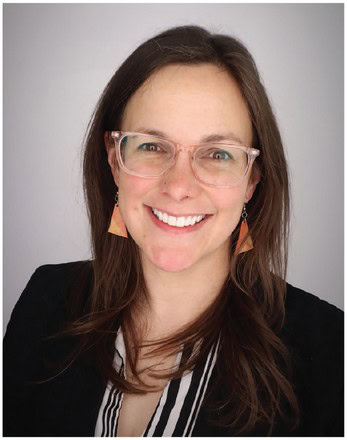 Lisa Martin is the Academic Editor of Music Educators Journal. She is Assistant Professor of Instruction at Ohio University in Athens, Ohio.
Did this blog spur new ideas for your music program? Share them on Connect! Interested in reprinting this article? Please review the reprint guidelines.
The National Association for Music Education (NAfME) provides a number of forums for the sharing of information and opinion, including blogs and postings on our website, articles and columns in our magazines and journals, and postings to our Connect member portal. Unless specifically noted, the views expressed in these media do not necessarily represent the policy or views of the Association, its officers, or its employees.