NAfME BLOG
“Let’s Go-Go”: Music, Community, and Social Responsibilities
“Let’s Go-Go”
Music, Community, and Social Responsibilities
By NAfME Member Katy Ieong Cheng Ho Weatherly
This article was first published in the October 2025 issue of the Journal of General Music Education.
In this article, I examine the role of music education in fostering social responsibilities by challenging the pervasive notion of music as a universal language. Using the Let’s Go-Go Band initiative by the District of Columbia Public Schools as an example, I illustrate how music functions as a culturally situated practice shaped by local histories and community values. In addition, I offer practical strategies for music educators to engage more critically with issues of social responsibility in their teaching. Last, I advocate for a more critically engaged, place-based, and socially embedded model of music education; one that embraces intentional, reflective pedagogies and acknowledges music’s complex role in advancing equity, empathy, and community resilience.
Introduction
Previously, I explored the central question, “What is music for?” (Weatherly, 2024). I sought to shift the conversation beyond individuals. Framing the inquiry around “what” invites us to consider music not just as a personal or recreational activity but also as a transformative force; one capable of shaping histories, cultures, and social behaviors. It positions music as a bridge, narrowing social divides and fostering collective understanding. Within this framework, I propose a cyclical view of community music programs, where building and rebuilding are ongoing processes that sustain communal growth and connection. In this article, I aim to extend that discussion by engaging more critically with the relationship between community music and broader social responsibilities. In times of global upheaval, educators, scholars, and performers across the arts are called upon to consider their roles in responding to urgent social issues. We ask ourselves: To what extent can artists and educators in these disciplines be socially responsible in addressing ethical and societal concerns? How might we, as practitioners, engage in meaningful advocacy for social transformation through our academic and artistic practices? Music educators, in particular, often emphasize the power of music as a force for healing and empowerment. In a fractured world, we must ask how music and the arts can contribute to building more just, empathetic, and peaceful societies. What responsibilities do we bear in using our work to confront issues such as inequality, violence, and marginalization?
Despite skepticism from some who question the efficacy of the arts in confronting tangible and complex problems such as violent conflict, artists and cultural workers around the world utilize creative expression to foster cultures of peace. As Bornstein (2015) notes, music and the arts are being used to address social and psychological dimensions of conflict, such as trauma, dehumanization, and one-sided historical narratives, which structural approaches may fail to resolve. Arts-based peacebuilding initiatives aim to engage the whole person; they stimulate the mind, body, senses, emotions, and imagination in order to confront deep psychological and cultural barriers to peace (Bornstein, 2015). These initiatives seek to dismantle hostile emotional dispositions, bear witness to trauma, promote empathy, build cross-community relationships, and challenge biased collective memories (Cohen, 2005). Bergh and Sloboda (2010) also suggest that among the many aspects of conflict, music may be uniquely effective in addressing its psychological and emotional consequences, such as the deep and often unseen wounds left by war, such as trauma and long-term emotional distress.
The “Two Sides to Every Coin”
I believe it is vital to recognize that music is not inherently benevolent, a point that is rarely addressed in our field. Although it is often celebrated for its capacity to heal, foster peace, and build community, music can also be used to incite violence, reinforce division, and perpetuate harm. This darker potential is seldom addressed within music education (Sandoval, 2016). Music can become a vehicle for violence when songs are deliberately used or reinterpreted to promote aggression or conflict. Small (2011) explores how musical works can be re-signified in different social contexts, allowing them to serve purposes that diverge significantly from their original intent. In their comprehensive study of violence and popular music, Johnson and Cloonan (2008) argue that any study of music should begin with an awareness of its “radical ambiguity.” Music does not carry fixed meanings; instead, its effects depend heavily on how it is framed, received, and employed within specific cultural and political contexts (Johnson & Cloonan, 2008, p. 1). In addition, Daughtry’s (2014) concept of thanatosonics, which challenges the assumption that sound is always therapeutic. His work raises critical questions: When does sound cease to be healing and instead become violent? Is this shift determined solely by characteristics such as volume, pitch, or texture, or are deeper social and psychological factors involved? These concerns are particularly relevant in cases where sound itself is a source of trauma. For example, when individuals suffering from post-traumatic stress disorder associate certain sounds or types of music with painful experiences, it is worth asking whether those same sounds can later be used as part of a therapeutic process (Sandoval, 2016).
What about music as a universal language? From a critical perspective, it is important to question the often-repeated narrative that “music is a universal language,” a view rooted in universalism. Have we truly considered the possibility that music might not be universal? If music is not a universal language, then what is it? How should we understand music’s role across diverse cultural and political contexts? Dave (2015) critiques literature that uncritically celebrates music as a powerful or even heroic force for promoting human rights, particularly through musical protest or political opposition. This perspective tends to reduce human rights to freedom of expression alone. Dave (2015) calls for a more rigorous and reflective methodology that does not assume music is inherently good or impactful in rights work. Instead, Dave encourages scholars to examine how music operates within human rights discourses, to ask which rights are being addressed, for whom, and under what conditions, and to explore when and why music may fail to promote or may even contradict the goals of human rights.
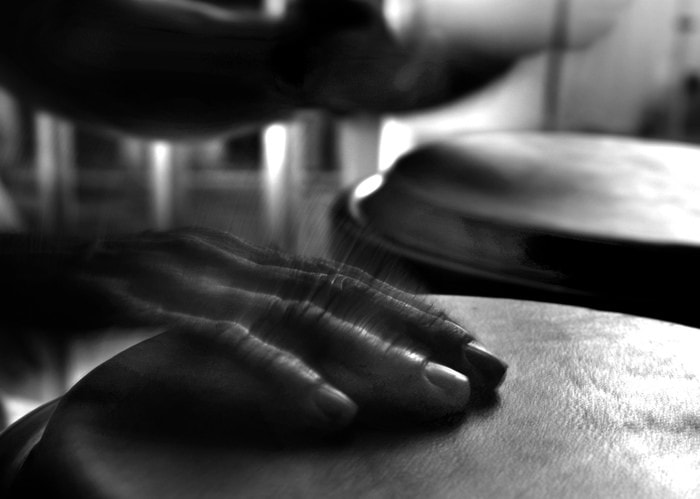
Photo: Carlos. E. Serrano / Moment Collection via Getty Images
The Let’s Go-Go Band of Washington, DC
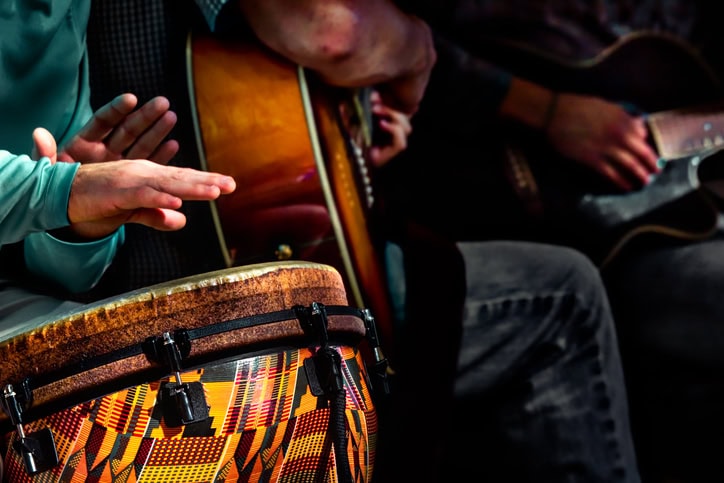
During my time working in Washington, DC, I became familiar with the District of Columbia Public Schools’ (DCPS) Let’s Go-Go Band initiative, a unique program that powerfully illustrates the culturally embedded nature of music in education and community life. In partnership with the Capital City Go-Go, the city’s professional basketball team, this program “Let’s Go-Go with Capital City Go-Go!” offers DCPS students a meaningful platform to express their artistic talents through music. Students from diverse schools come together to learn about Go-Go, compose collaboratively, and rehearse an original piece that culminates in a public performance at a Capital City Go-Go game.
In this context, the DCPS Let’s Go-Go Band provides a compelling example of how music functions not as a universal language, but as a culturally specific, socially embedded form of expression. Rooted in Washington, DC’s Black musical traditions, Go-Go is more than a genre. It is a social language, a rhythmic narrative through which communities affirm identity, cultivate belonging, and express collective resilience. A student percussionist in the program described it as “a welcoming environment when we play. Everybody shows their own talent and their own ability to be themselves.” His words reflect that music’s significance lies not in abstract or universal emotion, but in how it enables individuals to connect, assert agency, and be seen within their own cultural frame. Similarly, a bass clarinetist emphasized the communal and energetic quality of the music, stating, “My favorite thing would definitely be the kind of community in it, and how it’s like the beat that never stops.” For her, Go-Go represents endurance and joy, a continuous rhythm that captures the spirit of a community that persists through adversity, reflecting the sustained vitality of a tradition and a people.
Go-Go, in this sense, is not music that demands translation into sanitized or globalized categories of “universal music.” It is a locally grounded and culturally resonant practice, one that reflects the lived realities of DC’s youth and offers them a means to participate in a larger story of community, creativity, and resistance. As an example, I believe the Let’s Go-Go initiative, therefore, does more than teach students to perform. It affirms their histories, voices, and potential on their own terms.
Practical Strategies
Given that music can function as a double-edged sword, capable of both healing and harm, inclusion and exclusion, music educators must remain thoughtful and intentional in how they design and implement its use in the classroom. Rather than assuming music’s inherent goodness, educators should carefully consider how musical content, context, and pedagogical choices can either reinforce or challenge existing inequalities. Here are several important suggestions that are often underdiscussed by practitioners:
Foster Ethical Engagement with Music and Media
Building on the recognition that music can serve both healing and harmful purposes, educators should teach students to engage with music critically and ethically. This includes examining how music and media can be manipulated to reinforce harmful ideologies, misinform audiences, or promote violence. Encourage students to consider the intent behind musical content, the consequences of sharing it, and their role as both consumers and potential creators in a broader media ecosystem.
Challenge Stereotypes Through Musical Representation
Acknowledging music’s capacity to be re-signified in different contexts, educators must resist the urge to present any musical tradition as static or homogeneous. Instead of relying on simplified representations that risk reinforcing cultural stereotypes or tokenism, teachers should highlight the internal diversity and evolving nature of musical practices. This helps students see music not as a fixed symbol of identity, but as a dynamic form of expression embedded in social, historical, and political contexts.
Support Emotional Literacy Through Reflective Listening
Given that music can evoke both healing and distress, classrooms should be structured to allow for emotional reflection. Encourage students to explore how music affects their feelings and thoughts, and help them articulate why. This can foster emotional intelligence while sensitizing them to the idea that others may experience the same piece of music very differently, especially when personal or cultural trauma is involved. Such reflection aligns with trauma-informed teaching and supports social-emotional learning.
Use Music as a Lens for Global Interconnectedness
To move beyond isolated or superficial representations of global music, frame classroom exploration within themes such as migration, colonial histories, environmental justice, and human rights. This approach helps students understand how music is interwoven with global systems of power and resistance. It also encourages empathy and critical thinking by exposing students to both the celebratory and contested uses of music in global contexts.
Examine Power and Participation in the Classroom Itself
Finally, educators must remain aware of the power structures present within their own teaching. Whose voices and musical traditions are prioritized? Who gets to choose what is heard or studied? Drawing from the concept of music’s radical ambiguity, educators should create inclusive, participatory environments where students co-construct meaning and where multiple musical identities are validated. This helps ensure the classroom itself becomes a site of equity, reflection, and transformation.
Photo: Patricio Nahuelhual / Moment Collection via Getty Images
Building Resilience Through Music Education
In the context of ongoing social challenges and community constraints, music educators, practitioners, and community leaders play a vital role in sustaining the social and educational impact of the arts. Even with limited institutional support, music remains a powerful tool for connection, healing, and civic engagement. Community-based initiatives can become central to this effort. Musicians and educators can collaborate with local schools, nonprofits, libraries, and grassroots organizations to offer workshops, performances, and participatory music-making. These initiatives often require fewer resources than large-scale institutional programs but can have profound social impact.
Furthermore, music and the arts contribute meaningfully to empathy not only by transcending cultural difference but also by engaging deeply with it. The Let’s Go-Go Band exemplifies how music, when rooted in local histories and identities, can serve as a form of community-building and cultural affirmation. Rather than assuming that music has universal emotional or moral power, educators and practitioners can support justice by centering contextually relevant musical practices that give voice to marginalized communities. As educators and practitioners, we bear the responsibility to challenge dominant narratives, such as the myth of music as a “universal language,” that obscure structural inequalities and cultural differences. We must instead recognize that music can both empower and exclude, depending on how it is used and whose voices are amplified. To conclude, I hope music educators can consider moving beyond celebratory or romanticized notions of music’s power. Instead, we can collectively adopt a historically informed, place-based, and participatory approach that understands music as a socially embedded practice capable of fostering agency, solidarity, and transformation when engaged with care, criticality, and intention.
Acknowledgments
I would like to express my sincere gratitude to the District of Columbia Public Schools’ Arts Team for their inspiring work, particularly in organizing the Let’s Go-Go Band initiative, and for granting permission to use it as an example in this work. Special thanks go to the team, Mary Lambert, Robert Battle, Yan Carlos Colón León, and Patrick McDonough, for their leadership and dedication in promoting music education.
References
Bergh A., Sloboda J. (2010). Music and art in conflict transformation: A review. Music and Arts in Action, 2(2), 2–18.
Bornstein J. (2015). Music and peace. In Christie D. (Ed.), Methodologies in peace psychology: Peace research by peaceful means (pp. 325–343). Springer International Publishing.
Cohen C. (2005). Creative approaches to reconciliation. In Fitzduff M., Stout C. E. (Eds.), The psychology of resolving global conflicts: From war to peace (Vol. 3, pp. 69–102). Praeger Security International.
Daughtry J. M. (2014). Thanatosonics: Ontologies of acoustic violence. Social Text, 32(2), 25–51.
Dave N. (2015). Music and the myth of universality: Sounding human rights and capabilities. Journal of Human Rights Practice, 7(1), 1–17.
Johnson B., Cloonan M. (2008). Dark side of the tune: Popular music and violence. Ashgate.
Sandoval E. (2016). Music in peacebuilding: A critical literature review. Journal of Peace Education, 13(3), 200–217.
Small C. (2011). Misunderstanding and reunderstanding. In Laurence F., Urbain O. (Eds.), Music and solidarity: Questions of universality, consciousness and connection (pp. vii–xviii). Transaction Publishers.
Weatherly K. I. C. H. (2024). What Is Music For? The Power of Community Music Programs. Journal of General Music Education, 38(2), 33–35.
About the author:
 NAfME member Dr. Katy Ieong Cheng Ho Weatherly earned her Bachelor’s and Master’s degrees from The Juilliard School and a Master’s and Doctorate in Music Education from Teachers College, Columbia University. She currently serves as Assistant Professor of Music and Music Education at the University of Macau. Her previous professional experience includes serving as the District Music and Performing Arts Manager in Washington, DC. Dr. Weatherly received the NAGC Arts Researcher Award in 2024 and the USF Emerging Researcher Award in 2025. Her research interests include creative music pedagogy, informal music learning, talent development in music, and music advocacy.
Did this blog spur new ideas for your music program? Share them on Connect! Interested in reprinting this article? Please review the reprint guidelines.
The National Association for Music Education (NAfME) provides a number of forums for the sharing of information and opinion, including blogs and postings on our website, articles and columns in our magazines and journals, and postings to our Connect member portal. Unless specifically noted, the views expressed in these media do not necessarily represent the policy or views of the Association, its officers, or its employees.