NAfME BLOG
Making the Case Your Community Cannot Ignore
Building the Support Your Music Program Deserves
By NAfME Member Dr. José Valentino Ruiz
The email arrives on a Tuesday. The district is cutting the instrument repair budget again. The spring trip costs more than the boosters raised all fall. A cello needs a new bridge, and there is no line item for it. If you teach music in a public school, you already know this moment. The question is what you do next, because the answer is not to shrink the program until it fits the budget. The answer is to build the support the program deserves.
Fundraising feels like a second job, and for many teachers it is one they never applied for. But reframe it: You are not begging. You are making a case for students, in public, with evidence, to people who want to help and do not know how. That is a teachable skill, and it follows the same logic as good teaching: Start from the outcome, know your audience, and show your work.
Start from the Outcome
Good teaching starts from the end. Wiggins and McTighe (2005) call it backward design: Name the outcome first, decide what evidence would prove it, then plan the work that gets you there. Fundraising works the same way, and most teachers get it backward. They start with the shopping list: thirty violins, a new sound system, a bus. Then they wonder why the ask falls flat.
Start instead with what students will be able to do that they cannot do now. An outcome sounds like this: Every fifth grader plays in an ensemble by spring. A purchase sounds like this: thirty violins. Funders fund outcomes, not shopping lists. A grant reader, a school board member, and a local business owner can all understand the first sentence. Only you understand the second, and that is the problem. Lead with the outcome, and the instruments and the bus become the means, easy to fund once the end is clear.
Backward design also gives you a way to judge every dollar. Hattie (2009) puts the hinge point for an effect worth having at d = 0.40, a reminder that not all spending moves learning equally. Before you ask for anything, ask whether the thing you want clears that bar. Does it put an instrument in a student’s hands every day, or sit in a closet? Does it add rehearsal time, or paperwork? The teachers who raise the most money usually ask for the fewest things, because they only ask for what can change what students can do.
Photo: SolStock/E+ Collection via Getty Images
The Case Is the Curriculum
The most persuasive fundraising argument is not about instruments. It is about students. The research gives you language for this, and you should use it. Students with access to the arts in high school were three times more likely to earn a bachelor’s degree than students who lacked those experiences (Catterall et al., 2012). A school board member, a donor, and a grant reader can all understand that number. Your program is not an enrichment extra. It is an academic intervention with evidence behind it.
The evidence goes further. Active engagement with music affects language, literacy, concentration, self-confidence, emotional sensitivity, social skills, teamwork, and self-discipline (Hallam, 2010). Those benefits appear when the experience is enjoyable and rewarding, which is exactly what a good ensemble provides. When you write a grant or speak to a donor, lead with one student and one story, then support the story with the research. The story makes the case human. The research makes it credible. Neither works alone.
There is a second reason the research matters: It keeps you honest about what your program actually does. Students stay in programs where the music belongs to them. Lucy Green (2008) studied informal music learning across 21 schools and more than 1,500 students and found that young musicians engage most deeply when they choose the music, learn mainly by ear, and learn with peers. If your fundraising builds a program students want to belong to, the money follows the engagement. If it builds one students endure, no amount of money fixes it. The case you make to funders should be the case you make to your students: This is worth your time, because it is yours.
Donors Are Relationships, Not ATMs
Here is the mistake that kills most school fundraising: treating donors like vending machines. Insert a letter, receive a check. That approach works once, and then the donor disappears, because nobody wants to be a machine. Donors give to belonging. They give because they were in the room, heard the ensemble, and felt part of something. Your job is to give them that feeling, and to keep giving it to them.
Self-determination theory names three human needs that drive motivation: autonomy, competence, and relatedness (Deci & Ryan, 2000). Donors have the same needs as students. They want to choose how they help, know their help works, and belong to the community they support. So invite them into the room before you ask for anything. Let them hear a rehearsal. Give them a specific role: the parent who runs the uniform closet, the business owner who sponsors the spring concert, the alum who mentors a section. Then report back, and show them what their support made possible, with a photo, a recording, or a student’s own words.
The small donor matters as much as the large one, and often more. The parent who gives 25 dollars and shows up to every concert is worth more than a one-time check from someone who never visits. Build a system for gratitude and treat it as seriously as the budget. Thank every donor within 48 hours, show the result of the gift, and invite the donor back. Gratitude is not the polite ending of fundraising. It is the beginning of the next gift.

Photo: Sol de Zuasnabar Brebbia/Moment Collection via Getty Images
Grants Are Stories with Budgets
Grants intimidate teachers, and the intimidation is mostly unnecessary. A grant is a story with a budget attached. The story is the outcome you named in your backward design: what students will be able to do. The budget is the honest cost of making it happen, including the hidden costs teachers know and funders forget: repairs, sheet music, transportation, substitute coverage for a field trip. Budget honestly. A funder who discovers hidden costs later will not fund you twice.
Start small and local. Community foundations, local education foundations, and civic groups fund small grants precisely because they want to see results close to home. A grant under 1,000 dollars, completed well and reported back on time, builds the track record larger funders ask for. Read the guidelines carefully and match the funder’s language, but never twist your program into something it is not. The right funder is the one whose goals already match yours.
One framework can keep the whole effort organized:
Collaborate
Resource
Engage
Adapt
Transform
Evaluate
Collaborate with partners who share the work. Resource the plan with the funding you have, not the funding you wish you had. Engage the community around the program. Adapt when a funder says no, because a no is information about fit, not a verdict on your worth. Transform the funding into student experience. And evaluate, because the evaluation is what gets the second grant. A funder who receives a clear report, with evidence the money did what you said it would do, is a funder who answers your next email.
Try This This Month
Five moves, in order, starting this week.
First, write the one-page case: one outcome, one student story, one statistic (students with arts access were three times more likely to earn a bachelor’s degree), and one ask. If it does not fit on one page, the case is not clear enough yet.
Second, build a list of twenty names: parents, alumni, local business owners, community members, anyone who has ever said something kind about your program. Twenty names is a pipeline.
Third, invite five people into your room this month, with no ask attached: a rehearsal, a sectional, a student performance. Let them hear the work before they hear the request.
Fourth, find one local grant under 1,000 dollars and apply. The application is the education. Win or lose, you will have a draft, a budget, and a reusable story.
Fifth, start the thank-you system: a note within 48 hours of every gift, every time, no exceptions. The system matters more than any single note, because it turns one gift into a relationship.
The Work Is the Teaching
Fundraising is not separate from teaching. It is teaching, extended: naming an outcome, making a case, inviting people into the work, and showing them the result. The teachers who do it well never pretend the money is the point. The point is the student who gets an instrument in their hands, the ensemble that performs for a real audience, the program that survives a budget cut because the community refused to let it go. Build the case, build the relationships, and the budget will follow the program. Keep it that way.
References
- Catterall, J. S., Dumais, S. A., & Hampden-Thompson, G. (2012). The arts and achievement in at-risk youth: Findings from four longitudinal studies (Research Report No. 55). National Endowment for the Arts.
- Deci, E. L., & Ryan, R. M. (2000). The “what” and “why” of goal pursuits: Human needs and the self-determination of behavior. Psychological Inquiry, 11(4), 227-268.
- Green, L. (2008). Music, informal learning and the school: A new classroom pedagogy. Ashgate.
- Hallam, S. (2010). The power of music: Its impact on the intellectual, social and personal development of children and young people. International Journal of Music Education, 28(3), 269-289.
- Hattie, J. (2009). Visible learning. Routledge.
- Wiggins, G., & McTighe, J. (2005). Understanding by design (2nd ed.). ASCD.
About the Author
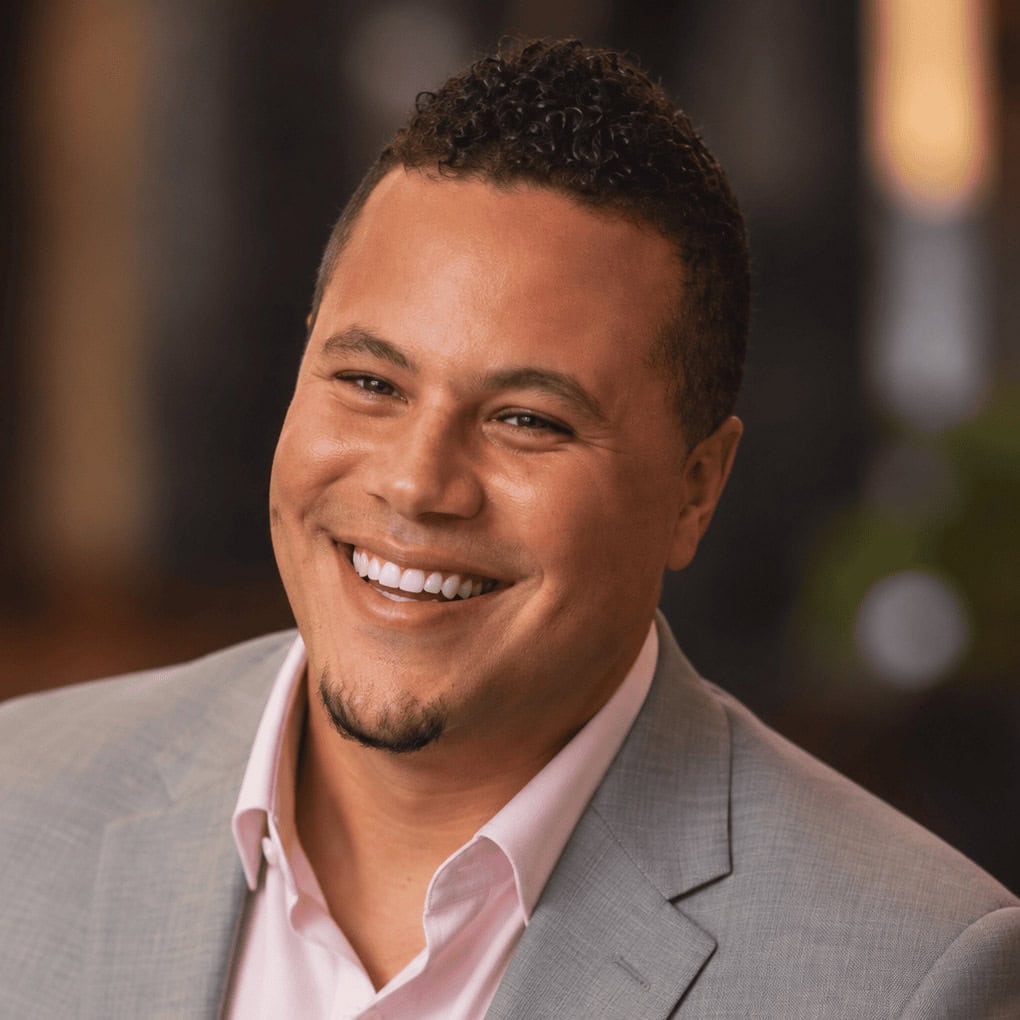 NAfME member Dr. José Valentino Ruiz is a multi-Latin GRAMMY®-winning and multi-Global Music® Award-winning bassist, multi-instrumentalist, composer, producer, and educator. He is an Associate Professor and Founder/Coordinator of Music Business & Entrepreneurship at the University of Florida, a U.S. Department of State U.S. Speaker on Creative Economy and Global Arts Entrepreneurship, and an internationally active recording and performing artist. Ruiz also serves in editorial, research, and interdisciplinary leadership roles spanning music, creative industries, entrepreneurship, artificial intelligence, healthcare, and cultural diplomacy.
Did this blog spur new ideas for your music program? Share them on Connect! Interested in reprinting this article? Please review the reprint guidelines.
The National Association for Music Education (NAfME) provides a number of forums for the sharing of information and opinion, including blogs and postings on our website, articles and columns in our magazines and journals, and postings to our Connect member portal. Unless specifically noted, the views expressed in these media do not necessarily represent the policy or views of the Association, its officers, or its employees.