NAfME BLOG
My Children’s School System Wants to Eliminate Music Education
Making Key Changes to Advocate for a Vital Part of Every Student’s Education
By NAfME Member Lori Schwartz Reichl
“To be an activist is to speak. To be an advocate is to listen. Society can’t move forward without both.”—Eva Lewis
The Reason
My children’s school system wants to eliminate music education—specifically elementary instrumental music and chorus.
Music education is woven into my family’s life. My dad was a band director for 31 years in one school district, where my brother and I were fortunate to be taught by him. He conducted pit orchestras for countless school and community musicals (where my brother performed on trumpet and I on saxophone). He performed regularly in a brass quintet and served four years in the Air Force Band on trombone and baritone. In retirement—at age 80—he still teaches private music lessons and conducts his church choir.
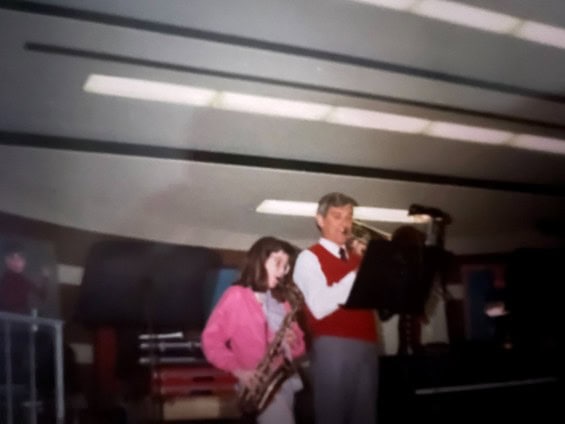
I confidently performed a duet with my father in fourth grade for my entire elementary school (circa 1988)—a moment made possible by a band program similar to one that may be cut from my children’s school system’s proposed budget next year.
My mom sings in that church choir each week, played piano for years, directed several high school musicals early in her career, and performed in local theatre productions. She also encouraged musical participation in our home through singing and consistent instrument practice, and has attended many musicals with me on and off Broadway.
I was a band director in two public school systems for 15 years and traveled to Europe for four summers as a conductor with American Music Abroad. I continue to conduct community and honor ensembles when invited, teach graduate courses to music educators each summer, write a monthly column for a national music education association, and have taught private music lessons since I was 16 years old. I also performed in a saxophone quartet for many years.
Both of my children have studied piano for several years. This year, my daughter began playing saxophone in her fourth-grade band. Her second-grade brother hopes to start a band instrument in two years as well. She also sings in a community choir and will perform a vocal solo in her third musical production this spring. When my extended family gathers, we often sing in four-part harmony.
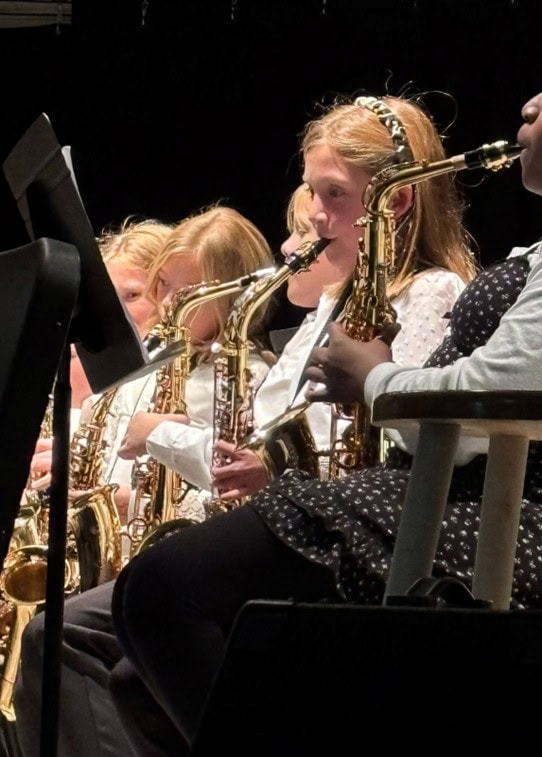
My fourth-grade-daughter confidently performed in a band concert (December 2025)—a program that may not exist next year if it is eliminated in the school system’s proposed budget.
In our family, the impact and importance of music education are not theoretical—they are lived. And it is exactly these kinds of opportunities that the proposed elimination of elementary instrumental music and chorus puts at risk—for an entire generation of students, families, and communities.
At a January Board of Education meeting, only 15 community members were allowed to speak. I registered but was not selected. So instead, I am publishing the three-minute speech I would have given—for all 58,000 members of the National Association for Music Education to read, reflect on, and share—if needed.
Had I been selected, I would have brought my whole self to the podium. There would have been a high kick—along with several appropriate hand gestures or winks. I would have involved the audience, placed intentional silent pauses, amplified my sarcasm, and laughed during the speech. As music educators, we understand that communication is performance. Imagine those moments as you read.
And time yourself. Three minutes goes fast. Three minutes can alter a child’s, an educator’s, a program’s, and a community’s trajectory.
Based on our individual experiences, each of us would include different information in an advocacy speech. Would I have wanted to share more research, more stories, more ideas? Of course. But three minutes is all I had.
Here is my speech. I suggest you prepare yours, too.
The Response
I’m Lori Schwartz Reichl—a parent, educator, musician, and proud Doctor of Music Education. I come from a family of educators and musicians, but also athletes, engineers, beauticians, medical professionals, and more. What binds us together is not a single profession, but a shared belief in a comprehensive education—one that values music alongside every other subject. Because in music, we all found a place to belong.
I’ve taught music in rural schools, Title I schools, and a school placed on corrective action. I now travel the country speaking about confident and compassionate leadership because of those experiences. And in every space, someone inevitably shares how music education shaped their life—often because it gave them belonging—which elementary schoolers desperately need (even adults!).
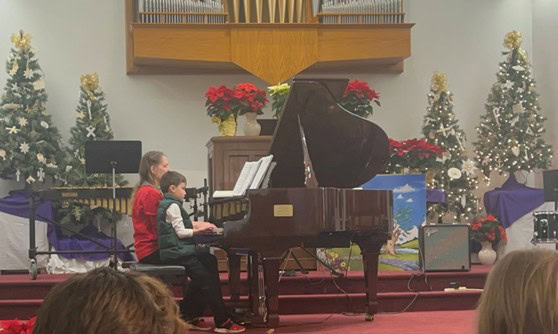
My second-grade son confidently performed a piano solo for a packed audience (December 2025).
When I speak to engineers at my husband’s defense company, they don’t talk about math equations. They talk about what they learned to secure and keep their job. These are transferable skills they credit to learning in a music ensemble—collaboration, critical thinking, and perseverance—and that they use every day in the workforce.
I could cite the research showing how music supports cognitive development, academic outcomes, and social-emotional learning. Our own Marylander, Susan Magsamen, co-author of the New York Times bestselling book, Your Brain on Art: How the Arts Transform Us, shows us—through science—how the arts, and especially music, influence emotional regulation, reduce stress, and enhance well-being—the essential skills elementary students (or anyone!) must learn to be successful in school and life.
But what music truly builds is confidence.
As a child, I was both an athlete and a musician. Across courts, fields, and stages, I developed teamwork, discipline, resilience, and the ability to perform under pressure. As I collaborated with others, my confidence grew through the trust we built together—allowing us to perform at our best in every game and concert.
“But what music truly builds is confidence.”
Not every child will be an athlete, or engineer, or doctor. But every child can be a musician.
Don’t believe me? Check out United Sound.
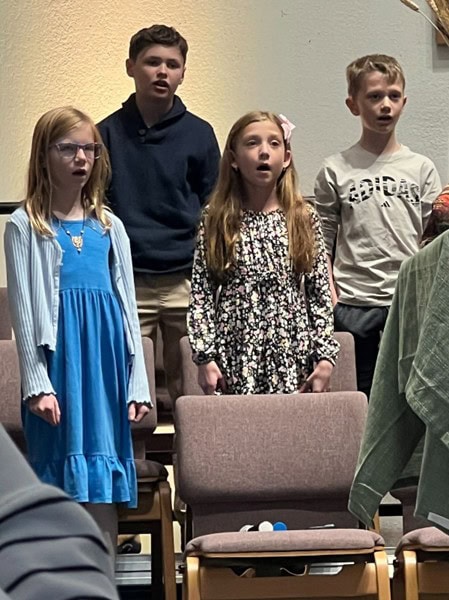
My fourth-grade daughter confidently sang in a community chorus performance (November 2025)—a program similar to one that may not exist next year if it is eliminated in the school system’s proposed budget.
Every person can perform music. Everyone.
Music meets students—people—where they are. It gives voice to the quiet child, belonging to the unseen student, and purpose to those who struggle to find success or belonging elsewhere.
Music teaches us to learn, listen, lead, and love.
Could students begin band, orchestra, or chorus in sixth grade? Sure. Just as they’re juggling every new middle school demand! What does that do to skill development? To program strength? Once these programs disappear, rebuilding them is often impossible, even by the most experienced educator.
We understand this in sports. We train children early so they can grow and compete at higher levels over time. Now imagine removing two years of an athlete’s development. The uproar would be immediate!
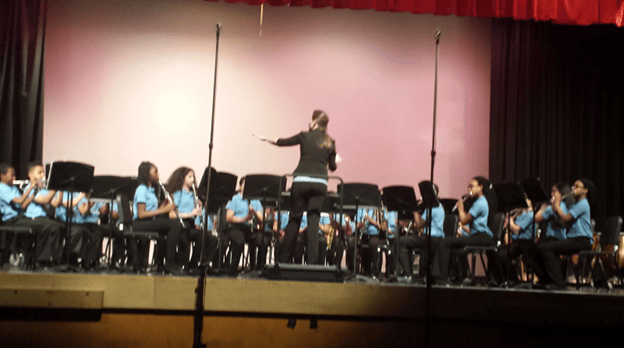
I happily conducted one of my former bands (2015).
As an athlete and coach, I understand that comparison. And as a musician and educator, I must be clear: Eliminating elementary instrumental music and chorus doesn’t simply delay participation—it fundamentally alters a child’s confidence, an educator’s craft, a program’s stability, a community’s future, and our society’s commitment to nurturing expressive and engaged citizens.
When we consider eliminating music, we are making a statement about who—and what—we value.
I urge you to look beyond short-term savings and consider the long-term cost. Protect music education at all levels—beginning in elementary school, where curiosity is sparked, belonging is nurtured, confidence is built, and lifelong learners are formed.
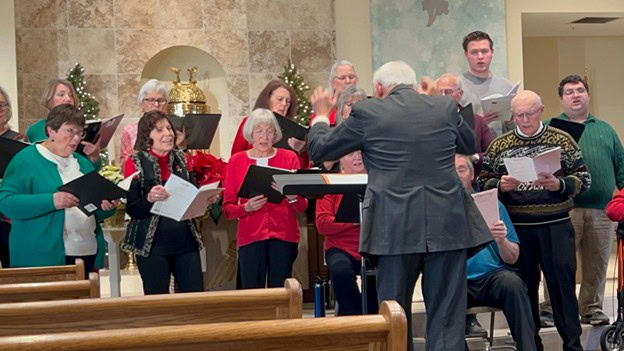
My mom passionately sang (in the front row in a black vest), looking at my dad while he conducted their church choir in December 2025.
The Request
If this article resonated with you, please consider sharing it with someone who might need it—perhaps a parent, educator, administrator, or school board member. For those who prefer other formats, this piece has also been adapted into a podcast episode, and a video of the speech is available on Facebook. I wanted to offer three avenues for learning: reading, listening, or watching.
Consider subscribing to the Making Key Changes weekly newsletter. Our community includes many educators and administrators, along with thousands of people from other professions. Also, consider listening to the Making Key Changes weekly podcast. This newsletter and podcast are about making key changes in our lives beyond music or education. Still, I felt it was important to use these platforms to advocate for a key change I hope will be made in my children’s school system and in our broader community.
If you’re planning an event and want to guide your people toward confident, compassionate leadership, I’d love to partner with you. My main work is public speaking.
As I do at the end of each podcast episode, I’ll leave you with an important question:
How are we making key changes to advocate for what we believe in?
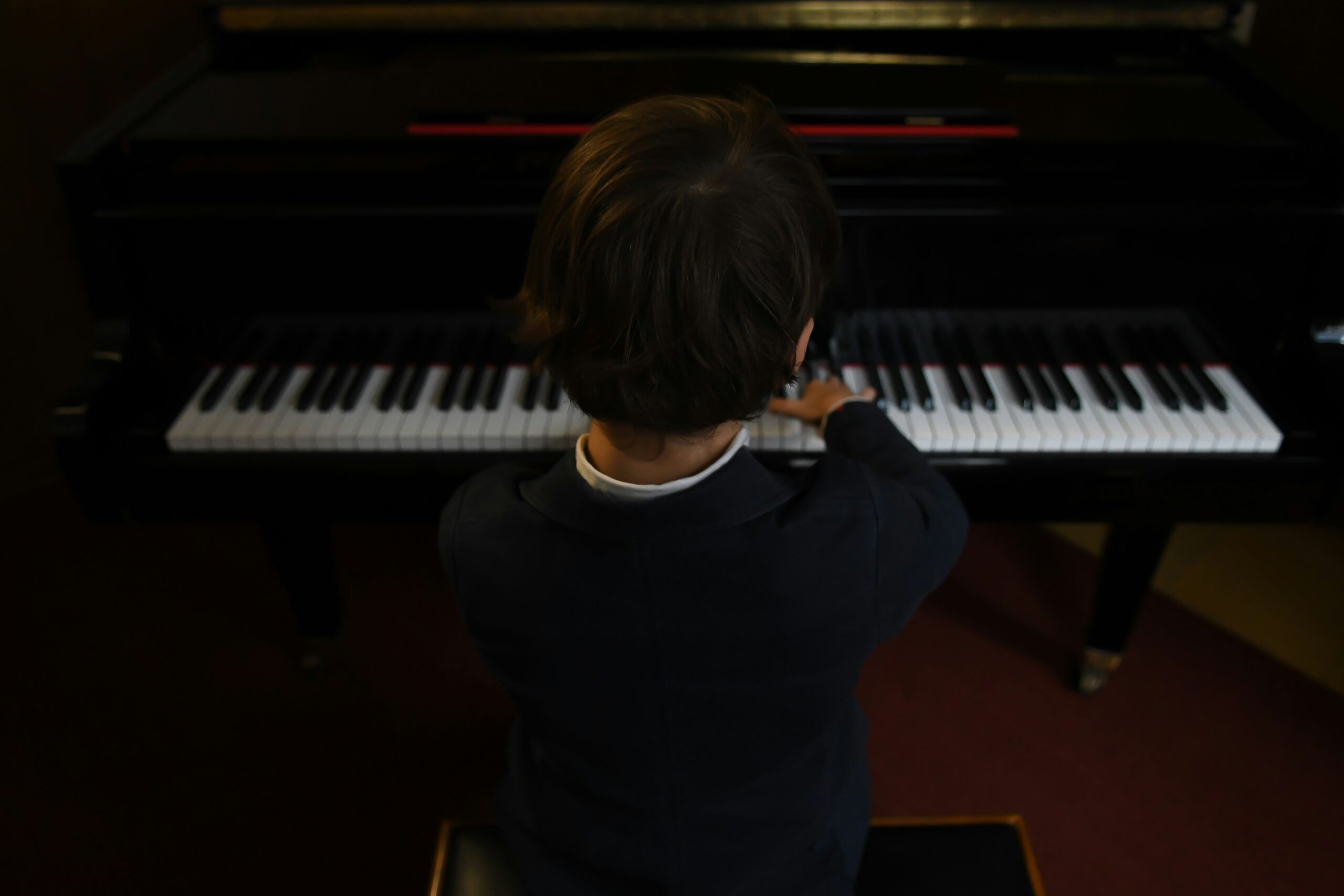
Photo at top by Michał Parzuchowski on Unsplash
About the Author

Photo by Richard Twigg Photography
NAfME member Dr. Lori Schwartz Reichl is the visionary leader behind MAKING KEY CHANGES, LLC, a consultancy dedicated to mentorship and motivation. She also founded The Confidence Camp for Kids and The Confidence Retreat for Adults—experiences that empower people to grow as confident, compassionate leaders.
An accomplished author, educator, podcaster, and former public school band director, Lori focuses her work on transformation through leadership and human connection.
Today, she leads a global classroom—guiding organizations and teams to unlock their potential, strengthen their people, and make key changes that help them grow alongside those they love, serve, and lead.
A sought-after speaker and consultant, Lori has delivered hundreds of workshops and keynote addresses worldwide. Her dynamic programs inspire audiences to align around a shared vision, boost confidence, overcome burnout, promote engagement, and embrace change as a catalyst for growth.
Lori hosts the MAKING KEY CHANGES podcast and produces its companion newsletter, sharing weekly, actionable insights to inspire continuous learning and leadership.
Lori lives in Maryland with her husband and their two active children.
Learn more at MakingKeyChanges.com.
Did this blog spur new ideas for your music program? Share them on Connect! Interested in reprinting this article? Please review the reprint guidelines.
The National Association for Music Education (NAfME) provides a number of forums for the sharing of information and opinion, including blogs and postings on our website, articles and columns in our magazines and journals, and postings to our Connect member portal. Unless specifically noted, the views expressed in these media do not necessarily represent the policy or views of the Association, its officers, or its employees.