NAfME BLOG
What Homeschool Families Are Teaching Us about Community Music Education
An Opportunity the Music Education Profession Should Not Miss
By NAfME Member Cathy LaFrombois
What happens when hundreds of homeschool families set out to make music together?
In the Fox Valley of northeast Wisconsin, I have spent the past decade watching that question answer itself. Today the answer fills a 24,000-square-foot building: beginning band students finding their first clear notes, a high school choir working through a difficult key change, a theater cast running lines in the hallway. It looks, and sounds, like exactly what it is: a large and thriving music community.
Much of the national conversation about homeschooling centers on policy, regulation, and headcounts. I want to offer a different view, one from inside a movement that is building rich, collaborative learning communities, because it points to an opportunity our profession should not miss.
A Quiet Shift, Happening at Scale
Homeschooling is no longer a fringe choice. Researchers at the National Home Education Research Institute estimate roughly 3.4 million homeschool students in the United States during the 2024–2025 school year. That is about 6.3 percent of school-age children, a population that now rivals public charter school enrollment. The pandemic accelerated the trend, but it has not reversed the way many predicted.
Here is the part that matters for music educators: Today’s homeschool families are deeply networked. They organize co-ops, athletic leagues, science fairs, and, increasingly, bands, choirs, and theater productions. Music and theater are natural gathering points, and for a simple reason: You cannot form a band or stage a musical alone. Ours are the subjects that draw a community together.
You can see the same instinct playing out across the country in different forms: homeschool bands in rented church halls, co-op choirs meeting in homes, and parent-run theater troupes staging full musicals. Most operate quietly, below the notice of the wider profession. Ours simply grew large enough, and fast enough, that it became hard to overlook.
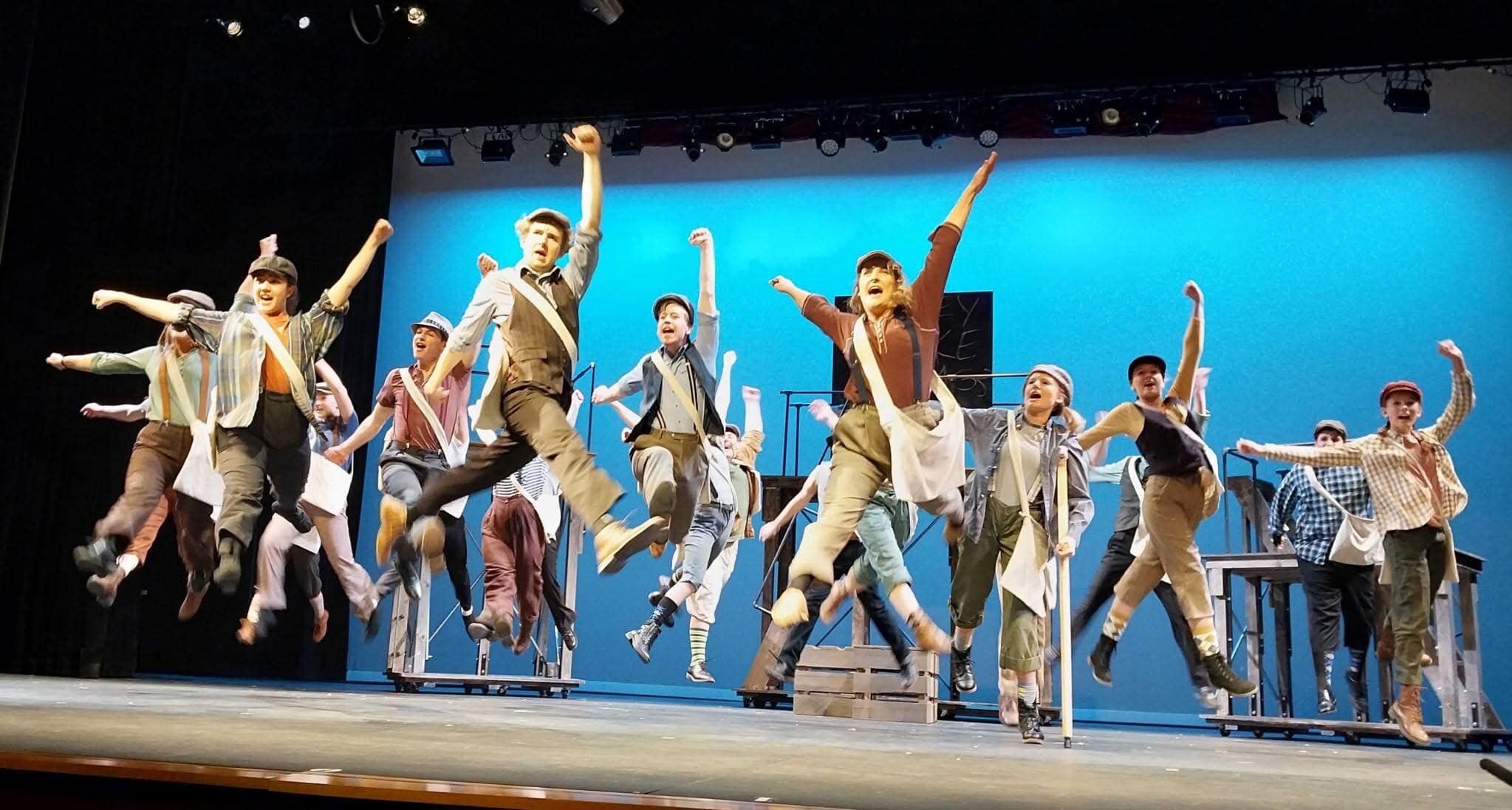
Valley Troubadours theater production
What We Built in Appleton
The Valley Troubadours Homeschool Music & Theater Program began in 2013 with a modest goal: give homeschooled students access to the kind of ensemble experience I had spent years leading in traditional K–12 schools. I did not anticipate how quickly the need would reveal itself.
In 2018 we served about 150 students. Today we serve nearly 800, roughly a 400 percent increase in eight years. This semester alone we expect more than 1,500 class registrations across some 50 music, theater, and performing arts classes for students in kindergarten through adult. The demand was steady and clear enough that in 2023 we purchased a 24,000-square-foot facility to house it all. The building now hosts not only our own classes but homeschool co-ops, community ensembles, concerts, and educational events. Remarkably, we are already nearing capacity again.
I share these numbers not to boast but because they genuinely surprised me, and because educators around the country keep reaching out to ask how it happened. What I have come to understand is that we did not create the demand. We simply built a place for it to land.
How It Came Together
People often assume there must have been a master plan. There wasn’t. We started with two band and two choir classes and a borrowed room. When it filled, we split into more groups. When that filled, we added beginning strings, then theater, then early-childhood music for the youngest siblings who came along and did not want to sit in the hallway. Each new offering was a response to a family who asked, “Do you have something for my child, too?”
Three things, in hindsight, made the difference. First, we refused to lower the bar. Word travels fast among parents when a program is both welcoming and serious. Second, we hired working educators who treat this as a profession, not a hobby, and we pay them accordingly. Third, we invested in a home. Renting by the hour caps what you can become; owning a building let us schedule fifty-six classes a week, store instruments and sets, and become a genuine hub rather than a traveling act. The facility did not cause our growth, but it gave the growth somewhere to go.
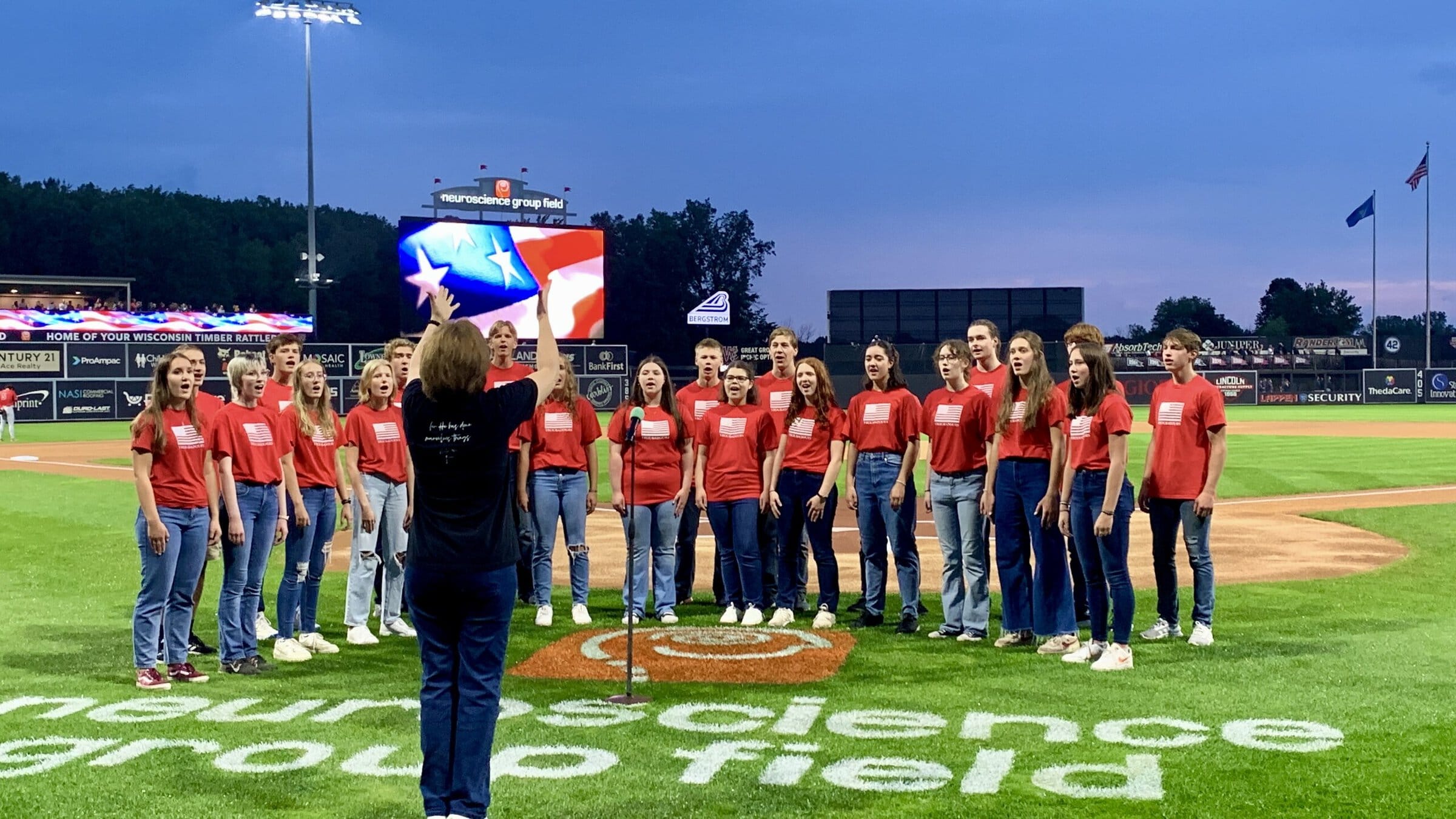
Valley Troubadours singers performing the National Anthem at Neuroscience Group Field
Families Want the Real Thing
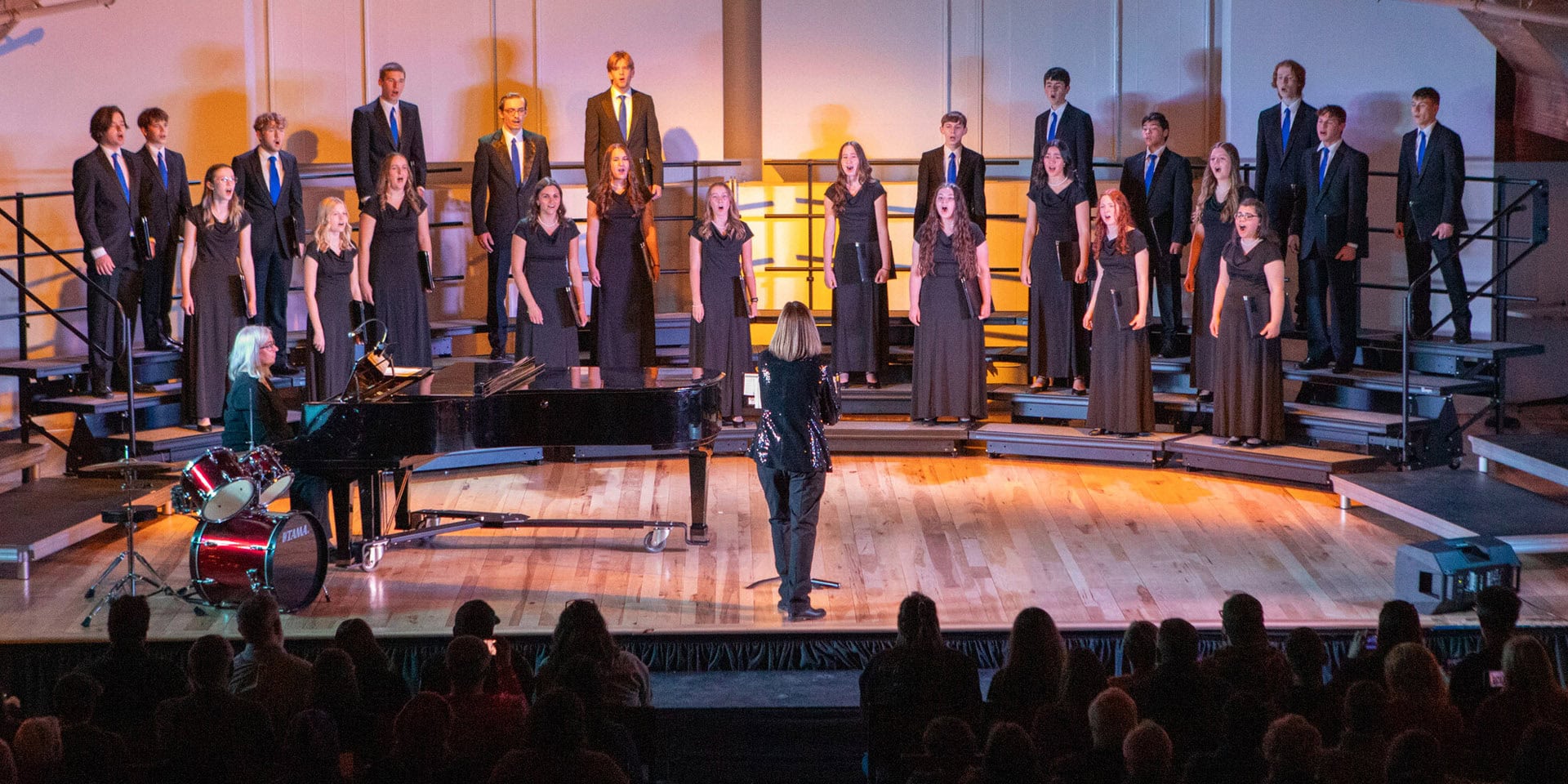
If there is a single lesson in our growth, it is that homeschool families are not looking for a watered-down version of music education. They want the real thing: sequential instruction, high expectations, genuine performance opportunities, and teachers who take their students seriously as musicians.
We hold to the same standards I always have. Our ensembles rehearse toward real performance, not just enrichment. Students progress through skills, not merely activities. And because every family is choosing to be here, often driving considerable distances and arranging their entire week around a rehearsal, the level of commitment is extraordinary. In more than thirty years of teaching, I have rarely seen buy-in like it.
What strikes visitors most is the energy in the room. These students arrive already connected. Many know one another from co-ops, church, and years of shared activities, and the ensemble gives that community a shared purpose. They learn to listen across a section, to blend, to hand a solo to the player beside them. They are making music together, and the friendships deepen with every rehearsal.
I think of one student who joined our beginning band too shy to play a note above a whisper. A few years later she sat first chair and mentored the newest players in her section. Nothing about that arc is unusual in a strong school music program. The point is that, without a program like ours, she would never have had the chance to walk it at all.
Twice a year our families fill a concert hall. Grandparents drive in from out of state; younger siblings watch from the front rows and count the years until they can join. The pride in that room, from students, parents, and teachers alike, is the clearest evidence I can offer of what these families are building together.
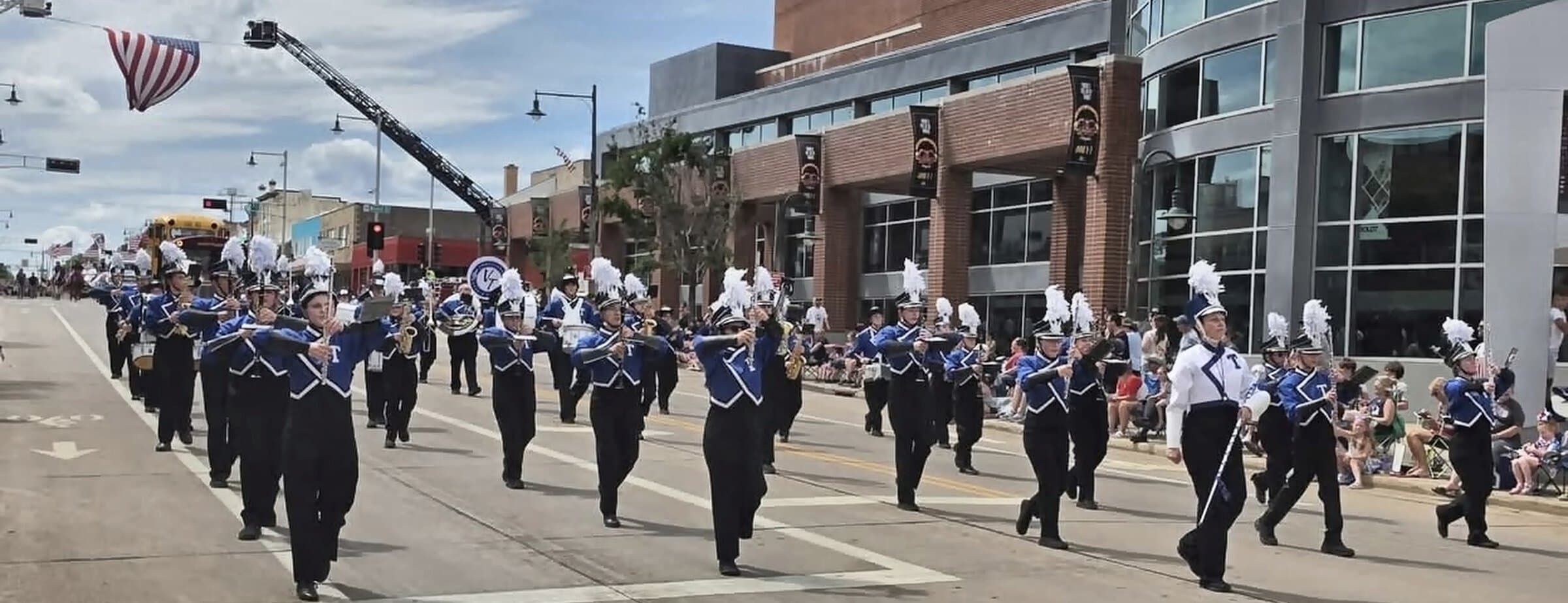
Valley Troubadours marching band in the Flag Day Parade
Room for Every Learner
That sense of belonging reaches students who do not always find an easy place in conventional settings. Our program welcomes learners of varying abilities, including neurodiverse students like my own, and I have watched again and again how an ensemble can meet a young person exactly where they are. Music makes room. A student who struggles to find words can still find a rhythm, a part, a place in the group, and the group is richer for it. This is not an accommodation we bolt on; it is simply what a healthy ensemble does.
An Access Story Our Field Should Not Miss
This is where our experience speaks to the profession as a whole. We talk often, and rightly, about expanding access to arts education. Homeschooled students are a large and fast-growing population our field has not always known how to reach. Many of them want precisely what we as music educators are trained to provide, and in most communities no one is offering it to them.
A program like ours is one answer. It is not the only one. But it demonstrates something worth sitting with: When you offer real, rigorous, community-based music instruction to homeschool families, they come, by the hundreds. The appetite is there. The open question is whether our profession will choose to meet it.
The opportunity is straightforward. Millions of homeschooled students are eager to make music, and in most communities no trained music educator is there to meet them. That is a gap our profession is uniquely equipped to close, and closing it expands the reach of music education itself.
I do not believe what we have built in Appleton is unique to Appleton. The ingredients are ordinary: a qualified teacher, a space to gather, families eager for their children to make music together, and a commitment to doing the work well. Those ingredients exist in nearly every community in this country. What has usually been missing is simply someone willing to bring them together.
An Invitation
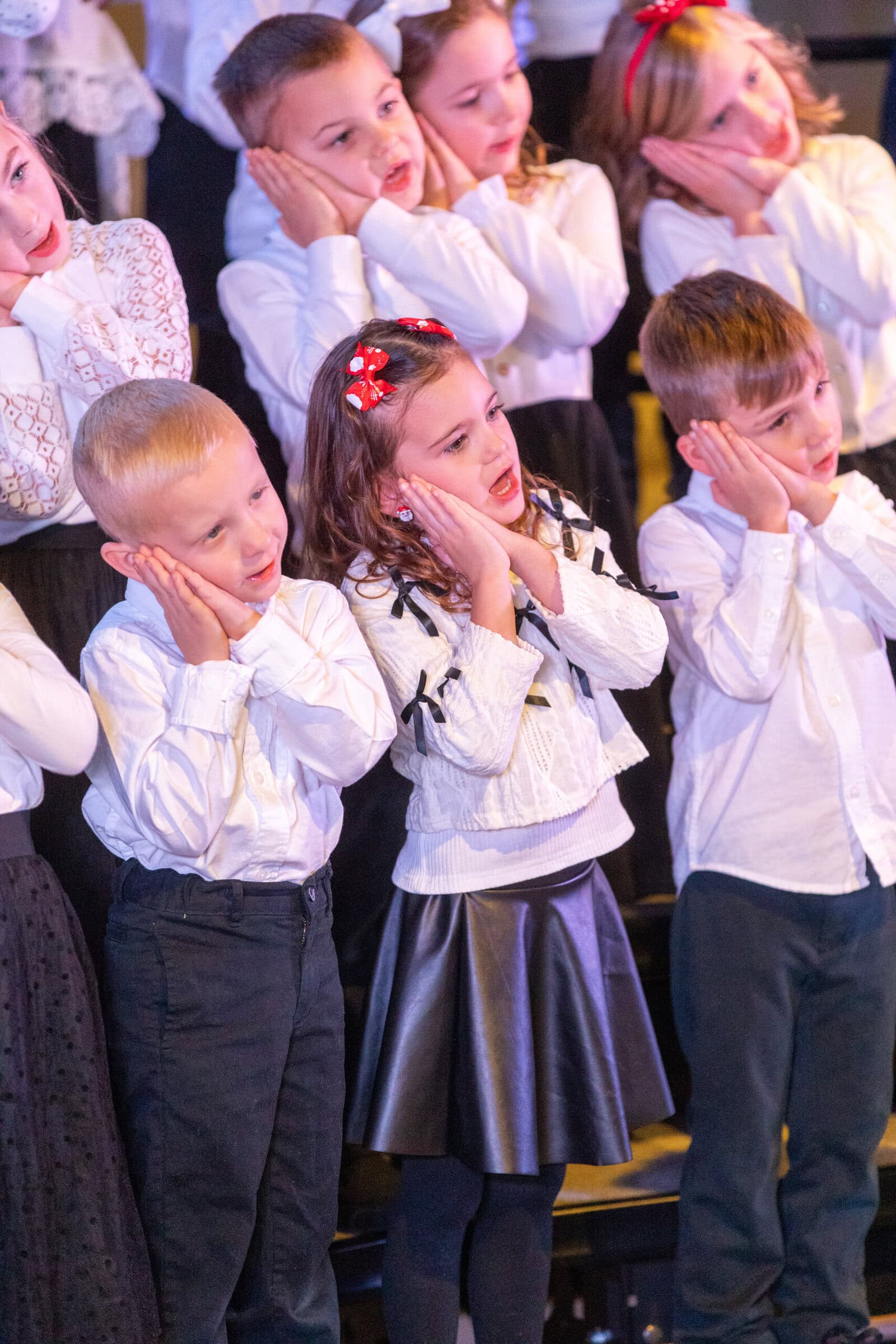
Valley Troubadours early childhood choir
I have spent more than three decades as a music educator, and this chapter has been the most surprising and the most hopeful of my career. It has reminded me that the fundamentals of our work (ensemble, mentorship, the shared discipline of making something beautiful together) travel well beyond the walls of a traditional school.
There is an advocacy dimension here too. Every one of our students is forming a lifelong relationship with music: a future audience member, ensemble volunteer, and, in some cases, the next generation of music teachers. These young musicians are part of our profession’s future, and they are ours to welcome. Music education is stronger when its tent is wide.
If you are a music educator curious about serving the homeschool families in your own community, I would welcome the conversation. This branch of music education is still taking shape, and I believe it has room to grow in every state. We are figuring it out together, which, come to think of it, is exactly what an ensemble is for.
Did this post spark ideas for your own program or community? I would love to hear them.
About the Author
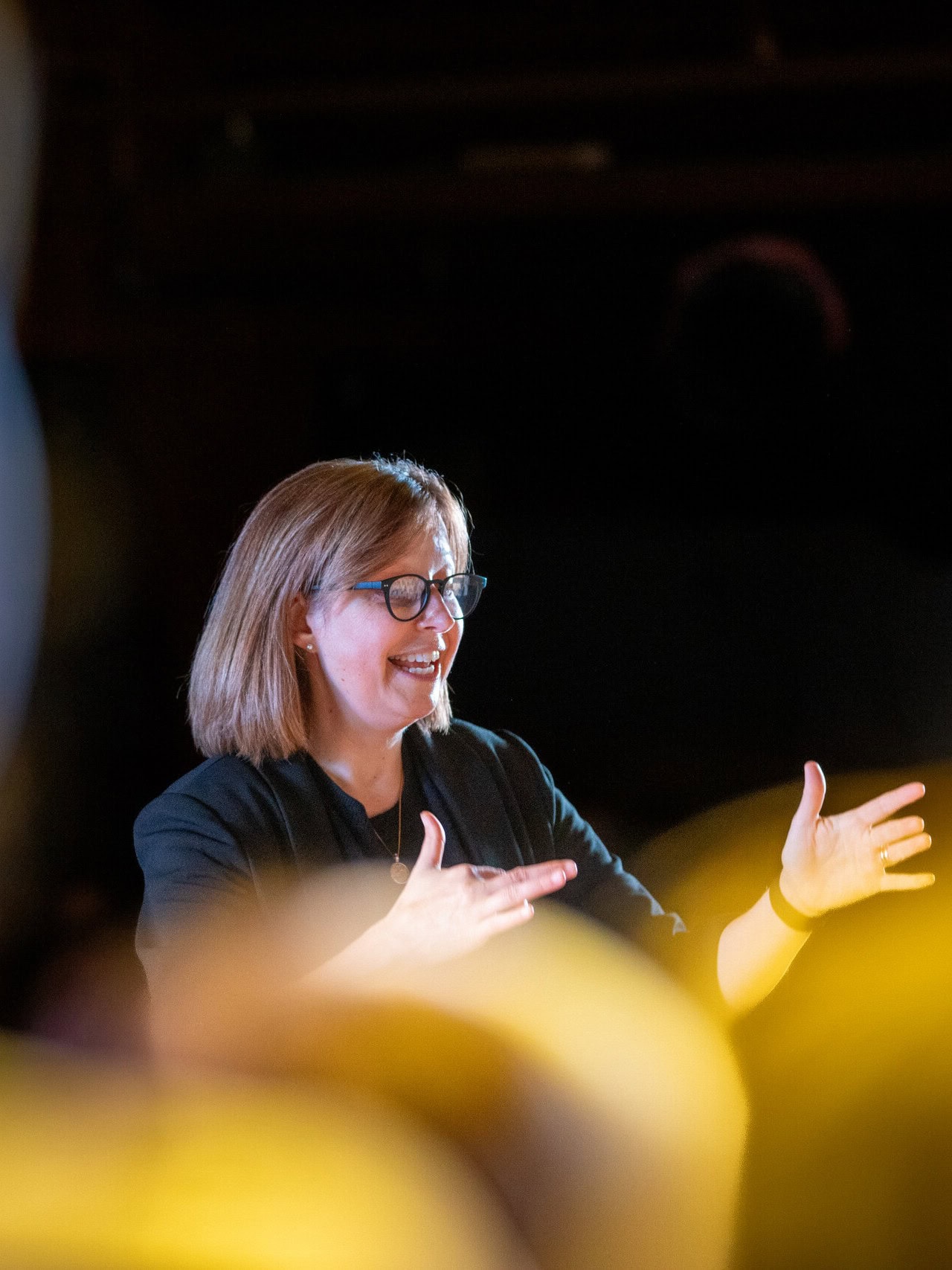 NAfME member Cathy LaFrombois is the Founder and Executive Director of the Valley Troubadours Homeschool Music & Theater Program in Appleton, Wisconsin, where she serves as Director of Bands & Choirs. A music educator for more than thirty years, she holds a Bachelor of Music in performance and education from the DePaul University School of Music in Chicago, is pursuing a Master of Music Education from Boston University, and performs on oboe and English horn. Her ensembles have earned Division I ratings and Exemplary Performance Awards. A homeschooling parent herself, she founded Valley Troubadours in 2013 and has grown it into what is likely the nation’s largest homeschool music and theater program, though no formal registry of such programs exists. She is a member of NAfME and Wisconsin Music Educators Association.
Did this blog spur new ideas for your music program? Share them on Connect! Interested in reprinting this article? Please review the reprint guidelines.
The National Association for Music Education (NAfME) provides a number of forums for the sharing of information and opinion, including blogs and postings on our website, articles and columns in our magazines and journals, and postings to our Connect member portal. Unless specifically noted, the views expressed in these media do not necessarily represent the policy or views of the Association, its officers, or its employees.