MEMBER PROFILE
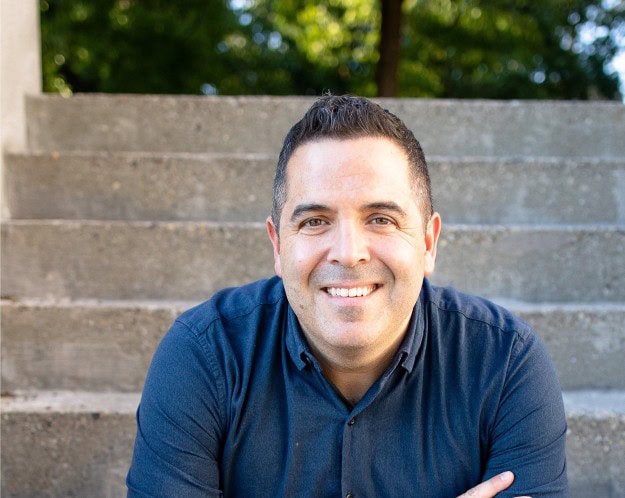
Edward Doyle
- Candidate for 2026-2027 NAfME Eastern Division President-Elect
/ Membership / Meet Our Members / Edward Doyle
What do you see as the major challenges music education will face during your term and in what ways can you transform these into opportunities during your presidency?
Music education, just like our nation, stands at a pivotal moment. Together we face cultural and political shifts that test the very purpose of public education. Music educators must reaffirm our shared belief that every child deserves access to meaningful, high-quality music learning. There are major challenges ahead such as teacher shortages, uneven participation, and inequities in access. Each issue is inseparable from the larger issues of justice and inclusion in our schools.
The teacher shortage, already striking in many areas, threatens not only our programs but also the diversity and vibrancy of our profession. To address this, NAfME must act boldly and with purpose. We can strengthen our relevance at every stage of the educator pipeline: inspiring future teachers through Tri-M chapters and outreach to high school musicians; building deep partnerships with colleges to engage pre-service teachers; and offering strong, equity-centered mentoring networks for early-career educators. When new teachers are supported by a caring professional community, they are more likely to stay and grow into leaders who mentor others in turn.
At the same time, we must recognize that retention and recruitment are inseparable from the goal. Teachers who feel unseen, underpaid, or marginalized often leave the field. Creating a culture that values all voices across race, gender identity, socioeconomic status, and geography is essential for sustaining our profession.
Another urgent challenge is rebuilding participation in school music programs, which continue to show post-pandemic disparities across ensembles, instruments, and communities. Declining enrollment is more than a logistical issue. It reveals who feels included and who feels left out. We can turn this challenge into an opportunity by forming stronger partnerships with local arts organizations and school districts. NAfME can diversify repertoire and recruitment strategies so that every student can see their culture and identity reflected in the music they make.
Through it all, I remain steadfast in my faith in music education and in our public schools. Our work has always been and should continue to be about more than concerts or contests. It is about nurturing empathy, creativity, and belonging in every child. As Eastern Division President, I would lead with conviction that justice in music education is not a separate goal but rather is the only path to a stronger, more unified profession.
What do you see as the major challenges the association will face during your term and in what ways can you transform these into opportunities during your presidency?
One of the greatest challenges NAfME faces is maintaining a sense of relevance and belonging among its members. Teachers today are stretched thin, often feeling disconnected from professional organizations that once anchored their careers. I believe NAfME’s strength lies in reminding educators that we are never alone and that advocacy, community, and shared purpose can sustain us even through the most difficult times.
During my term as NHMEA president, I saw firsthand how powerful our collective voice can be. In 2022, we faced legislation (HB 1671) that would have redefined core content and undermined the role of the arts in public education. Instead of reacting out of fear, our community came together to advocate for what we know to be true: that music is essential to every child’s education. With NAfME’s strong support, we reversed that proposal. That experience reaffirmed for me that advocacy is not something we do only when we are threatened. It is something we must practice daily, through the stories we tell, the lessons we teach, and the relationships we build.
At the same time, we must ensure that our programs grow alongside our students. Today’s learners live in a dynamic and diverse musical world. They create beats, share tracks online, and discover new genres every day. When we welcome those sounds and identities into our classrooms, we send a powerful message that every student belongs. I have seen the excitement that comes when teachers are given the tools to rethink what school music can be. Through NHMEA’s collaboration with our state Department of Education and MusicWill, over ninety teachers in New Hampshire have been trained in Modern Band, a higher percentage than any other state in the country. This work opens doors for students who might never have joined a traditional ensemble. These classrooms are vibrant, creative spaces where students see themselves reflected in the music they make.
As Eastern Division President, I want to help NAfME lead with that same spirit. I will advocate fiercely for our profession while nurturing spaces where both teachers and students feel seen, valued, and inspired. Music education has always been about connection, and in these complex times, connection is exactly what we need most.
How do you plan to advance equity/DEIA in NAfME during your term of office?
Dr. Robert Putnam’s book Our Kids has stayed with me ever since I first read it. His research on the widening opportunity gap in America deeply resonates with what I see every day in our schools. Putnam reminds us that a child’s ZIP code often determines their chances in life. As educators, we cannot accept that. In music education, that gap becomes painfully visible. Some students have access to well-funded programs, private lessons, and new instruments, while others, just a few miles away, have none of those things.
When I think back to my own childhood, I realize how fortunate I was to have teachers and programs that nurtured my love of music. Many of today’s students don’t have that same opportunity, and that truth weighs on me. I feel personally called to help close that gap, because I’ve seen what music can do for a young person’s confidence, creativity, and sense of belonging.
Making music with others has been the most meaningful experience of my life, and I want every student to feel that same spark.
During my time with NHMEA, we began to take steps in this direction. We created affinity groups for educators to share experiences and build understanding, reviewed our music libraries to remove insensitive materials, and revised the audition repertoire to reflect a broader range of artistry and cultural voices. These efforts taught me that advancing equity is not a single initiative but rather a mindset of leading and a daily commitment to listen, learn, and act.
As Eastern Division President, I will continue to lead with that mindset. Guided by Putnam’s call to bridge the opportunity gap, I want NAfME to be a place where every student, every teacher, and every community feels seen, supported, and valued. Equity in music education is about ensuring that the joy and power of music truly belong to all of us.
Equity Statement
Music has the power to change lives. It allows every student to see themselves in the greater world and to understand others through shared experience. As educators, we are entrusted with a profound responsibility: to ensure that every child has the opportunity to participate fully in that transformative experience, regardless of their background or circumstance.
Equity in music education begins with relationships. We must approach every student, every family, and every community partner with respect, empathy, and an open heart. Through these connections, we can begin to remove the barriers that prevent some students from accessing meaningful music learning. True inclusion means celebrating the diversity of all musicians, embracing differences in race, ethnicity, religion, gender, gender identity, sexual orientation, socioeconomic status, and ability, and ensuring that none of these ever limit our expectations for student success.
The pandemic exposed and deepened inequities that have long existed. As we rebuild, we must prioritize social and emotional learning, especially for students who have lost both musical and personal connections. Healing and growth happen when students feel seen and supported.
The programs that we often celebrate for musical excellence have typically been the ones with the most resources. Yet rarely do these programs represent the demographics of the nation as a whole. We professionals must change our mindset to reform the traditional definition of success, and embrace the success of music programs that serve the underserved. The traditional process of allocation of resources must also be scrutinized to ensure that every student has what they need to succeed.
These are not empty suggestions. Everyone involved in music education must look at our profession through the mindset of equity. We must tap the potential of all young musicians, allowing them to participate fully, and open their doors to higher opportunities within the world. If we dedicate ourselves to changing our focus towards equity, we can reach a dream of using music education to create a greater impact on the larger community.
Leadership Statement
Of the many qualities that define a great leader, a sense of perspective remains one of the most important. Perspective means having both a clear understanding of how organizations operate and an awareness of the diverse interests and concerns that shape our profession today. During my leadership in NHMEA, a relatively small state association, I worked closely with programs in the rural regions of New Hampshire while also serving daily in the vibrant and diverse school district of Manchester. Our district serves more than 13,000 students, over half of whom receive free or reduced lunch and speak more than seventy-five languages. These experiences have given me a perspective that extends far beyond the boundaries of my state.
As Eastern Division President, one of my primary commitments will be to empower state associations to reach their fullest potential. As part of the NAfME Executive Board, I will work to ensure consistent and open communication across associations of all sizes. Our goals and plans must be unified, but our approaches can and should reflect the unique character of each state association. Clear objectives, paired with trust in local leadership, create the conditions for true collaboration and progress.
Leadership today also requires an understanding of the new voices shaping both education and culture. Music educators must stay relevant to current trends in music and society, engaging with government leaders and community advocates to ensure that our profession continues to thrive.
Above all, effective leadership begins with listening. Respect for the many passionate voices in our field is essential, but we must also be intentional about including those who have been historically marginalized. Our highest priority must be to celebrate the experiences that reflect our students’ lives and to ensure that every learner sees themselves represented in our collective work. I will encourage every state association to commit to that mission and to lead with empathy, inclusion, and purpose.