Candidate for Division President-Elect
Amy Symes
- Western Division
- NAfME
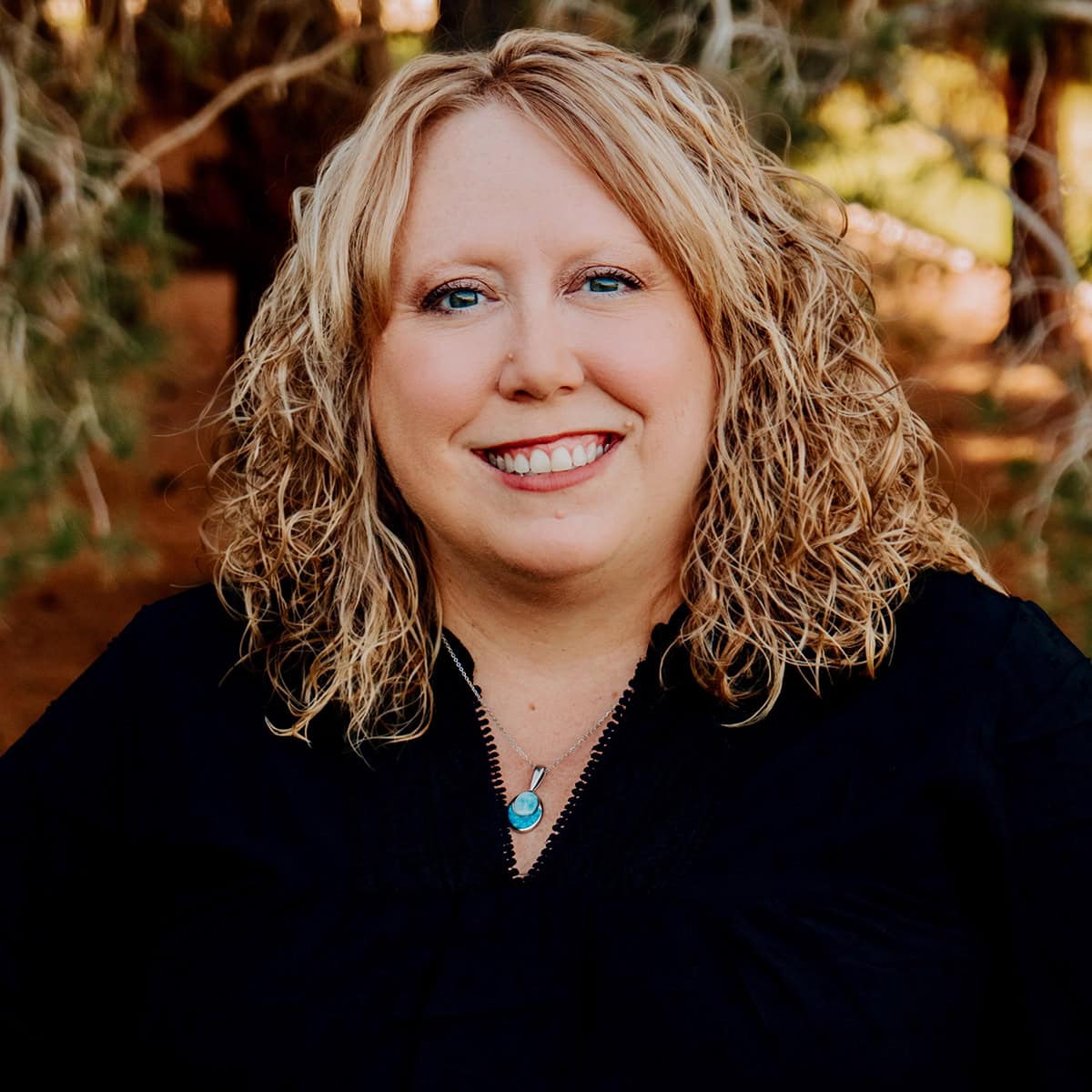
/ About / Person / Amy Symes
Responses to Questions
- What do you see as the major challenges music education will face during your term and in what ways can you transform these into opportunities during your presidency?
Over the past few weeks in Nevada, school budgets have been slashed, teachers are facing the possibility of being RIFed, and enrollment is at an all-time low. These are trends that are impacting school districts across the United States and seeing them firsthand has been challenging. Even more troubling is seeing data-driven decisions negatively impact music classrooms and, ultimately, students’ access to music education.
While these challenges are significant, I believe they also provide an opportunity to step back, examine the situation from multiple perspectives, and focus on what we know is working. Rather than allowing ourselves to be defined by the challenges facing music education, I want to focus on our successes and use them to tell a stronger story about the value of music education.
One of my priorities would be gathering meaningful data. How many schools offer secondary music programs? How many students have access to general music or elementary music? What can we learn from participation in Music Educators Association All-State programs and ensembles? We need to understand not only where music education exists, but where opportunities are being lost and where we can expand access.
At the same time, we need to gather the stories behind the data. I want to engage parents, community members, educators, and students in shining a spotlight on the impact music education has, not only on students’ musical development, but on their confidence, relationships, sense of belonging, and success beyond the classroom.
During my presidency, I would work to transform these challenges into opportunities by strengthening advocacy, expanding meaningful professional development, increasing support for teachers and students, and building stronger partnerships with parents and communities. Most importantly, I want us to be able to clearly articulate the long-term impact of music education and equip our educators and advocates with the data and stories they need to demonstrate why music education matters.
Our greatest opportunity is not simply to defend music education when it is threatened, but to proactively demonstrate its value before the cuts, enrollment declines, or policy decisions ever reach our classrooms.
- What do you see as the major challenges the association will face during your term and in what ways can you transform these into opportunities during your presidency?
I believe the challenges NAfME will face over the next several years are reflective of the pendulum swing taking place in education. Reductions in the teaching workforce, decreased school funding, the challenges facing higher education, and the need to continually demonstrate the value of music education will have an impact on our profession and on the work of our association.
I believe we can transform these challenges into opportunities by ensuring that NAfME remains visible, transparent, responsive, and forward-thinking. We must continue to communicate what music education does for students today, but why it matters to the 21 st-century learner and to the communities and workforce of tomorrow. Our advocacy must extend beyond music educators to parents, administrators, policymakers, business and community leaders, higher education, and other stakeholders who have a role in shaping the future of education.
Transparency and communication will be critical. NAfME must ensure that members and stakeholders understand the work of the association, have access to its leadership, and feel that their voices are heard. I would like to create more opportunities for NAfME leadership to engage with members and stakeholders—to listen, provide perspective, offer support, and build a stronger collective voice for music education.
Ultimately, I see these challenges as an opportunity for NAfME to strengthen its role as a leader and advocate for music education. During my presidency, I would work to ensure that NAfME is not simply responding to changes in education but helping to shape the conversation about what a meaningful, well-rounded education should look like. Our goal should be to ensure that music education is not viewed as an extra, but as an essential part of the educational experience for every student.
- How do you plan to advance equity/DEIA in NAfME during your term of office?
I believe that every student, regardless of where they live or the circumstances of their school, should have access to a high-quality music education. To me, equity in music education means recognizing that “equal” does not always mean “equitable.” Different communities may need different levels of support to provide students with meaningful opportunities to participate, create, perform, and experience the lifelong benefits of music.
I grew up in a small, rural school in Iowa, where I saw firsthand the disadvantages that smaller and less-resourced school districts can face. In my career, I have also seen many of these same challenges in urban schools and communities. These experiences have shaped my belief that NAfME must recognize and respond to the unique needs of rural, suburban, urban, and underserved schools.
During my term, I would like to increase the visibility and voice of smaller and rural music programs while continuing to advocate for schools and communities that need additional support. In many of these schools, there may be only one music educator, the proverbial “one-person band,” responsible for building an entire program, often with limited resources, professional support, or opportunities to collaborate with colleagues. These teachers may be early in their careers and may not even know what resources are available to them.
NAfME can help bridge that gap by intentionally connecting educators with one another. We need to ensure that teachers in every community know they are part of a larger profession and do not have to navigate these challenges alone.
Equity Statement
I believe equity in music education begins with a simple premise: every student deserves the opportunity to experience the power of music, regardless of where they live, the school they attend, or the circumstances of their community.
My own experiences have shaped this belief. Growing up in a small rural school in Iowa, I saw firsthand how geography and resources can influence educational opportunities. My experiences are reminiscent of the states that the Western Division of NAfME represents. Throughout my career, I have also seen that these challenges are not unique to rural communities. Urban and suburban schools face their own barriers, and equity requires us to understand and respond to the unique needs of each community rather than applying a one-size-fits-all solution.
As President-Elect and ultimately President, I would work to ensure that equity remains embedded in how NAfME listens, leads, advocates, and serves its members. That means intentionally elevating voices that may not always be represented in national conversations, including educators from rural and small schools, under-resourced communities, early-career educators, and those serving students with diverse needs and experiences.
I also believe that supporting teachers is one of the most important ways we advance equity for students. A teacher who is the only music educator in a school can feel isolated and may not know where to turn for resources, mentorship, or professional learning. NAfME has an opportunity to connect those educators to one another and to the broader profession.
Equity is about removing barriers, expanding opportunity, and ensuring that people feel seen, heard, valued, and supported. My goal would be to help NAfME become an association where every music educator can find a place, every community has a voice, and every student has the opportunity to make music.
Leadership Statement
I believe leadership begins with listening, building, and maintaining relationships, and a commitment to serve others. Throughout my career as a music educator, I have learned that meaningful progress happens when people feel heard, valued, and empowered to contribute. My leadership is collaborative, transparent, and grounded in the belief that our greatest strength comes from learning from one another.
As a leader, I strive to build bridges between educators, between state associations, between school settings, and between the classroom and the larger educational community. I believe the Western Division is strongest when every music educator, regardless of location, teaching assignment, or experience, has a voice and feels connected to our profession.
My experience as a classroom teacher, department and school leader, arts integration advocate, and state association president has taught me the importance of turning ideas into action. I have seen firsthand the power of professional networks, advocacy, and strong association leadership to create opportunities for educators and students. I also understand the unique challenges faced by music educators across a geographically vast and diverse division.
As President-Elect, I would lead with curiosity, collaboration, and purpose. I would work to strengthen communication and connections across the Western Division, amplify the voices of educators, support state leadership, and advocate passionately for music education. Most importantly, I would approach this role as a servant leader—someone who is willing to listen, learn, bring people together, and help our profession move forward.
I believe the future of music education depends on leaders who are willing not only to speak for our profession, but to create space for others to speak, lead, and shape its future. That is the kind of leader I strive to be, and the kind of leader I would bring to the Western Division.
Job Position
Director of Choirs
Organization
K.O. Knudson Academy of Creative Arts