Candidate for Division President-Elect
Chad Zullinger
- Western Division
- NAfME
/ About / Person / Chad Zullinger
Biography
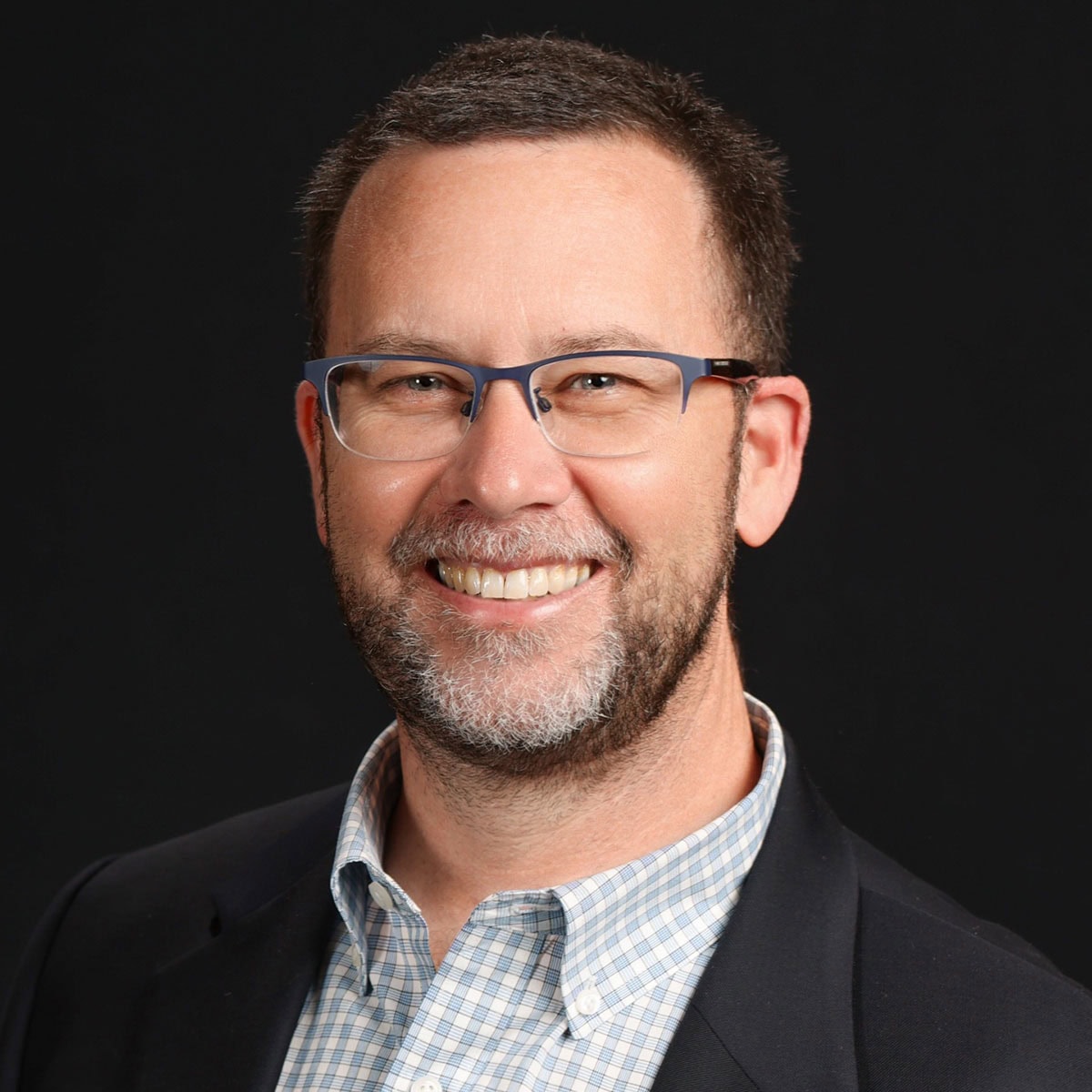
Dr. Chad Zullinger is an Assistant Professor of Music Education at California State University, Sacramento, where his teaching focuses on choral, general music education, and preservice music teacher preparation. In addition, he serves as Immediate Past President of the California Music Educators Association (CMEA). Mr. Zullinger earned his BM in Composition at San Francisco State University, MM in Choral Conducting from the University of Delaware, and a DMA in Music Education at Boston University.
Chad is a self-taught guitarist who grew up participating in small groups (rock bands), in and outside of school, as well as creating music at computer workstations using MIDI keyboards, devices, and software. After attending San Francisco State University, he taught for over 20 years in a variety of classes including band, chorus, general music, and popular music performance in K-12 public school and university settings. His choirs consistently earned top ratings at state festivals that led to performances and ensembles earning accolades from prestigious organizations and associations, both regionally and abroad.
Dr. Zullinger has presented on topics in in post-secondary music curriculum and pedagogical practices with numerous NAfME state affiliates and at research conferences including the Suncoast Music Education Research Symposium, Research in Music Education (RiME), the Society for Music Teacher Education (SMTE), and the Desert Skies Symposium. In these contexts, he guides participants to engage reflexively, creatively, and critically with pedagogical approaches to curriculum and experiential learning across multiple musical disciplines and settings. He explored these themes in the book chapter, “Digital Audio Workstations and Participatory Learning,” in The Modern Band Handbook: Practical Perspectives and Lessons for Music Educators with Oxford University Press.
Dr. Zullinger’s dissertation, Experiences of Multi-Musical Music Educators In/Through U.S.-Based Preservice Music Education Programs, explored the perspectives and values of self-defined, multi-musical preservice and in-service music educators. This research examined current and past experiences of preservice and in-service educators and, alongside participants, developed a vision of how teacher education programs might embrace hybridized, multi-musical identities as central to program frameworks. He looks forward to continuing these paths of research, as well as seeking out opportunities for collaborative and creative work with the music education community in the greater Sacramento region.
Responses to Questions
- What do you see as the major challenges music education will face during your term and in what ways can you transform these into opportunities during your presidency?
The field of Music education is evolving alongside the students and communities we serve. Today’s educators are navigating rapidly changing student interests, new technologies, shifting educational priorities, teacher workforce shortages, and increasing demands on schools. These realities can understandably feel daunting, but I believe they also invite us to ask an important question: Who are we becoming as a profession?
Students arrive at our classrooms with diverse musical experiences, identities, and ways of making music that extend far beyond traditional school ensembles. Rather than viewing these pathways as a departure from what music education has traditionally been, I see them as opportunities to imagine what music education can become, while continuing to strengthen the excellence of band, choir, orchestra, and jazz.
Our opportunity is to think more expansively about who participates in school music and the experiences we can create for them. We should continue asking whether our programs and curricula make space for the musical identities students already bring with them, while also considering the students who have yet to find a place within our classrooms and programs. The future of music education depends not only on preserving what is established, but on remaining curious about what else is possible. By creating multiple pathways for students to engage in music, we can broaden participation while remaining grounded in meaningful music-making, creativity, collaboration, and the sense of community that have long defined music education in our country.
- What do you see as the major challenges the association will face during your term and in what ways can you transform these into opportunities during your presidency?
Professional organizations, like classrooms, are never static. They evolve as the needs of educators, students, and communities evolve. I believe one of the most important responsibilities of NAfME leadership is ensuring that our organization continues to grow alongside the profession it serves. Our association represents extraordinary geographic and cultural diversity, as well as a wide range of teaching contexts and musical experiences. Rather than viewing diversity as a challenge, I see it as one of our greatest strengths. Every state brings unique perspectives, successful initiatives, and innovative ideas that can strengthen NAfME regions across the country.
My goal would be to cultivate stronger relationships across our member states by creating opportunities to listen, collaborate, and learn from one another. Associations are at their best when they create space for thoughtful dialogue, elevate successful work already happening in our states, and help members feel connected to something larger than themselves. Together, we can continue building an organization that is responsive, forward-thinking, and deeply committed to serving educators throughout the association.
- How do you plan to advance equity/DEIA in NAfME during your term of office?
For me, equity begins by asking a simple question: Are we creating opportunities for every student to see themselves reflected in music education? Students enter our classrooms with rich, musical identities shaped by family traditions, community experiences, technology, popular culture, and many other influences. We can build upon these experiences and create new pathways that invite more students into meaningful music-making in our classrooms.
Throughout my career, I have been guided by the belief that our profession grows when we expand opportunities with and for others. Whether through supporting emerging forms of school-based music making, developing new leadership opportunities, or encouraging broader participation within our national, regional, or state NAfME organizations, I have seen how creating new pathways can foster belonging while enriching the musical experiences of both students and educators. As Western Division President, I would continue to support conversations that help states expand access, welcome diverse perspectives, and think through together how we can create environments where every student has opportunities to grow, contribute, and be seen and heard.
Equity Statement
When my students are engaged in learning activities, drawing on a curiosity that has cultural and personal value in their lives, I feel most effective as an educator facilitating an environment where the teacher and student co-construct meaning and knowledge in the learning space attentive to students’ unique needs. In order to meet my students at their cultural and lived experiences, this pedagogy requires an approach to teaching and learning that functions as a bridge to the diversity of cultural experiences within the classroom, allowing the teacher and student to co-construct a learning space that is attentive to their unique needs. Every student is recognized as having a specific perspective and is given the opportunity to express this in the learning environment.
Throughout my career, from elementary and secondary classrooms to preparing future music educators, I have worked to create learning environments that recognize students as active participants in their education. This means listening to their voices, providing meaningful opportunities for choice, and designing experiences that connect learning with their identities and lived experiences. It also requires us to continually reflect upon whose knowledge and experiences are represented in our classrooms, and whose might be missing.
My experiences as a music educator range from elementary music classrooms through secondary general and ensemble, and in my current capacity, working with preservice music teachers at California State University, Sacramento. Several of my teaching positions were at Title 1 schools in the California Bay Area where music offerings (if any at all) did not include traditional ensemble class offerings. As a result, I had to draw upon my personal experiences in popular and informal styles, and in some instances, create music classes with minimal barriers to instruction that were inclusive and accessible for students with little to no prior formal music experience.
Equity, however, extends beyond what happens within the classroom. We must also consider who has, and who does not have access to our music classrooms. Band, choir, orchestra, and jazz remain important and vibrant parts of music education, while mariachi, modern band, music technology, songwriting, popular music, and multiple forms of music engagement can create additional pathways for students to participate. Expanding these opportunities is not about replacing our traditions; it is about broadening our profession so that more students can find a place within it.
Leadership Statement
Throughout my career, many of my leadership opportunities have begun from simply being asked to serve. My years of service within the California Music Educators Association eventually led to an opportunity to serve on the Executive Board as Vice President, and then as President for the last two years. Each of those experiences reinforced my belief that leadership is not defined by a position or title, but by a commitment to the people and communities we are entrusted to serve.
We inherit organizations shaped by those who came before us. For a moment, we are given the opportunity to contribute our ideas and perspective before eventually entrusting them to the next generation. I view leadership, therefore, as an act of stewardship: honoring the work that brought us here while remaining curious about who we are becoming and what might be possible next.
Throughout my career as an educator, university professor, advocate, and association leader, I have learned that meaningful leadership begins by listening. It means asking thoughtful questions, seeking perspectives different from our own, and creating conditions where people feel their experiences and ideas matter. Leadership is not about having every answer; it is about bringing people together around a shared purpose and helping a community discover possibilities collectively.
I also believe leaders have a responsibility to create pathways for others to serve. We should continually ask: Who is at the table? Whose voices are represented? Some of the most meaningful work of my own leadership has involved creating pathways for students, emerging educators, and colleagues to participate, contribute, and lead. Our organizations become stronger when leadership is something we intentionally cultivate rather than simply inherit.
As I consider the opportunity to serve the Western Division, I return to a question that has always guided my work: Who are we becoming? I would approach this next opportunity as I have those before it: with curiosity, humility, optimism, and a willingness to serve, honoring those who have led before us, while helping create opportunities for those who will lead after us.
Job Position
Assistant Professor of Music Education
Organization
California State University, Sacramento