Candidate for Division President-Elect
Jamie Minneman
- Southwestern Division
- NAfME
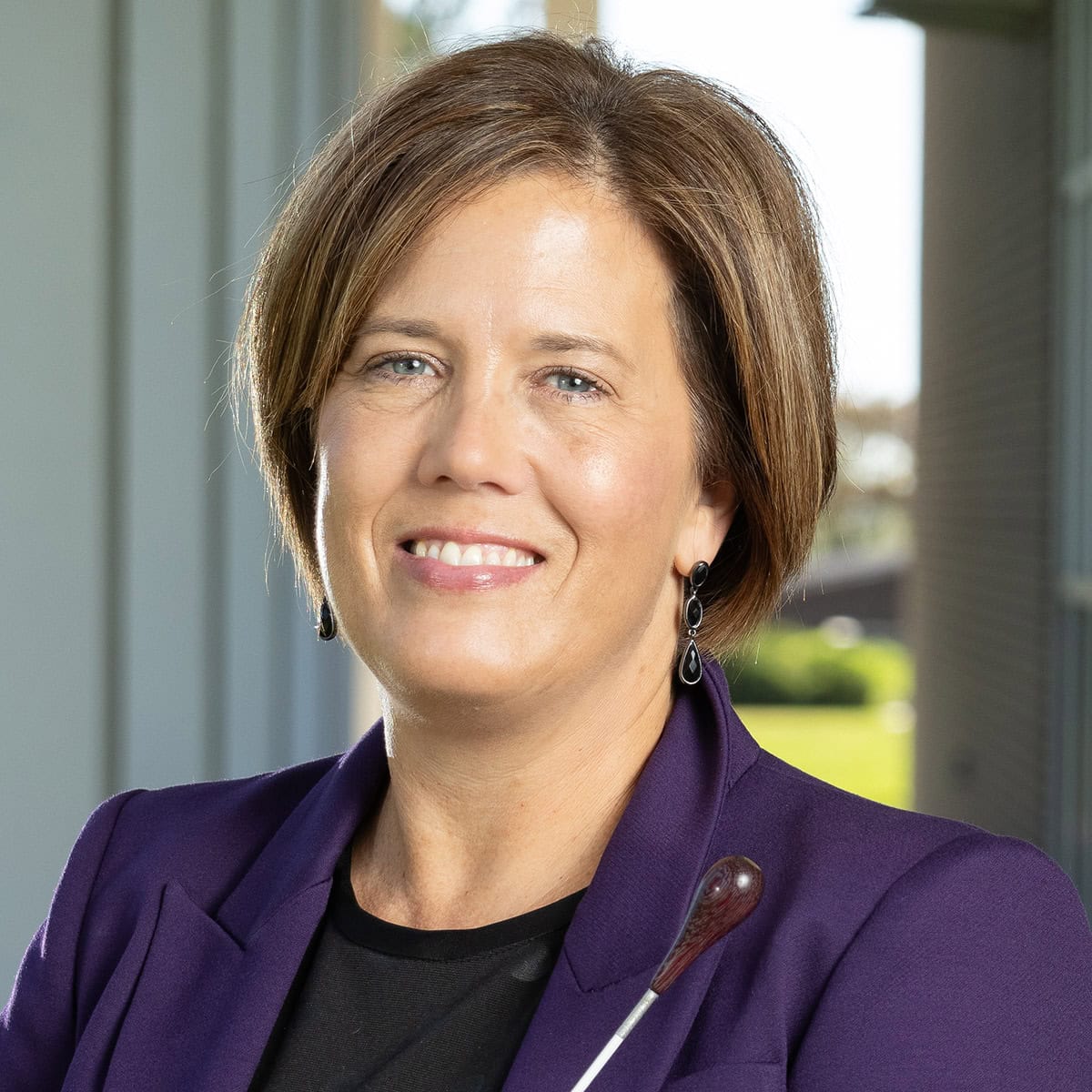
/ About / Person / Jamie Minneman
Responses to Questions
- What do you see as the major challenges music education will face during your term and in what ways can you transform these into opportunities during your presidency?
Music education will sit at the intersection of rapid technological change, shifting student needs, and evolving societal priorities. Each challenge carries the potential to be reframed as an opportunity for growth and transformation.
One of the biggest challenges will be equity and access. Funding disparities between districts continue to limit access to instruments, qualified teachers, and robust programs. We can look to expand partnerships with community organizations, leverage digital platforms for wider reach, and advocate for policy changes that position music as essential within a well-rounded education. Expanding access to low-cost digital tools and open educational resources can help level the playing field.
Another major issue is the integration of technology. This may initially feel like a threat to traditional music instruction, but it can become a powerful opportunity. By embracing technology, music education can become more inclusive of diverse musical styles and career pathways. A strong vision would promote curricula that balance foundational skills with modern competencies, preparing students for a broader musical landscape.
Teacher recruitment and retention will also be a pressing concern. Burnout, low pay, and increasing demands are pushing educators out of the profession. This challenge can be transformed into an opportunity by prioritizing mentorship programs, professional development, and advocacy for better working conditions. Elevating teacher voice in decision-making and creating leadership pathways within NAfME can also strengthen long-term commitment.
Additionally, there is the challenge of relevance—ensuring that music education reflects the cultural diversity and interests of today’s students. Programs that remain narrowly focused risk disengagement. This is an opportunity to expand repertoire, incorporate student voice, and embrace culturally responsive teaching practices. Doing so not only increases participation but also affirms students’ identities and builds stronger communities.
- What do you see as the major challenges the association will face during your term and in what ways can you transform these into opportunities during your presidency?
One significant issue is membership engagement and growth. Like many professional organizations, NAfME faces the risk of declining or disengaged membership, particularly among early-career educators. This challenge can be reframed by reimagining member value: offering more flexible, personalized benefits; strengthening mentorship networks; and creating more accessible virtual communities. Engaging students and young professionals early can build a stronger, more invested pipeline of future leaders.
Advocacy at the national and state levels will remain a critical challenge, especially as arts education competes for funding and instructional time. This is an opportunity to amplify NAfME’s voice by forming broader coalitions with other arts and education organizations, leveraging data to clearly communicate impact, and equipping members with practical advocacy tools to use in their local contexts.
The diversity, equity, inclusion, and access (DEIA) landscape will also require continued and intentional focus. Ensuring that NAfME represents and serves a truly diverse membership—and supports inclusive classrooms—is both a challenge and an opportunity. By investing in culturally responsive teaching resources, diversifying leadership pathways, and elevating underrepresented voices, the organization can become a model for equity in professional associations.
Additionally, teacher retention and professional sustainability will be an ongoing concern. NAfME can turn this into an opportunity by expanding wellness resources, highlighting career flexibility within music education, and advocating for policies that improve working conditions. Supporting educators holistically will strengthen both the profession and the organization.
Finally, organizational adaptability and financial sustainability will be essential. As member needs and external conditions change, NAfME must remain agile. This challenge can be addressed by exploring new revenue streams, modernizing operations, and embracing data informed decision-making to ensure long-term stability.
- How do you plan to advance equity/DEIA in NAfME during your term of office?
Advancing equity and DEIA within the National Association for Music Education requires more than statements of intent—it calls for sustained, measurable action that is embedded across the organization’s structures, programs, and culture. During my term, I would focus on aligning vision, policy, and practice so that equity is not an initiative, but a standard.
First, I would prioritize representation and leadership pathways. This means intentionally identifying, mentoring, and elevating educators from historically underrepresented groups into leadership roles at the state, division, and national levels. Creating transparent pathways to leadership—and removing barriers that may discourage participation—ensures that decision making bodies reflect the diversity of the profession and the students we serve.
Second, I would expand culturally responsive professional learning. NAfME can lead by providing high-quality, practical resources that help educators diversify repertoire, adopt inclusive pedagogies, and better connect with students from varied cultural backgrounds, as well as supporting teachers in implementing them with confidence.
A third focus would be equitable access to participation and resources. This involves examining membership structures, conference access, and program costs to reduce financial and geographic barriers. Increasing virtual offerings, offering tiered or subsidized membership options, and strengthening partnerships with underserved communities can make NAfME more accessible and relevant to a wider audience.
Additionally, I would emphasize member voice and community engagement. Creating structured opportunities for listening through forums, advisory councils, and affinity groups, allows NAfME to better understand and respond to the lived experiences of its members. This feedback should directly inform organizational decisions and priorities.
Equity Statement
Equity in music education means more than access; it means ensuring that every student has the resources, representation, and encouragement they need to succeed. We should strive to remove barriers to participation by addressing disparities in funding, materials, and opportunities, and by cultivating a classroom culture rooted in respect, curiosity, and belonging. I am dedicated to ongoing reflection and growth, engaging with students, families, and communities to build programs that are responsive, relevant, and just. Through equitable practices, I aim to empower all students to find their voice, express themselves creatively, and experience the transformative power of music.
Leadership Statement
I believe effective leadership is grounded in service, integrity, and a commitment to growth. As a leader, I strive to create an environment where all individuals feel valued, supported, and empowered to contribute their unique strengths. I prioritize listening, collaboration, and transparency, recognizing that the best outcomes emerge when diverse perspectives are respected and included. I view challenges as opportunities for learning and innovation, and I encourage thoughtful risk-taking and continuous improvement. I believe in leading with empathy while holding high standards, balancing accountability with support. Ultimately, my goal as a leader is to inspire others to grow, to cultivate a positive and collaborative culture, and to help individuals and organizations reach their full potential.
Job Position
Director of Instrumental Activities
Organization
Barton Community College