Candidate for Division President-Elect
Megan Kirwin
- Eastern Division
- NAfME
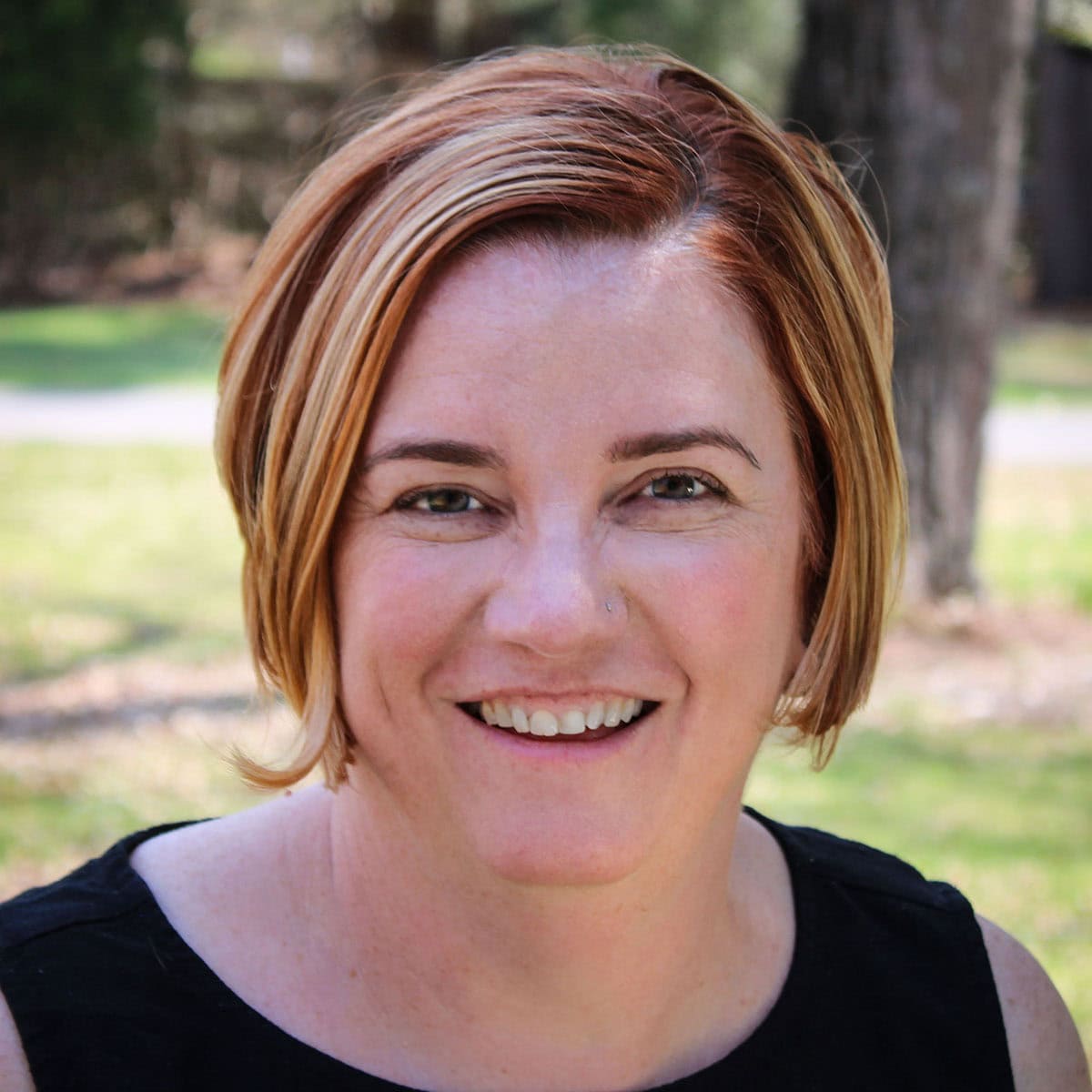
/ About / Person / Megan Kirwin
Responses to Questions
- What do you see as the major challenges music education will face during your term and in what ways can you transform these into opportunities during your presidency?
The biggest short-term challenge to music education is that no one wants to teach. The Learning Policy Institute found that in the 2024-2025 school year almost 1 in 8 teaching positions nationally was left unfilled or taught by someone not fully certified.
No new teachers mean no more music education. In order to face this challenge NAfME should be doing more to support the top of the new music teacher funnel. This means finding opportunities to talk to students studying teaching and it means supporting new teachers, so they don’t feel isolated or overwhelmed. One tactic is to use NAfME to pair new teachers with veteran teachers and provide structure and guidance to the mentorship program so that it’s mutually beneficial. The Blueprint for Strengthening the Music Teacher Profession, which was published by NAfME in mid-2023, provides just this kind of guidance. The next meaningful step is to find ways to leverage the expertise and on-the-ground experience of the membership to implement the plan.
I currently work with the new teacher training program at the University of Connecticut, and I’m interested in finding ways to leverage my position as a veteran music teacher to find creative ideas aimed at getting more new teachers interested in music education. I would use my platform at NAfME to help develop training, workshops, and long-term mentoring relationships to help new teachers feel successful. The goal would be to build a community to support new teachers and to make the profession feel more welcoming and less daunting at the onset. While we can’t control a lot of the dynamics that make education so difficult at the moment, we can control how teachers interact with each other and support one another to help build strong professional culture from the inside out.
- What do you see as the major challenges the association will face during your term and in what ways can you transform these into opportunities during your presidency?
Teachers are overwhelmed and that puts a strain on the time and motivation to volunteer. So, the question is: how can the organization change to help teachers understand the value of participation without feeling like the cost of the commitment outweighs the benefit?
All volunteer activities and opportunities should answer the basic question “What does the volunteer get out of this?”
One way to make this actionable is to continually survey the current membership and provide activities that are useful and appealing to them. Staff these activities with volunteers to build institutional knowledge, diversity, and build a feedback loop of participation. The goal would be to get creative and build programming that makes sense for busy and overwhelmed teachers. Examples could be how to use AI in music education, how to make music education more visible in local communities and beyond, how to rethink the fundamentals of music education in a changing world, etc.
How this becomes a win-win scenario is when NAfME attracts more members because volunteers feel like they are getting something out of participation. And the organization will feel more relevant to the membership if it is directly addressing their needs or current issues. Meanwhile, a more engaged base means better and more actionable feedback, which means better feedback loops, which makes it easier to continually attract new volunteers and develop new kinds of volunteer-based programming. The goal throughout is building a healthy and relevant music education organization.
- How do you plan to advance equity/DEIA in NAfME during your term of office?
DEIA work is at a critical crossroads, and it’s never been as important as it is right now. One thing that makes DEIA so challenging is that there is not a one-size fits all DEIA playbook or set of recommendations. Each state, each region, and each school district have its own priorities and own strategies, and it’s important to support those through the work of NAfME. A unifying principle throughout the DEIA work is to be supportive of difficult conversations.
As president of CMEA I took over at a critical time and worked to help promote appropriate practice and policy regarding DEIA. As a board representing the diversity of the state of Connecticut, we made the DEIA committee a permanent part of the board while writing new organizational bylaws. We enacted policies to align with the basic goal of making music education in Connecticut available for all students. One example of this work is our scholarship program to remove the financial barrier of audition and festival fees for students.
DEIA became a focal point of my time as president of CMEA. One strategy that I found helpful when navigating the important topics that are part of equity and inclusion issues was that I was always willing to listen and have difficult conversations. One takeaway from my time representing Connecticut’s music educators is that I wasn’t afraid to say that I didn’t have, or know, the answer. But I was always willing to find out or find someone that did know the answer. I talked to experts in the field and asked for help and advice, which ultimately led to new policies for CMEA.
Equity Statement
As a music educator, I believe that every student deserves the opportunity to experience the joy, creativity, and community that music brings. My teaching is grounded in the conviction that access to music education is a matter of equity and social justice — not privilege.
I am committed to creating a classroom where every student feels seen, valued, and capable of success, regardless of their background, identity, or prior musical experience. I strive to design inclusive learning experiences that honor diverse musical traditions, reflect multiple ways of knowing and creating, and celebrate the cultural richness each student brings to the ensemble.
I recognize that systemic inequities have historically shaped who has access to music education, whose music is valued, and whose voices are heard. I actively work to challenge those patterns by examining my own biases, diversifying my curriculum, and advocating for equitable access to instruments, instruction, and performance opportunities.
My goal is to empower students not only as musicians but as confident, compassionate individuals who understand that music can be a powerful force for connection and change. I believe that when we center equity in music education, we help every student find their place in the harmony of our shared human experience.
Leadership Statement
It’s important to remember that in a leadership position of a membership organization the main mission is to represent the people you’ve been elected to lead. Practically, that means a good leader should be listening more than talking, willing to get their hands dirty, be open to hard conversations and feedback, and communicate as transparently as possible.
As a leader, I am committed to fostering a culture grounded in collaboration, integrity, and excellence. I believe that meaningful progress emerges when people work collectively toward shared goals, demonstrating both hard work and mutual respect. I strive to cultivate an environment that values hard work, open dialogue, and diverse perspectives — where constructive discussions lead to new solutions and continuous improvement. Through transparent communication, accountability, and a shared sense of purpose the team can achieve their goal, and members are enabled to feel a sense of value or satisfaction with their continued membership and participation in organization.
Job Position
Director of Bands
Organization
Connecticut Music Educators Association