Candidate for Division President-Elect
Robert (Bob) Wicks
- Northwest Division
- NAfME
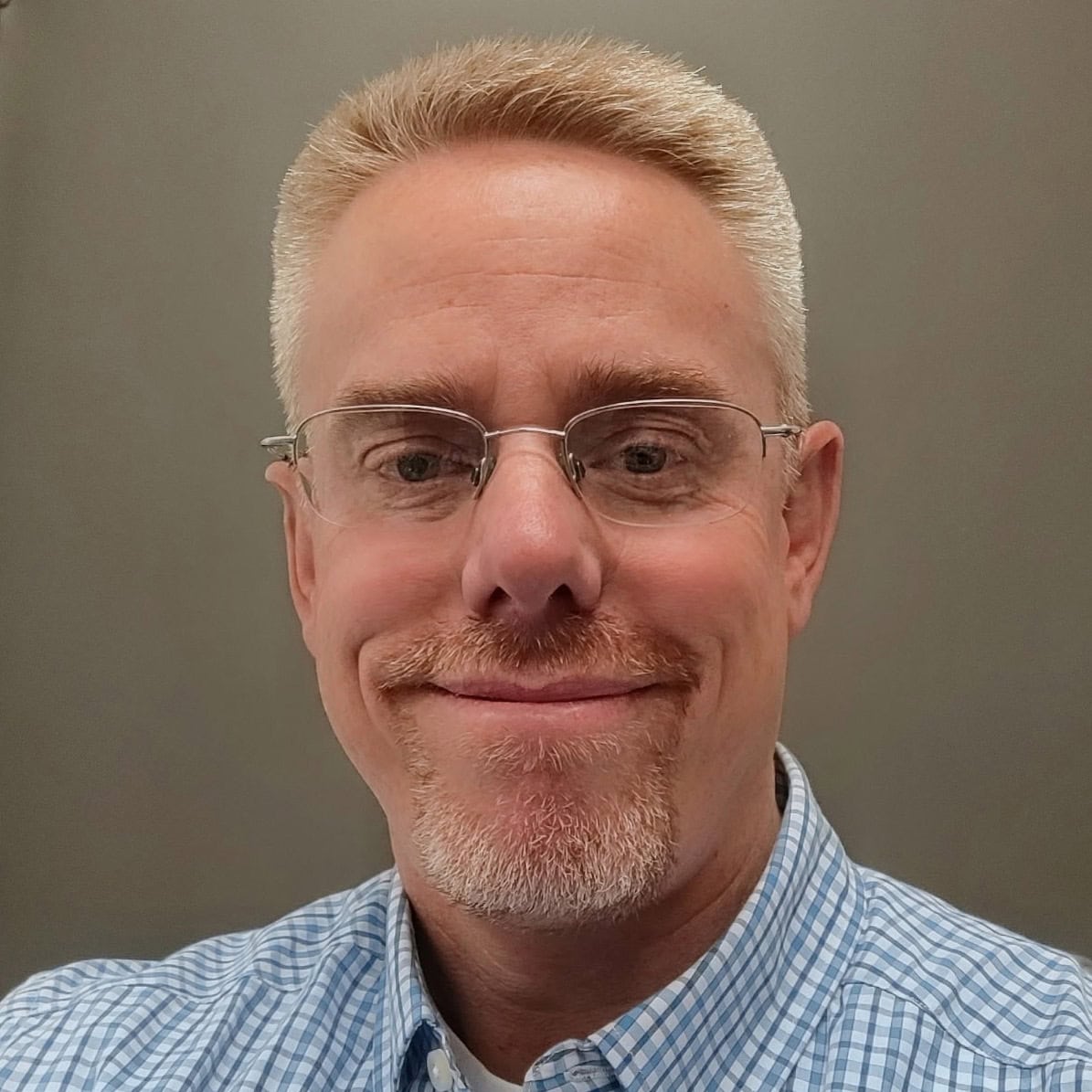
/ About / Person / Robert (Bob) Wicks
Biography
Robert (Bob) Wicks has had over two decades of service to music education as a public school teacher beginning his career teaching preK-6 General Music, 5-8 Band on the Nez Perce Reservation in Idaho, where Bob gained valuable knowledge to the importance of cultural heritage and its influence on the arts and education. Currently Mr. Wicks K-5 Elementary General Music, 5th grade Beginning Band and 6-8 Middle School Orchestra in the Lewiston Independent School District, Lewiston, Idaho.
Mr. Wicks was a major advocate for the reinstatement of the orchestral program in his district, where he began a non-paid before and after-school program providing students with instruction on orchestral instruments. Through his advocacy work with administrators and school board members the orchestra program was reinstated during the school day at the middle school and high school level and as a paid after school elementary program.
In 2006, Bob began his service to his profession as the elementary music festival chair in his region. Mr. Wicks has also served as a regional secretary, vice-president, and president before holding positions at the state level. At the state level Mr. Wicks has held the positions of Idaho All-State Mixed Choir chair, All-State Orchestra Chair, and facilitating the IMEA Strategic Planning committee in 2019 and 2024. In 2023 Bob was elected to the president cycle within IMEA and is finishing his final year as President ending July 1, 2026. Mr. Wicks’ service to NAfME has included the Equity Institute Committee and is currently a member of the Advocacy Leadership Initiative gaining vital knowledge for the advancement of Music Education.
Mr. Wicks has served on the Idaho State Department of Education textbook curriculum review team, Idaho Arts and Humanities Standards review, and GEAR UP College and Career Readiness team creating lesson plans connecting professional careers to music instruction for middle school students.
Through Mr. Wicks’ leadership the Idaho Music Educators Association became a founding member of the Arts Education Alliance of Idaho focusing on the advancement of Arts Education in the State of Idaho.
Bob holds a Bachelor of Music in Music Education and Master of Science in Curriculum and Instruction both from the University of Idaho, as well as teaching certificates in Idaho and Montana.
Bob holds level I and II Orff-Schulwerk certifications from Boise State University and has presented at IMEA Professional Development Conferences, Idaho Orff-Schulwerk conference and NAfME Northwest Music Educators conferences regarding assessment in the music room, use of children’s literature in elementary general music, standards implementation and advocacy topics. Most recently he was part of a three-person panel for the NAfME webinar Making it Happen: Navigating Advocacy as a Title I Music Educator. Mr Wicks serves as a founding member of the newly formed Arts Education Alliance of Idaho, working towards greater access for all of Idaho’s students to receive Arts instruction.
In 2016 Mr. Wicks was honored as the Idaho Music Educator of the Year award.
Responses to Questions
- What do you see as the major challenges music education will face during your term and in what ways can you transform these into opportunities during your presidency?
Education is ever changing as a reflection of societal and cultural constructs that are influenced by experiences and historical events. When changes in education transpire through national, state, and local legislative changes, Music and Arts education needs to maintain a vital part of a well-rounded curriculum focusing on the whole child. Many states are beginning to see a narrowing of curricular and course requirements.
True advocacy happens at the local level, and it is the role of leadership to empower local educators with provided resources and practical guidance strategies that positive changes can happen when people build relationships, communicate with dignity and express the value of Music and Arts education in ways that help others understand. Advocacy is not always an easy task, and it is filled with many frustrations, however these are opportunities for educators to stay focused on the goal that all students have the right to quality instruction in the Arts.
As artificial intelligence becomes more and more common in our daily lives through digital means it is important that we do not lose the human aspect of music making. Therefore, it is up to us as an organization to find healthy ways to incorporate artificial intelligence into our art form so that we are able to stay current and relevant in the lives of our students and the future of Arts Education. It will be up to leadership to help facilitate ways states can work together in devising instructional strategies, lessons and standards that can be shared to keep the Arts current and not become obsolete.
- What do you see as the major challenges the association will face during your term and in what ways can you transform these into opportunities during your presidency?
As new generations enter the field of Music Education so does a different culture and the needs of its educators. How does leadership keep our organization relevant to the needs and wants of all members? To help eliminate alienation of veteran, mid-career, novice, and future educators it is important that members know they have access to communicate concerns, needs and wants to leadership. It is then up to leadership to evaluate these needs and create priorities to help all educators be successful in their abilities to serve students.
- How do you plan to advance equity/DEIA in NAfME during your term of office?
All students have the right to instruction in Music and Arts Education, and the National Association for Music Education should be a cross section of our country’s population representing all nationalities, races, religions, orientations, etc. All people bring something different to the table and it is through these differences that we can work together with dignity, listening to understanding and collaborative efforts that we can ensure all people are seen, valued and have the resources needed for success. When people are excluded from the table, assumptions are made for them which most of the time has a negative effect on those not represented. It is the job of leadership to ensure that all voices are represented and heard for the betterment of the organization and the advancement of Music Education.
Equity Statement
All students have the right to uninterrupted instruction in the Visual and Performing Arts regardless of zip code, race, culture, orientation, religion, learning gaps and/or socioeconomic status. All students should have access to quality rigorous instruction in the Arts where no barriers hinder one’s participation and learning. It is the duty of all educators to provide relevant content instruction while protecting the safety and well-being of all students without bias.
Leadership Statement
Leadership is an act of service for the betterment of the people entrusted to their care. It is through organization, integrity, and forward thinking that one can guide others in reaching a common goal. As issues arise it is through process of discernment and evaluation that decisions can be made for the betterment of an organization. Leaders are those who have a willingness to listen to understand, communicate effectively and work in a collaborative manner with gratitude and integrity.
Job Position
K-5 Elementary General Music, 5th grade Beginning Band, and 6-8 Middle School Orchestra
Organization
Lewiston Independent School District