NAfME BLOG
Advocacy Ideas for General Music Teachers
By Kendra Kay Friar, Academic Editor of the Journal of General Music Education
This article was first published in the April 2026 issue of Journal of General Music Education.
As the school year winds down, consider the day-to-day victories that fill your year. Do your administrators and colleagues know what professional goals you accomplished? Do the parents know the student learning objectives that guided your work? Advocating for general music education takes many forms.
In January 2026, I attended Oregon’s all-state music education conference and delighted in the variety of sessions available to general music teachers like me. Oregon’s elementary offerings are so popular that they frequently attract secondary ensemble directors as well as the expected audience of K–5 teachers. One of my former college students—a K–12 music teacher in a small district—attends the elementary sessions because the enthusiasm of the participants provides a mid-year boost to his personal morale. Oregon’s general music teachers ADVOCATE for their specialization by showing up, speaking up, and welcoming all-comers to their professional development space.
In addition to enjoying elementary-focused sessions on folk dance, music games, and music literacy, I also attended a roundtable discussion of NAfME goals presented to Collegiate NAfME members by Oregon MEA President Erika Lockwood and NAfME President Cecil Adderley. The theme? ADVOCACY. Erika invited college students to attend Oregon’s first-ever Hill Day at the state capitol—modeled after NAfME’s annual Hill Day at the U.S. Capitol. Cecil shared a moving story of achieving his childhood goal of serving as a congressional page—and witnessing firsthand the legislative decisions swayed by community action.
Here are some suggestions for ADVOCATING for your program and for general music based on my classroom and community experiences:
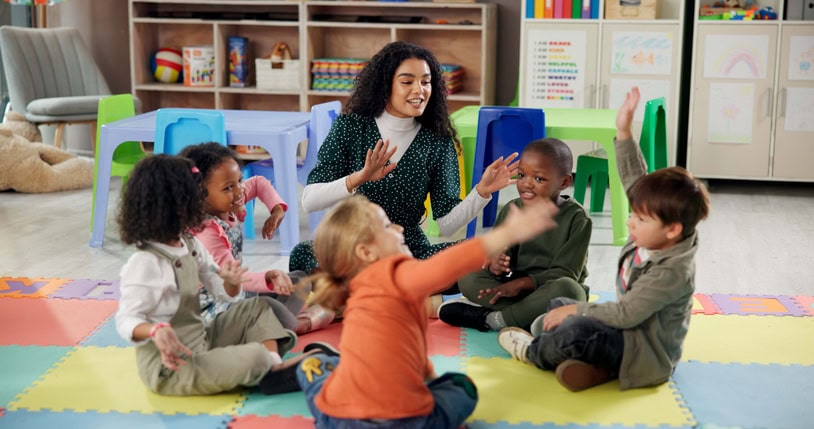
- Consider the impression of music class your students telegraph to others. One of my principals complimented me on my good work, even though she had yet to observe my teaching. I asked her how she knew what was taking place in the music room, and she said, “Every time a class of students exits your room, they are smiling from ear to ear and practically bounding out of the room. They show me that something wonderful just happened in their lives!”
- Consider the impression of music class your words telegraph to others. School days are filled with challenges, especially for those of us who interact with every student on campus. School days also include moments when teachers gather for adult conversations and “down time.” These informal gatherings present welcome opportunities for you to promote your music classroom as a place of learning and discovery. As appropriate, describe students’ milestone achievements or exciting classroom projects. Represent the positive benefits of music education to your colleagues, and let them know you are a resource for their goals as well.
- Consider the impression of music class your priorities telegraph to others. General music education is a specialized field of practice dedicated to the education of a general population of learners. In my experience, nonverbal cues such as scheduling, resource allocation, and teacher availability communicate to others the value system guiding music education programs. I once taught on a campus that housed my school district’s learning program for students with severe and profound learning challenges. My schedule, however, did not include interactions with these students. One semester, I had an open class period. With my principal’s assistance, I added the Life Skills class to my regular teaching rotation, ensuring that I fulfilled my obligation to provide music education to ALL students on my campus. My colleagues noticed this aspect of my practice and told others (with pride) that they worked on a campus where every student received equal services.

Photo: FatCamera / E+ Collection via Getty Images
You spark joy and creativity on your campus each and every day you open your classroom door to all learners. ADVOCATE for your work in any context that presents itself, from the teacher’s workroom to your own state’s Hill Day. You and your general music colleagues have valuable stories to inspire action and reflection among all audiences. Your voice is needed!
Learn more about NAfME’s Hill Day.
About the author:
 NAfME member Kendra Kay Friar is an Adjunct Professor at Pacific University in Forest Grove, Oregon. Previously, Kendra taught elementary general music in the Portland, Oregon, metro region and served as Associate Conductor of the Pacific Youth Choir, where she directed two resident choirs and supervised the neighborhood choir program. In 2021, Kendra received the Excellence in Elementary Music Education Award from Oregon Music Educators Association (OMEA).
Kendra serves as the Academic Editor of the Journal of General Music Education (JGME) and as a member of NAfME’s Equity Committee. She is also the President of Southern Washington and Oregon Kodály Educators (SWOKE), an affiliate chapter of the Organization of American Kodály Educators (OAKE). Kendra has presented sessions and webinars at national, regional, and state conferences, most recently at ACDA’s 2025 National Conference and Iowa ACDA’s 2025 Summer Symposium. Her practitioner-focused work has been published in Music Educators Journal, Journal of General Music Education, Teaching Music Magazine, and Lorenz Publications’ Activate! magazine. Kendra is also a collaborative pianist who performs regularly with the professional ensemble Portland Phoenix Chamber Choir.
Kendra is a University of Illinois Ed.D. student majoring in Educational Policy, Organization, and Leadership—Diversity and Equity Concentration. She holds music education degrees from The University of Texas (M.M.) and The University of Illinois (B.S., Elementary-General Specialization). Her research interests include critical historical discourse analysis; music education history; cultural plurality in music education curricula; and Scott Joplin and ragtime music.
Did this blog spur new ideas for your music program? Share them on Connect! Interested in reprinting this article? Please review the reprint guidelines.
The National Association for Music Education (NAfME) provides a number of forums for the sharing of information and opinion, including blogs and postings on our website, articles and columns in our magazines and journals, and postings to our Connect member portal. Unless specifically noted, the views expressed in these media do not necessarily represent the policy or views of the Association, its officers, or its employees.