NAfME BLOG
How Will the November 2026 Midterm Elections Impact Music Education?
Leadership Changes that Could Impact Priorities
By Amanda Karhuse, NAfME Assistant Executive Director, Advocacy and Public Policy
In what will likely be a record for voter turnout in a midterm election, the 2026 results will greatly change the makeup of the 120th Congress and legislatures across the country.
As of November 5, Democrats had taken control of both the U.S. House of Representatives (247-153) and the U.S. Senate (54-44) with a number of races still undecided in both chambers. Democrats had also overturned five Governor seats bringing their total to 28 with races still undecided in Alaska and Kansas. Ten state legislative chambers also flipped from Republicans to Democrats, with two more leaning toward the Democrats.
The top congressional Democrats are expected to remain in their leadership roles with Rep. Hakeem Jeffries (NY) serving as Speaker of the House and Sen. Chuck Schumer (NY) serving as Majority Leader. On the Republican side, there are already shakeups. The current Speaker Mike Johnson (LA) has announced that he will step aside setting up a potential two-way race between Rep. Steve Scalise (LA) and Rep. Jim Jordan (OH) for Minority Leader. Senate Majority Leader John Thune (SD) is expected to run for Republican leader again.
Sen. Bernie Sanders (VT) is expected to chair the Senate Health, Education, Labor and Pensions (HELP) Committee. He previously chaired the panel from 2023 to 2025 and currently serves as its Ranking Member. Sen. Sanders is the author of the Pay Teachers Act (S. 2481), legislation supported by NAfME that would set a minimum $60,000 annual salary for teachers. He has also championed proposals to triple funding for Title I.
The current Senate HELP Committee chair Bill Cassidy (LA) lost his primary race earlier this year and will be leaving Congress at the end of December. Sen. Lisa Murkowski (AK) is the most senior Republican on the committee following the losses of both Sen. Roger Marshall (KS) and Susan Collins (ME). She seems to be the top contender for Ranking Member, but she may choose to serve in this role on the Senate Appropriations Committee. In that case, Sen. Josh Hawley (MO) could become Ranking Member of the Senate HELP Committee. Sen. Hawley has been a strong proponent of school choice and introduced the Parents’ Bill of Rights in 2021. He also has been vocal about technology and the use of artificial intelligence (AI) in the classroom, co-authoring a bipartisan letter in October with Sen. Richard Bluemthal (CT) to the CEO of Alphabet Inc. and Google LLC about their AI products in schools.
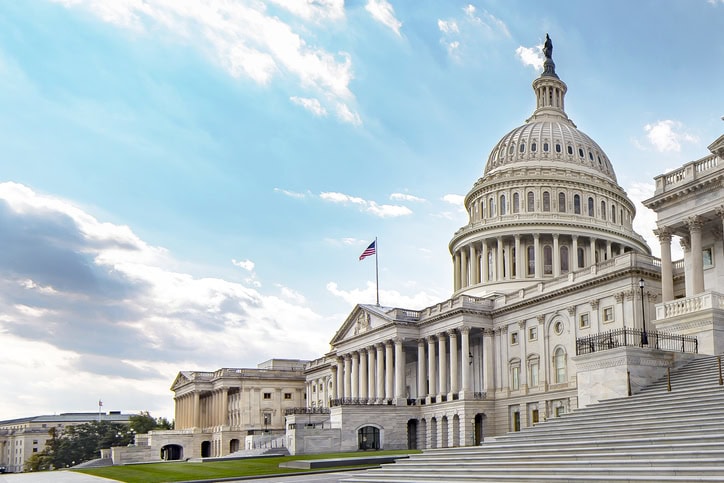
Photo by Mike Kline (notkalvin)/Moment Collection via Getty Images
On the House side, Democrats are expected once again to rename the committee “Education and Labor” instead of “Education and the Workforce.” Rep. Bobby Scott (VA) would like to continue in the top leadership position where he has served since 2015, but both Rep. Jahana Hayes (CT) and Rep. Suzanne Bonamici (OR) have announced their intentions to vie for chair position. Rep. Hayes is a former Teacher of the Year and the sponsor of the RAISE Act (H.R. 1611), which would authorize additional funding for Title II to increase teacher salaries and double the educator tax deduction for out-of-pocket classroom expenses. Rep. Bonamici is a longtime champion for arts education having introduced the Arts Education for All Act (H.R. 2485) in multiple Congresses.
Rep. Tim Walberg (MI), who currently chairs the House Education and the Workforce Committee, is expected to serve as Ranking member in the 120th Congress. He has also been a proponent of school choice and parental rights in K–12 education, but most of his term has been focused on higher education. He has championed proposals to lower the cost of college, simplify the Free Application for Federal Student Aid (FAFSA), and rolled back student debt forgiveness programs while promoting structural loan repayment reforms.
On education issues, Democrats will likely conduct oversight hearings regarding the interagency agreements and efforts to dismantle the U.S. Department of Education (ED). Ranking Member Scott sent a letter to Secretary of Education Linda McMahon the morning after the election demanding a guarantee that she will preserve documents and warned that officials and employees who violate the law “are subject to criminal penalties.” There will likely be an effort to block the use of funds to transfer ED programs and staff to other agencies as part of the Labor-Health and Human Services-Education (LHHSE) appropriations bills, which would be difficult for President Trump to block by veto without risking a government shutdown.
Ranking Member Scott has also shared his intentions to probe implementation of the Every Student Succeeds Act and the waivers approved by Secretary McMahon, which would allow states to consolidate funds under key programs, including Titles I, II, and IV-A. Many House Democrats have expressed interest in pursuing legislation on college affordability and early childhood education, including the Child Care for Working Families Act, which would expand access to preK and create a child care entitlement program. They have also supported legislation to repeal the new Federal Scholarship Tax Credit, which was enacted as part of the Big Beautiful Bill.
The top Democrats on the House and Senate Appropriations Committees, Rep. Rosa DeLauro (CT) and Sen. Patty Murray (WA), are expected to serve as chair of their respective committees.
The top order of business when Congress returns to Washington for the lame duck session is passing all twelve FY 2027 appropriations bills before the current continuing resolution (CR) expires on December 11. The House Appropriations Committee passed the LHHSE bill in June, but it has not been considered on the House floor. On the Senate side, no bills have been passed by the Appropriations Committee. If they are not able to come to agreement on final bills or pass another CR, we could experience a complete shutdown of the federal government similar to fall 2025.
This blog post on FY 2027 appropriations summarizes how the president’s budget proposal and the House bill would impact programs supporting music education. Now is also a great time to remind your members of Congress about the value of music education and why these opportunities should be made available to all students.
Interested in reprinting this article? Please review the reprint guidelines.