NAfME BLOG
Music Education Advocacy Pays Off
Music Education Advocacy Pays Off
Federal Funding Preserved for FY 2026
By Amber Friel, NAfME Communications Manager, Advocacy and Public Policy
After months of intense advocacy and lingering uncertainty, the much-anticipated Fiscal Year (FY) 2026 Labor–HHS–Education appropriations bill has been signed into law, delivering a significant victory for music and arts education programs nationwide.
Last year, the President’s proposed budget sent shockwaves through the education community, calling for a $12 billion cut (more than 15%) to the U.S. Department of Education. Those proposed reductions threatened access to a well-rounded education and put critical programs that support students, educators, and schools across the country at risk.
Thanks to strong pushback from Congress and education advocates, these cuts were largely avoided in the final bill, an encouraging and hard-earned triumph for American education.
Education Funding Maintained, Key Programs Protected
Despite proposed reductions at various points in the process, lawmakers ultimately level-funded or increased support for nearly all major K–12 education programs in 2026–27 school year appropriations.
In total, the bill provides $79 billion for the U.S. Department of Education—approximately $217 million above FY 2025 levels—sustaining investments essential to student success and a well-rounded education that includes the arts.
Key program outcomes include:
- Title I funded at $18.4 billion, providing resources to support students in schools serving low-income students, including resources that help strengthen access to arts education.
- Title II received $2.2 billion to support educator recruitment and retention, build professional expertise, and increase the number of high-quality educators nationwide—including arts instructors.
- The budget also includes $1.4 billion for Title IV, Part A (Student Support and Academic Enrichment Grants) for flexible funding that supports a well-rounded education including the arts, safe and healthy students, and the effective use of technology.
- In addition, the Assistance for Arts Education program remains funded at $36.5 million, supporting professional development for arts educators, accessible instructional materials, and strengthened partnerships among schools, districts, and arts organizations.
- Finally, IDEA is funded at $15.5 billion, to ensure students with disabilities continue to receive a free appropriate public education, including access to music and arts learning opportunities.
Together, these investments help ensure all students have access to high-quality, well-rounded education opportunities. By avoiding cuts to these vital programs, Congress has reaffirmed the importance of education—and arts education—in supporting student success nationwide.
While this funding outcome is a clear win, the final bill does not fully halt efforts to shift U.S. Department of Education functions to other federal agencies. Although the legislation includes reporting requirements for interagency implementation plans, NAfME continues to oppose fragmentation and will keep advocating for education programs to stay where they belong—within a strong, centralized Department dedicated to serving students and educators across the country.
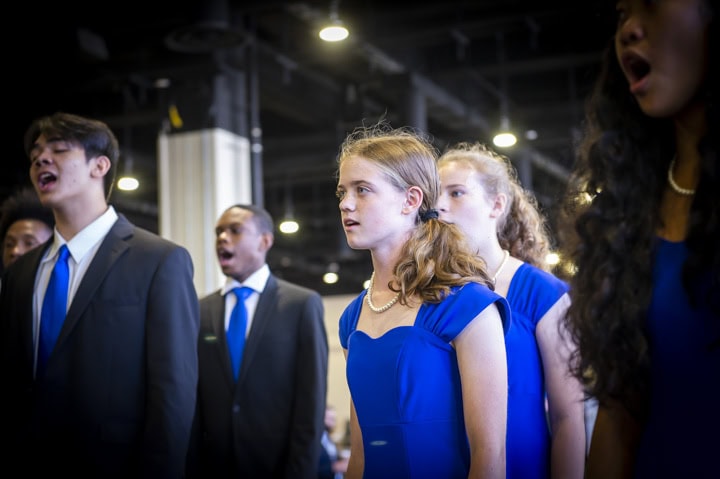
Photo: Powell Media Concepts
Advocacy Makes the Difference
This funding victory serves as a powerful reminder to advocates everywhere: Continue making your voices heard. This success may not have been possible without strong, sustained grassroots engagement.
Throughout the appropriations process, more than 930 advocates participated in a grassroots NAfME campaign, in partnership with NAMM, to contact their Members of Congress in support of music education funding. In addition, more than 2,300 advocates participated in a campaign with the broader Arts Education Alliance, collectively raising their voices to advocate for arts education funding.
We are deeply grateful to our dedicated community of advocates who consistently show up, speak out, and help secure meaningful wins for music educators and students nationwide, proving that when we join forces and advocate together, real change is possible.
Looking Ahead: A Bright Season for Music Education
With federal investments preserved for FY 2026, the near future of music and arts education looks brighter, and our community has some real momentum on which to build. NAfME will continue working alongside educators and advocates to protect these programs and push for even stronger support in the years ahead.
 This progress comes at the perfect moment as we head into Music In Our Schools Month® (MIOSM®) this March. MIOSM is a nationwide celebration of the vital role music education plays in every child’s development—and a powerful reminder that schools are where all students should have access to these opportunities. Thanks to the collective advocacy efforts highlighted above, we enter this year’s celebration with renewed confidence that music education in public schools is being prioritized at the federal level.
Now is the time to celebrate and to keep the momentum going. Take the next step to get involved with Music In Our Schools Month®! And show your support on social media with MIOSM and advocacy graphics!
To learn more about how you can stay engaged and advocate for music education, visit our Grassroots Action Center.
Interested in reprinting this article? Please review the reprint guidelines.