NAfME BLOG
Unlocking the Mystery and Beauty of the Art of Jazz
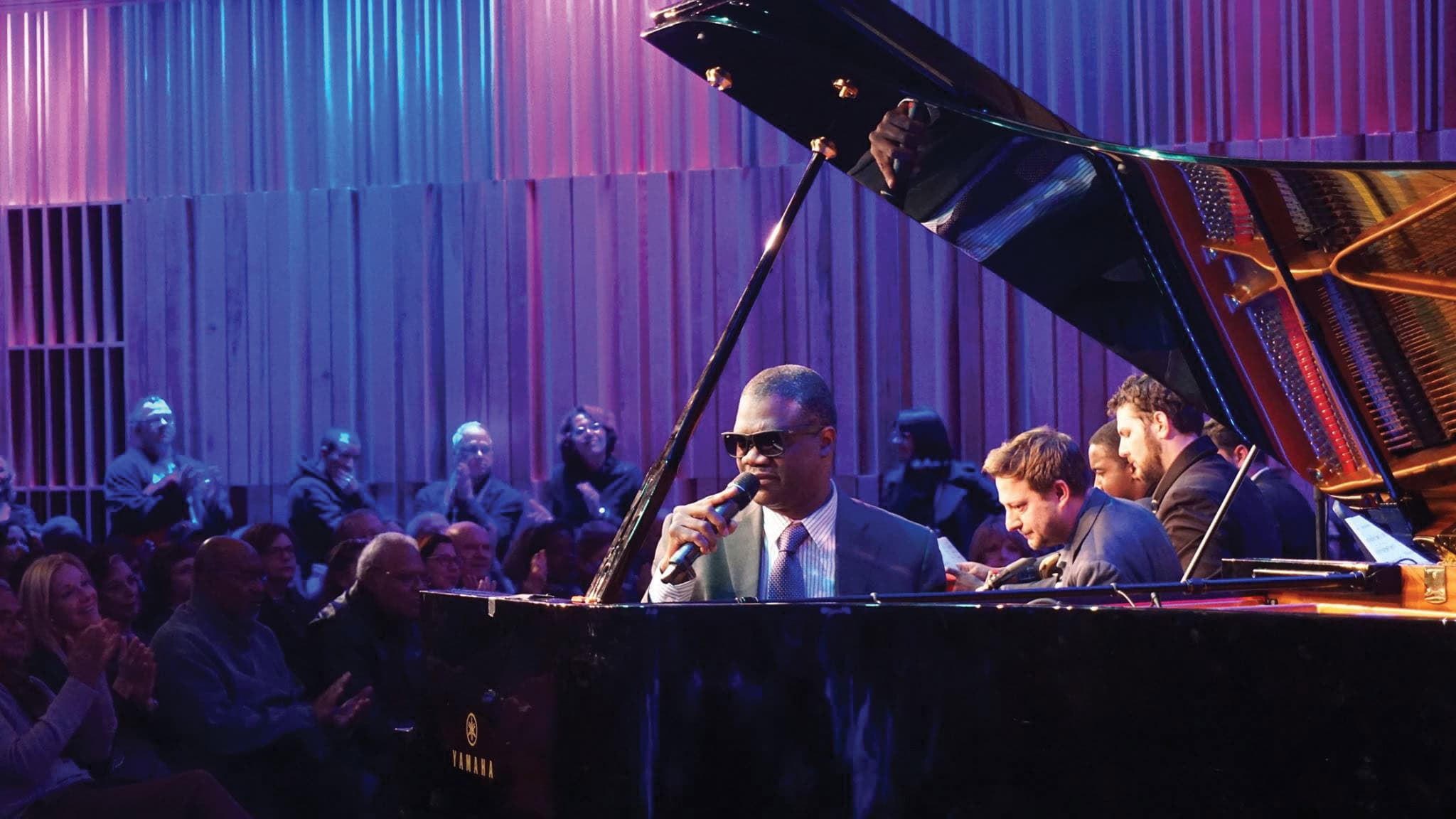
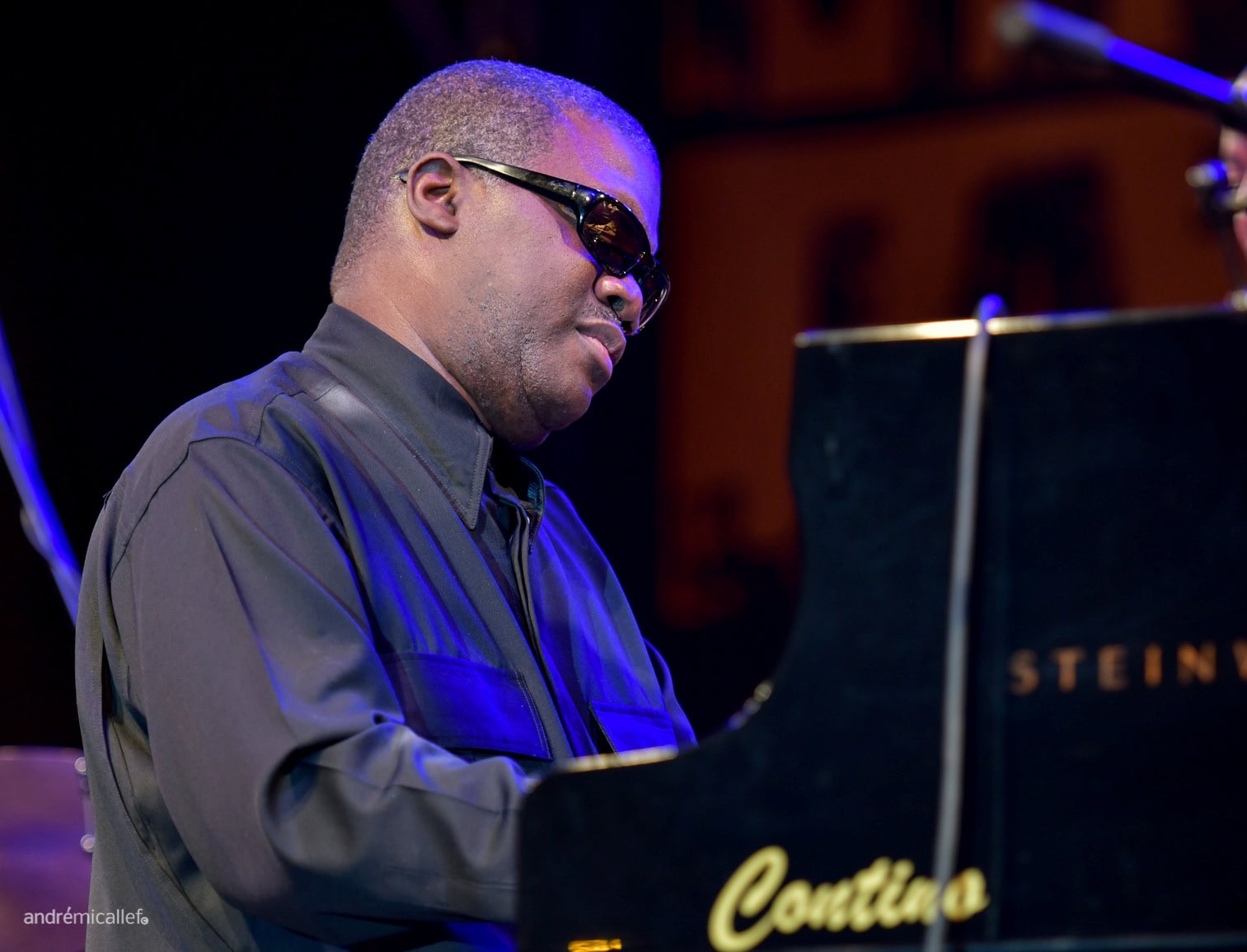
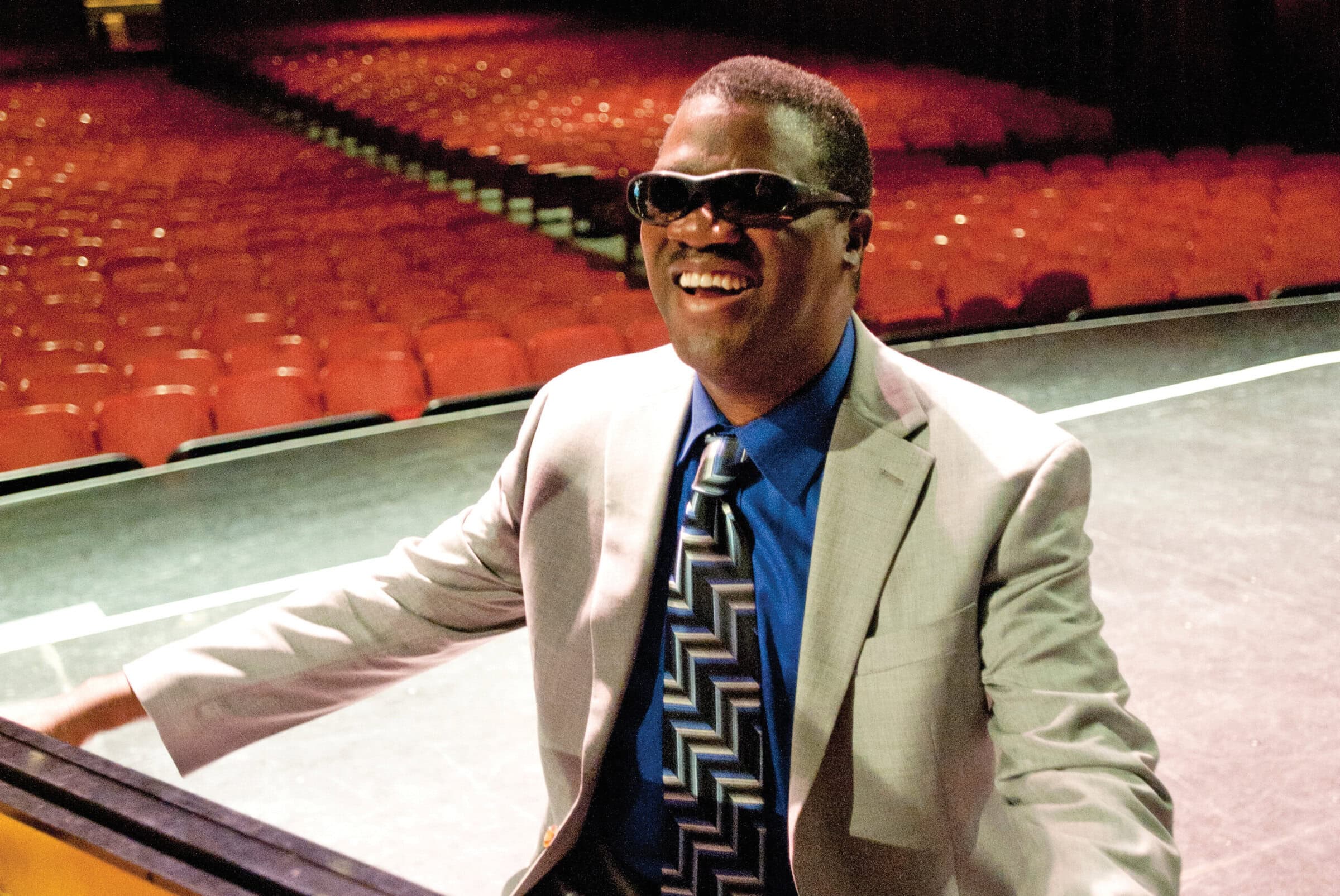
An Interview with Marcus Roberts
To commemorate Jazz Appreciation Month, NAfME’s Teaching Music Advisory Committee member Larry Blocher interviews jazz great Marcus Roberts.
Larry Blocher (LB): When did you know you wanted to be a jazz musician?
Marcus Roberts (MR): I knew I wanted to dedicate my life to unlocking the mysterious and complex beauty found in the art of jazz performance at 13 years old. It was a pivotal year. I was studying piano, saxophone, and drums at the time, and something really clicked that year with me and the music. The harmonic structures, the Ellington chords, the brilliance of Mary Lou Williams, and the soulful sounds of Coltrane really began to speak to me then.
I was fortunate that my teacher Hubert Foster, who was blind like me, taught me harmony, classical piano, and Braille music notation. He refused to let me be illiterate, and he supported my love for the music. One day before the breakthrough, I went in for a lesson, and he put on a recording of Art Tatum playing “Tea for Two.” At age 12, I was not impressed. “That’s no big deal,” I said. “Two pianists can certainly do that.” When he gently told me that that was one person playing, I knew then that my arrogant childish views needed to stop. And they did.
LB: How has your approach to jazz, improvisation, and creativity evolved over the years?
MR: I want to get better every time I sit down at the piano. That’s my goal. Just get a little deeper into understanding how I can express the power and grandeur inherent in jazz music with a little more clarity and spontaneity every day. When I started playing early in my life, I was into chords. Then I got into playing the blues. I have so many influences I could not begin to list them here, but certainly as I grew, Monk, Jelly Roll, Ahmad Jamal, Chick Corea, and many other masters have helped me to bring their language into my own voice.
Improvisation is always a matter of balancing using what I know with trusting my instincts to play what I hear while performing. I always want what I know to unlock what I don’t know. When that happens it’s truly special.
I might study a Jelly Roll Morton piece but use it in a situation where I’m playing a bebop tune from the ’50s. I do not believe in limiting myself to a 10- or 20-year period of the music. I believe the modern jazz musician can use the entire canon to draw his or her improvisational style from. Creativity always comes from the imagination and is built from knowledge, study of form, transcription work, good practice habits, and performance with other serious musicians.
I agree with Coltrane when he said during an interview: “I know certain devices that will take me out of the ordinary path. . . . I want to acclimate my ear so that I can hear.” That’s what I want to do. I want to know the music so thoroughly that I can gain inspiration on the bandstand from anywhere—from any musician that’s up there. That approach has helped to lead me to a state of subconsciousness where I’m no longer thinking but I’m just hearing what the music needs from the piano.
I use many exercises with strict limitations when I work with students, though. Since jazz has infinite possibilities for what a musician could do at any given time, it’s important to place limitations so that a student can focus on one facet of the music at a time. A lot of my teaching has to do with learning how to play jazz music with the right rhythmic feeling, which is the biggest problem I see with students. Also, typically, jazz is played by young students at two dynamic levels, loud and louder. I give the students in a group setting exercises that they must do together to start to unlock their hearing and their spontaneity.
LB: Who or what has most shaped your perspective as an artist and as an educator?
MR: My biggest influence musically comes from my mother. She’s a gospel singer. During the ages of 8 to 12, when I was self-taught, she told me that the most important thing I had to do when playing for people was to move them. She said people have to feel something deep inside when you play for them. So, I would play for her and she’d say, “I don’t feel anything from that.” I would have to keep playing until she felt something.
She also insisted that I play with real soul. No matter how complex some of my music may get, I always want there to be a throughline that a nonmusician can understand and experience in his or her own way.
As far as education goes, I learned how to teach by teaching other musicians since I was 12. I always had a band from then until now, because I wanted to compose and arrange and experiment. That meant that I had to understand what a musician’s talents were, and through my teaching, I wanted each person’s talents to be showcased while I still would work on what required attention.
I like to work with students in groups. Since in jazz everyone is improvising both as individuals and as a shared collective unit, the only way to truly learn how to make good improvisational choices is when you play with other people. This music is not about you by yourself. It is about you with other people.
I always make musicians play to the bass player, for example, and I do not allow bassists to use a lot of amplification. So, if people are set up close and can hear each other at a comfortable volume, an environment for good jazz improvisation now exists. I always say, “If you can’t hear the bass, you’re playing too loud.”
LB: What are some things you are especially proud of about your work as an artist and educator?
MR: I’m proud and honored any time I get to play for people and enrich their lives through my music. I’m proud any time a student or someone who plays with me is performing better and gaining inspiration through the music and is providing those same opportunities for other musicians. I’m blessed to be able to play a glorious instrument like the piano in different settings, including solo, trio, large ensemble, and with symphony orchestra. I’m proud and grateful when people come up to me and say that the music had a healing effect on their lives. That means a lot to me.
As an educator, I love to see young people gaining more confidence as their hard work starts to pay off. I love when they experience the true majesty and shared power that jazz music can bring out of them when they are in a group setting and they are all listening to and being inspired by each other. I love it when a student who has been struggling with a difficult concept can finally experience the feeling that comes with being able to use that concept without stress, fear, or uncertainty.
A teacher’s job is to show students how they can achieve in performance what the teacher can do. If I can play the blues well, I want them to be able to play the blues well, too. A teacher must demystify the music and make playing the music possible for the student within his or her capacity.
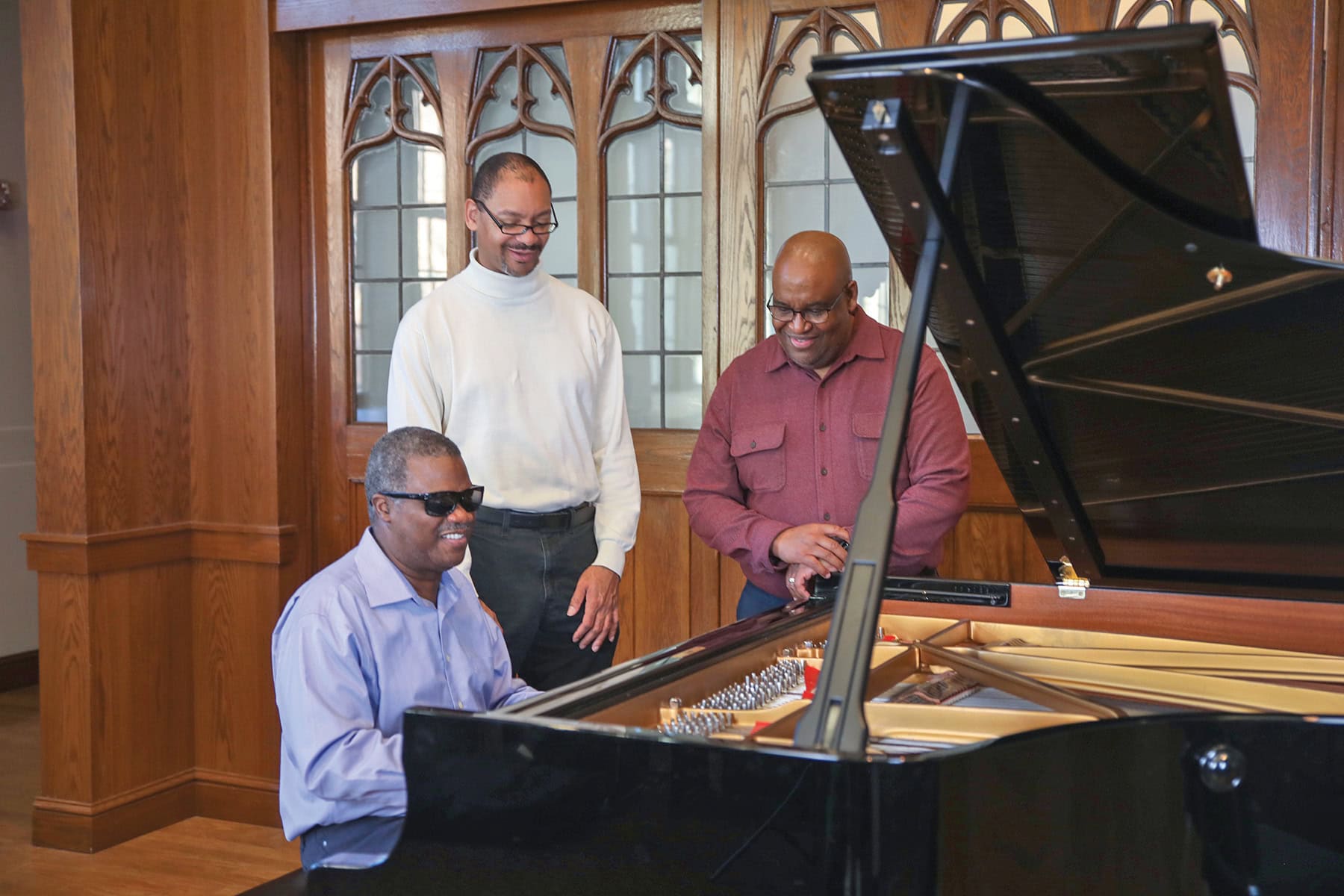
The Marcus Roberts Trio, Longmire Recital Hall, Florida State University College of Music, 2024. Marcus Roberts, piano; Jason Marsalis, drums (middle); Rodney Jordan, bass.
LB: What do you hope students experience or discover when they study jazz?
MR: I want students to experience the joy of consistent growth that is the key to being a good musician and creative force in the world. I want them to experience what it’s like to have small daily goals and measurable victories that will build over time into larger goals with measurable success.
I want students to experience the art of collaboration with others; learning how not to play too loud so they can enjoy the fruits and labor of their fellow students. I want them to experience jazz as a community. Finally, I want them to be successful and have whatever style of music they choose to play to be a source of enrichment that helps them mature and enjoy growing as adults living in a complex world.
LB: From your perspective, why does jazz matter right now—culturally, artistically, or personally?
MR: Jazz matters right now because it came from the shared struggle of a group of people who managed to develop a virtuosic but accessible music that celebrates life and the greatness of American democracy. It embodies all the important founding principles in our founding documents, and it unites individual rights and freedoms with rules that govern good citizenship and respect for others.
The blues places opposite life symbols right next to each other using syncopation to reconcile them without sentimentality by using melody, rhythm, and the distinct sound and style of each artist from Armstrong to Hancock to our present musicians of today. It’s relevant because great art is never old, any more than a great meal using great-grandmother’s recipe is old. It nourishes you just like it nourished her.
Jazz is still important because American culture is still important, and this music is a cornerstone and beacon that will always resonate globally throughout the world. We are all individual improvisors trying to shape the chaos of our lives into something beautiful that will sustain us as we share, communicate, and listen to each other.
Our ultimate goal through jazz is to make this planet a better place to be and a place where the beauty found in the blues, standards, ballads, and groove music will make every generation feel good despite their individual and group struggles. As Duke Ellington so eloquently and simply stated: “Problems are opportunities.” Jazz music can help solve them.
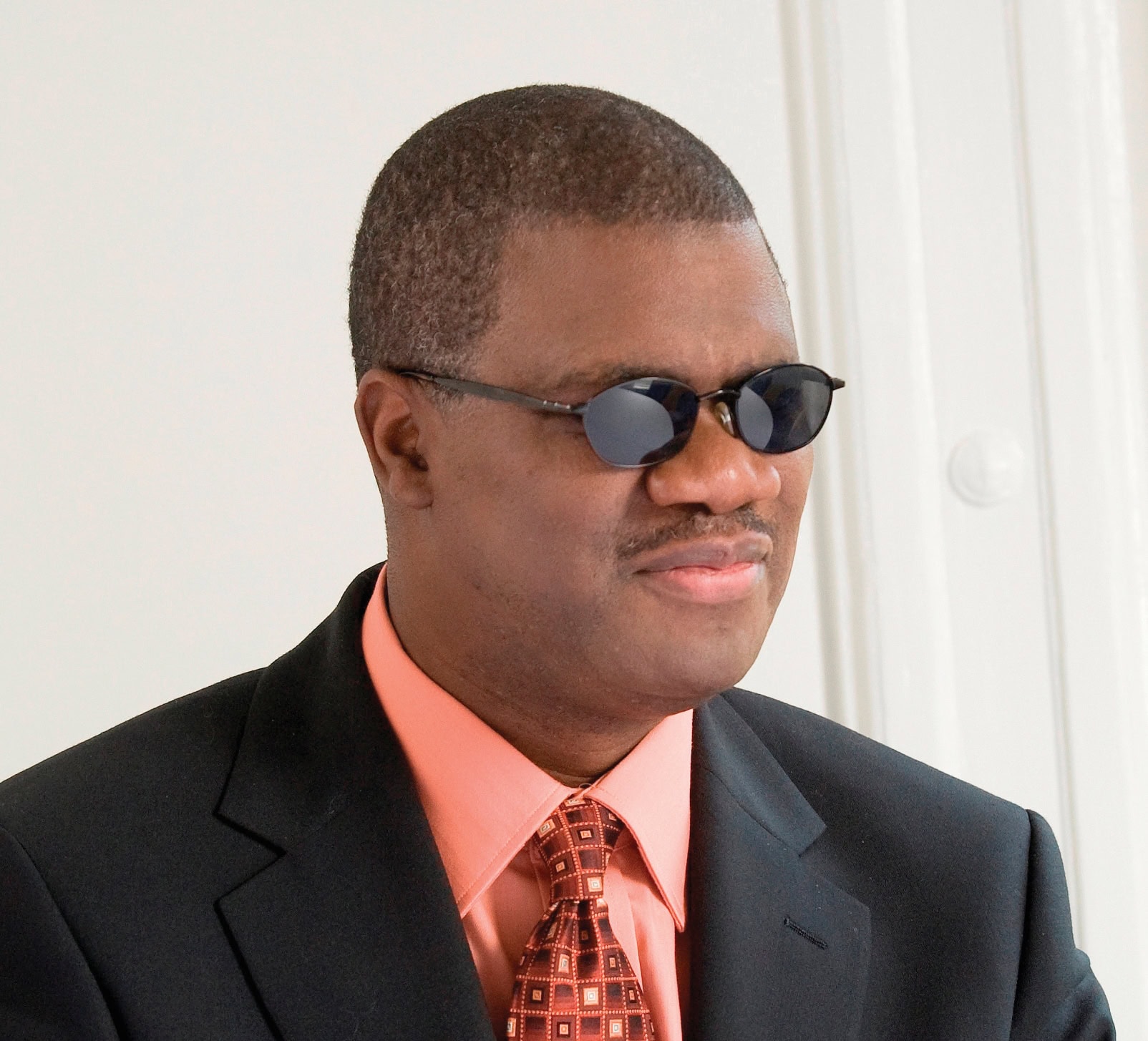 Marthaniel “Marcus” Roberts is a Professor of Jazz Piano at Florida State University in Tallahassee, where he received his bachelor’s degree. He also serves as a Distinguished Professor of Music at Bard College. Throughout his career, he has won numerous awards and competitions, including the 1982 Young Artist’s Award at the National Association of Jazz Educators conference and the Helen Keller Award for Personal Achievement in 1998. In 2024 he received the Dorothy and David Dushkin Award by the Music Institute of Chicago. In 2002 he served as an Artist-in-Residence for the Winter Olympic Games.
Roberts tours regularly with his trio and his Modern Jazz Generation band, and he has made dozens of recordings. His 1996 recording, Portraits in Blue, was the first to showcase the art of jazz improvisation within a traditional classical setting, and he continues to pursue new ways to bring the sounds of jazz and classical music together. Roberts and the Modern Jazz Generation are featured on the March 2026 recording of Harlem Renaissance with the Cincinnati Pops Orchestra.
As a composer he has received commissioning awards from organizations such as Chamber Music America, Jazz at Lincoln Center, ASCAP, the Atlanta Symphony Orchestra, Savannah Music Festival, the American Symphony Orchestra, and the Doris Duke Foundation, among others. He has written two piano concertos—Spirit of the Blues: Piano Concerto in C-Minor (2013) and Rhapsody in D for Piano and Orchestra, premiered in 2016. That piece was commissioned by Seiji Ozawa and the Saito Kinen Orchestra. His arrangements of Ellington’s orchestral works (“New World A-Comin’” and “Three Black Kings”) premiered at Carnegie Hall (American Symphony Orchestra).
Roberts holds honorary doctoral degrees from The Juilliard School, Bard College, and Brigham Young University.
For more information, visit MarcusRoberts.com or music.fsu.edu/person/marcus-roberts.
 Larry Blocher is Professor Emeritus at Troy University in Troy, Alabama, as well as a composer. Larry first connected with Marcus Roberts during his doctoral work at Florida State University in Tallahassee, when Director of Jazz Studies Bill Kennedy would bring Marcus (a high school student) to their Jazz I rehearsals. Bill would have another pianist in rehearsal, and Marcus would listen to him play the parts, and after one time through Marcus knew them. Larry reflects, “Bill would open the tunes up for solos; Marcus would play; the rest of us would just listen,” and adds, “He was amazing even then.”
Did this blog spur new ideas for your music program? Share them on Connect! Interested in reprinting this article? Please review the reprint guidelines.
The National Association for Music Education (NAfME) provides a number of forums for the sharing of information and opinion, including blogs and postings on our website, articles and columns in our magazines and journals, and postings to our Connect member portal. Unless specifically noted, the views expressed in these media do not necessarily represent the policy or views of the Association, its officers, or its employees.