NAfME BLOG
What Becomes Possible When Musicians Love People

The Oversaturated Market Is Not the Entire Problem
Part two of a two-part series.
Read part one: Excellent at Music, or Excellent at Making Music Matter?
By NAfME Member Dr. José Valentino Ruiz
We live in an extraordinary moment in music history. Technology has dramatically expanded access to music creation, recording, production, and distribution. Individuals can develop and release musical works using resources that would have been unimaginable to previous generations.
At the same time, the accessibility of these tools has contributed to an environment of extraordinary competition for attention. Musicians now navigate algorithmic recommendation systems, enormous volumes of available recordings, fragmented audiences, and an increasingly complex relationship between artistic production and economic sustainability.
These realities are significant. But I wonder whether we sometimes allow discussions of market saturation and technological disruption to obscure a more difficult question: Have we become so focused on producing music that we have neglected the equally important responsibility of understanding why someone might care about what we produce?
We can spend years refining an artistic vision, invest substantial resources in its realization, and become frustrated when the resulting work fails to attract the attention we anticipated. Sometimes that frustration is entirely understandable. The marketplace is not perfectly fair. Algorithms do not consistently reward artistic excellence. Access to capital, professional networks, institutional support, and promotional infrastructure can profoundly influence outcomes.
Nevertheless, we should be willing to examine our own assumptions. Have we developed meaningful relationships with the communities we hope to reach? Have we investigated how people encounter and experience music? Have we considered whether our methods of communication make our work accessible to those who might appreciate it? Have we explored contexts beyond the traditional settings in which we imagine our music being presented?
These questions do not require artistic compromise. They require curiosity, humility, and an understanding that creating something meaningful and helping others discover its meaning are related but distinct responsibilities.

Photo: Maki Nakamura/DigitalVision Collection via Getty Images
What We Can Learn from Musicians Who Reach the World
Consider the musicians whose work has reached far beyond the concert hall or the traditional audience for their genre. Their artistic approaches, professional environments, and cultural contributions differ considerably. Yet each offers an opportunity to investigate how musical identity, communication, cultural understanding, artistic conviction, and relationships with audiences can produce influence beyond technical accomplishment.
The most useful question is not simply how these musicians became widely known. It is how their work became meaningful to particular audiences, how they cultivated or expanded those relationships, and how their professional activities created opportunities for continued artistic development and influence.
I find it fascinating that institutions sometimes invest substantial resources to bring highly accomplished artists to campus, celebrate their presence, and promote the prestige associated with their accomplishments. There is certainly value in exposing students to exceptional artists.
But imagine if we were equally committed to investigating the thinking, relationships, decisions, and circumstances that helped make their contributions possible. Instead of merely asking students to admire extraordinary careers, we could help them examine the principles that might be transferable to their own lives.
This requires moving beyond the mythology of artistic success. It requires recognizing that extraordinary careers emerge through complex combinations of ability, preparation, cultural context, relationships, opportunity, resources, timing, persistence, and sometimes circumstances beyond anyone’s control. We should study these relationships with the same seriousness that we study the musical works themselves.
The Poverty Narrative Deserves Reconsideration
There is another assumption within music education and professional culture that I believe deserves examination. For years, I have encountered the familiar jokes and warnings about musicians struggling financially, the supposed inevitability of economic hardship, and the notion that pursuing music necessarily requires accepting a life of limited financial opportunity.
These narratives are often presented humorously, sometimes even affectionately, as though financial instability were an unavoidable characteristic of musical identity. I recognize that many musicians face legitimate economic difficulties. Compensation structures, labor conditions, unequal access to resources, and unpredictable employment patterns are serious concerns that cannot be dismissed through motivational language.
But I question whether repeatedly associating musicianship with financial struggle risks normalizing an outcome that our educational systems should be helping students understand, navigate, and, where possible, overcome.
Why should the pursuit of artistic excellence be understood as incompatible with financial literacy, entrepreneurial imagination, economic mobility, or professional sustainability? Why should students learn to accept limited opportunities before they have learned how to investigate and create new ones? And why should we treat the ability to generate meaningful economic value through musical expertise as somehow less authentic than pursuing traditional artistic pathways?
There is no inherent contradiction between artistic integrity and financial sustainability. Nor is there a contradiction between serving others and being appropriately compensated for the value of that service. Compensation is not the enemy of artistic purpose. It can be one of the mechanisms through which meaningful artistic contributions become sustainable.
Of course, financial success should not be mistaken for proof of artistic superiority or moral virtue. Markets reward many things besides excellence, and important artistic contributions may remain economically underrecognized. But we should be preparing musicians to understand these realities rather than teaching them, explicitly or implicitly, to regard economic hardship as an inevitable feature of their vocation.

Photo: Johner Images via Getty Images
Leadership Is Not a Title. It Is a Responsibility.
These reflections also have implications for leadership. I have become increasingly interested in the distinction between occupying a leadership position and actually exercising leadership in ways that improve the lives of others.
One of the most enduring metaphors for leadership is that of the shepherd. A shepherd does not merely direct a flock from a distance. The responsibility involves attentiveness, protection, provision, guidance, and a willingness to enter difficult circumstances for the well-being of those entrusted to one’s care. It is not glamorous work. It requires proximity. It requires patience. It requires knowing the needs of those being led and recognizing when they are vulnerable.
This metaphor offers a compelling challenge to institutions that define leadership primarily through titles, authority, organizational hierarchy, or professional prestige. A leader’s responsibility should extend beyond maintaining the institution’s reputation or advancing its strategic ambitions. It should include creating the conditions in which faculty, staff, students, and the broader communities they serve can flourish.
That requires more than inspirational statements about excellence, innovation, or institutional transformation. It requires listening. It requires advocacy. It requires confronting uncomfortable realities. It requires securing resources, removing unnecessary obstacles, and taking responsibility when established systems fail to support the people who depend upon them.
A shepherd cannot meaningfully care for a flock that remains unknown to them. Likewise, institutional leaders cannot fully understand the needs of their communities through administrative metrics alone.
This is not an argument against institutional authority or organizational structure. Effective institutions need clear responsibilities, sound governance, and accountable leadership. It is an argument that authority becomes most meaningful when exercised in service to others.
Leadership is not validated merely by the position someone occupies, but by the responsibility they accept for the people affected by their decisions.
And perhaps this principle also changes how we think about professional advancement. Rather than making the acquisition of titles our ultimate ambition, we might focus on developing the kind of expertise, character, relationships, and contributions that make meaningful leadership possible, whether or not a formal position accompanies them.
Leadership, like musicianship, becomes more consequential when understood through service rather than status.

Photo: Taras Grebinets/iStock/Getty Images Plus
A More Expansive Definition of Musicianship
All of this brings me back to the original question: What does it mean to be a musician?
Certainly, it involves musical knowledge, artistic practice, creativity, discipline, and the development of skills. But perhaps our definition has become too closely associated with what musicians can do and insufficiently attentive to what musicians can make possible for others.
I would propose a more expansive understanding: Musicianship is the disciplined and imaginative capacity to understand, create, organize, and communicate through sound in ways that contribute meaningfully to human experience.
This definition does not exclude artistic experimentation, abstract composition, technical virtuosity, or music created primarily for personal expression. These pursuits remain essential dimensions of musical life. Rather, it recognizes that music’s significance can extend far beyond the intentions of its creator.
A musical work may acquire meanings its composer never anticipated. A performance may influence someone whose circumstances are entirely unknown to the performer. A recording may travel across generations and cultures, becoming part of experiences that its creators could never have imagined.
This is one of music’s most extraordinary qualities. Its possibilities are not confined to the moment of creation. Its meanings continue to emerge through the people who encounter it.
And that is precisely why I believe the most important preparation for the future involves more than teaching musicians how to create. We must also encourage them to investigate, understand, and care about the human world in which their creations will exist.

Photo: Maria Korneeva/Moment Collection via Getty Images
A Future Worth Creating
We often discuss the future as though it is an external force approaching us, something we must anticipate, survive, or adapt to. But the future is also shaped by the decisions we make, the relationships we cultivate, the institutions we build, and the problems we choose to address.
Musicians are not merely participants in an evolving cultural and technological environment. We can help define the values, experiences, and possibilities that environment will contain. That responsibility is too important to surrender exclusively to algorithms, commercial markets, institutional traditions, or emerging technologies.
If we want music to remain relevant, we must do more than demonstrate that music deserves a place in the future. We must continue discovering how music can contribute to making that future worth experiencing.
Some of the most consequential contributions will emerge through celebrated performances, groundbreaking compositions, influential recordings, and extraordinary research. Others will occur in classrooms, hospitals, homes, community centers, places of worship, and countless environments where the significance of music may never be publicly recognized.
These contributions need not compete with one another. Their importance is not determined solely by visibility, prestige, financial return, or professional recognition. It is also revealed through the lives they touch, the relationships they strengthen, the understanding they cultivate, and the possibilities they create.
I believe we should continue pursuing musical excellence with extraordinary dedication. We should compose ambitious works, advance research, preserve traditions, develop new artistic languages, explore emerging technologies, and prepare future generations to accomplish things we cannot yet imagine.
But we should resist allowing the preservation of our disciplines to become the ultimate purpose of our work.
Our institutions should cultivate exceptional musicians who are also curious about the world, attentive to human needs, capable of recognizing opportunities, and prepared to contribute across different environments. Our students should understand that artistic excellence is not diminished by entrepreneurship, that financial sustainability need not compromise integrity, and that serving others does not require abandoning personal artistic identity. Our leaders should recognize that institutional success cannot be measured exclusively through recruitment, reputation, revenue, or recognition. It must also be considered through the opportunities created and the lives strengthened by their decisions.
And all of us, regardless of our professional roles, should be willing to ask whether our expertise is serving the purposes that originally made its pursuit worthwhile.
I do not believe these ideas are new. I believe they reflect principles that extraordinary musicians, educators, artists, and leaders have demonstrated throughout history, often without articulating them in precisely these terms. Perhaps our responsibility now is to make those principles more intentional.
The future of music does not belong exclusively to those who know the most about music. It belongs to those who understand why music matters to people and possess the knowledge, imagination, and commitment to act upon that understanding.
Because ultimately, our greatest contribution may not be what we accomplish within music. It may be what becomes possible in the lives of others because we chose to make music our life’s work.
And if we truly love people, we will not simply ask how music can survive in the future. We will ask how music can help humanity flourish within it.
About the Author
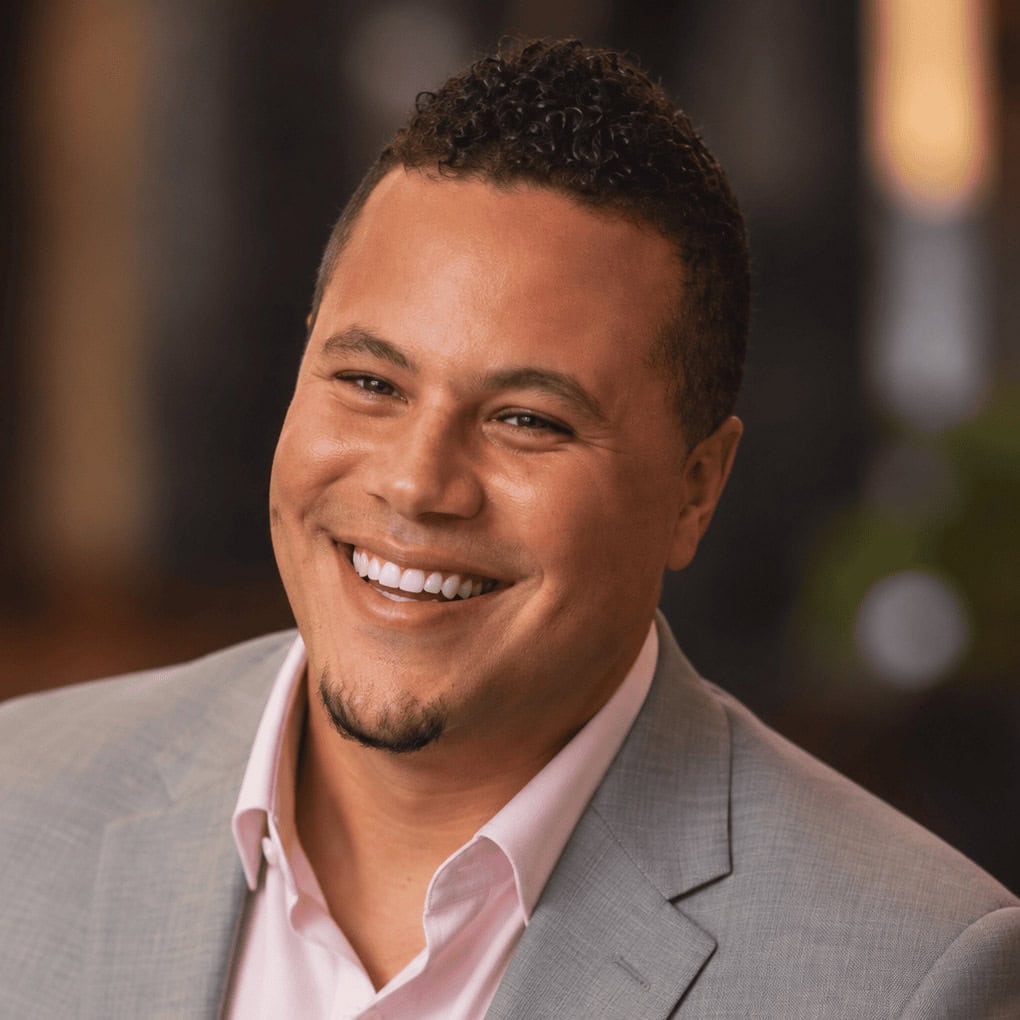 NAfME member Dr. José Valentino Ruiz is a multi-Latin GRAMMY®-winning and multi-Global Music® Award-winning bassist, multi-instrumentalist, composer, producer, and educator. He is an Associate Professor and Founder/Coordinator of Music Business & Entrepreneurship at the University of Florida, a U.S. Department of State U.S. Speaker on Creative Economy and Global Arts Entrepreneurship, and an internationally active recording and performing artist. Ruiz also serves in editorial, research, and interdisciplinary leadership roles spanning music, creative industries, entrepreneurship, artificial intelligence, healthcare, and cultural diplomacy.
Did this blog spur new ideas for your music program? Share them on Connect! Interested in reprinting this article? Please review the reprint guidelines.
The National Association for Music Education (NAfME) provides a number of forums for the sharing of information and opinion, including blogs and postings on our website, articles and columns in our magazines and journals, and postings to our Connect member portal. Unless specifically noted, the views expressed in these media do not necessarily represent the policy or views of the Association, its officers, or its employees.