NAfME BLOG
Whose Ability, Whose Music?
Reimagining Ability in Music Education
By Christopher Ricketts
This “Another Perspective” column was first published in the September 2026 issue of Music Educators Journal.
Across school contexts, music education contends with inherited notions of value and excellence rooted in formal training, notational literacy, and Eurocentric ideals of musical worth.1 Students who learn informally, produce music independently at home, or thrive in peer-led creative environments are often made to feel illegitimate, unqualified, or “not good enough.”2 Despite having meaningful musical experience, these students frequently opt out of formal music pathways because of systems that fail to recognize their musical identities and skills.
In my experience teaching in various contexts, I have increasingly questioned the relevance of formal routes in shaping musicianship. In many classrooms, there is a disconnect between what schools emphasize and the skills I see as most valuable in students: creativity, collaboration, intuition, and independent learning. These skills define working musicianship today but remain underacknowledged in many school-based music pathways.3 Working musicianship is what musicians actually do in their work as professionals.
When we consider the diverse skills of our students—including creativity, collaboration, intuition, and independence—we might contextualize them as aspects of “ability.” Indeed, in music education, the word ability carries weight, but who decides what counts as being musically able? In this article, I challenge the hierarchical and often exclusionary definitions of musical ability embedded in formal education systems, critiquing how ability is narrowly defined within music education. Through this critique, I interrogate how ability is constructed and valorized within dominant curricular and assessment frameworks. Drawing on practitioner inquiry and reflections and autoethnographic insights from my professional experience, I encourage music educators to consider how performance expectations, privilege, and culture contribute to exclusivity in music learning, offering questions for teachers to consider as they reevaluate their practice.4 This approach aligns with practitioner research in music education that values teacher voice and self-reflection.5
Photo: Alberto Case/Moment Collection via Getty Images
Musical Ability, Musical Value
To meaningfully interrogate the idea of musical ability, we must first ask who defines it and what cultural values lie beneath that definition. Across the globe, music education has long been shaped by inherited systems of power that privilege certain traditions, literacies, and identities while marginalizing others.6 Ultimately, these practices reflect values rooted in cultural and historical biases that influence what we consider “musical.”
Pierre Bourdieu’s concept of cultural capital is the idea that certain forms of knowledge, behaviors, and skills are valued more than others. In most formal education systems, the musical knowledge that is rewarded aligns with dominant cultural norms, including notation, classical repertoire, and solo performance.7 These are not neutral but, rather, predominantly reflect traditions rooted in white, middle-class, Western institutions. Students who inherit this capital through family background, private schooling, or early exposure to “legitimate” music are advantaged.8 Those whose musical knowledge is rooted in community practice, improvisation, digital production, or oral transmission are often excluded, not because they lack skill but because their talent is not recognized within the system’s existing value framework.
Let us consider this challenge in context through a composite vignette. Bella, a hypothetical talented multi-instrumentalist, developed her musical skills through entirely informal means. She could learn songs by ear, often teaching herself from YouTube tutorials; switch fluidly between instruments; and produce layered compositions using digital tools. With friends, she experimented in bands playing covers and writing original songs.
Despite her skills, Bella had never taken formal music coursework or learned to read standard Western notation. When she encountered school music, Bella realized the pathways on offer had entry requirements that value graded exams, notational literacy, and performance of selected Western classical repertoire. As a result, Bella internalized the idea that she was not good enough to pursue formalized musical study, which was reinforced by grading systems and entry requirements that privilege Western musical ideals that Bella had not been formally taught.
Bella’s experience offers an unspoken critique of the formal school system: There are limited visible pathways for musicians like Bella, whose skills may be rooted in informal practices or digital approaches. Moreover, Bella’s challenges were not about a lack of ability but a lack of recognition. Bella’s musicianship was rich, embodied, and creative—but she assumed her musicianship was not credible in the eyes of gatekeepers because it did not conform to a particular Western classical framework. Her concerns were not whether she could be successful in formalized musical study but whether that pathway would accept the version of musicality she brought with her. This scenario highlights the issue that ability is not defined by students like Bella but by institutional gatekeepers who privilege certain literacies and traditions while excluding others.
Paulo Freire’s work reminds us to value students’ musical experiences and not just deliver teacher-imposed content.9 When applied to music, this means acknowledging students’ musical lives both in and outside the classroom, not as deficits to be corrected but as rich sites of knowledge and expression. To do otherwise is to reproduce what Freire calls the “banking model” of education, where students are empty vessels to be filled with approved content. In many formal school contexts, music education still operates under this model, prioritizing delivery over dialogue and replication over relevance.10 For students like Bella, whose capital reflects that of informal learning and digital practices, the lack of recognition is not an honest reflection of their skill but of the system’s value framework.
Scholars including Lucy Green have further challenged the dominant paradigms of music education by highlighting the legitimacy and pedagogical potential of popular music and informal learning. Despite this evidence, school music curricula remain heavily weighted toward Western art music, historical analysis, and formal theory. The result is a disjuncture between how young people experience music and how they encounter it in school.11
In the end, this disconnect reflects a pattern of systemic inequality: Students are rewarded not for being musical but for being musical in the “right” way.12 The selection of content, the modes of assessment, and the progression structure all function as mechanisms of inclusion and exclusion. These systems appear meritocratic, but as Antonio Gramsci would suggest, they reinforce dominant cultural values under the guise of fairness.13
Photo: Billy Hustace/Corbis Documentary Collection via Getty Images
Reflections on Ability
As a teacher, I have had to confront my role in validating these perceptions. Do my practices affirm that the musical experiences of students like Bella are meaningful even when they fall outside formal norms? Or do I, intentionally or otherwise, reproduce the same hierarchies I claim to challenge? The answer is complicated. While I try to make my secondary classroom (ages eleven to sixteen) inclusive and relevant by integrating student-selected repertoire and informal learning practices, I am bound by curricular mandates (e.g., the Model Music Curriculum), assessment criteria that privilege notation and performance over creativity, and accountability frameworks tied to exam outcomes. This limits my ability to adapt and constrains my autonomy.14 These issues perpetuate wider societal issues that shape how students and teachers perceive music’s value.
Reimagining Ability
Internationally, there are glimmers of possibility. In South Africa, community-based initiatives such as the Field Band Foundation, which is rooted in oral tradition and storytelling, offer counterpoints to Eurocentric curricula.15 In Canada, some provinces have embedded Indigenous knowledge systems into music programmes, with a good example coming from the Yukon First Nations School Board,16 meaning that some schools adopt these frameworks robustly, while others do not. In the United States, educators in urban settings such as New York and Chicago, for example, incorporate hip-hop pedagogy and beat-making to validate their students’ cultural capital.17
To reshape how we see music’s value, we must first reimagine how we see musical ability. The following questions can help teachers reflect on how they define musical ability. In answering each of these questions, it is important to also consider the systems and norms that influence one’s responses:
- Whose musical knowledge is recognized and rewarded in your context—and whose is ignored? This question invites educators to interrogate how dominant forms of cultural capital (e.g., notational literacy, classical performance) shape what is valued in school music.
- In what ways does your curriculum validate or marginalize the musical experiences of your students? This question encourages practitioners to listen and engage with the musical interests of students, aligning with Freire’s call to value students as co-constructors of knowledge. This reminds us that students’ informal learning is a rich source of knowledge, yet in school contexts, these experiences may often be overlooked.
- How do your assessment practices reinforce or challenge hierarchical conceptions of ability? This question examines the deeper function of assessment as a tool that can either reproduce or disrupt exclusionary norms.
- How might rethinking ability create space for more inclusive, culturally relevant, and justice-oriented music education? This future-facing question encourages educators to connect reflection with policy, using student voice and practitioner autonomy as tools for transformation toward a more equitable music education.
Steps Forward
Rethinking musical ability is not just about classroom practice but also about how qualifications are structured, how success is measured, and how the curriculum is shaped. It is about reimagining music education as a more equitable and culturally responsive space for creativity and collective meaning-making, not a sorting mechanism that privileges the few and excludes the rest. Stories of students like Bella are common in classrooms worldwide and show us what is lost when ability is reduced to a narrow definition of acceptable skills. A broader range of students, musical identities, and ways of knowing music must be visible in how we teach, assess, and talk about music in our schools.
Footnotes
- Graham Moore, “Mind the Gap: Privileging Epistemic Access to Knowledge in the Transition from Leaving Certificate Music to Higher Education,” Irish Educational Studies 33, no. 3 (2014): 249–68; Gary Spruce, “Knowledge and Social Justice in English School Music Education: Reflections on the Report ‘Questioning the Gap in Music Literacy’ (McQueen 2020),” Music Education Research 26, no. 1 (2024): 21–36.
- Anna Bull, Class, Control, and Classical Music (Oxford University Press, 2019); Deborah Bradley, “Good for What, Good for Whom? Decolonizing Music Education Philosophies,” in The Oxford Handbook of Philosophy in Music Education, ed. Wayne D. Bowman and Ana Lucia Frega (Oxford University Press, 2012), 409–33.
- Chris Philpott, “What Does It Mean to Decolonise the School Music Curriculum?” London Review of Education 20, no. 1 (2022): 7; Alison Daubney, “Reviewing the Model Music Curriculum in Detail,” Independent Society of Musicians, April 14, 2021; Spruce, “Knowledge and Social Justice.”
- Pierre Bourdieu, “The Forms of Capital,” in Handbook of Theory and Research for the Sociology of Education, ed. John G. Richardson (Greenwood, 1986); Antonio Gramsci, Selections from the Prison Notebooks, ed. and trans. Quintin Hoare and Geoffrey Nowell Smith (International Publishers, 1971).
- Juliet Hess, Music Education for Social Change: Constructing an Activist Music Education (Routledge, 2018); Karin S. Hendricks and Gary E. McPherson, “Reconsidering Musical Ability Development through the Lens of Diversity and Bias,” in The Oxford Handbook of Care in Music Education, ed. Karin S. Hendricks (Oxford University Press, 2023).
- Bradley, “Good for What, Good for Whom?”; Randall E. Allsup and Heidi Westerlund, “Methods and Situations: Exploring the Need for Flexible Thinking in Music Education,” British Journal of Music Education 29, no. 1 (2012): 17–27; Dawn Joseph and Jane Southcott, “Classroom Music Teaching in Australia: Reflections from the National Review,” Australian Journal of Music Education 1 (2014): 17–28.
- Bourdieu, “Forms of Capital”; Gramsci, Selections from the Prison Notebooks.
- Juliet Hess, “Music Education and the Colonial Project,” in The Routledge Handbook to Sociology of Music Education, ed. Ruth Wright, Patrick Schmidt, and Juliet Hess (Routledge, 2021).
- Paulo Freire (1921–1997) was a Brazilian educator and philosopher best known for Pedagogy of the Oppressed (Herder and Herder, 1972), in which he advocated for dialogic, student-centered approaches.
- Freire, Pedagogy of the Oppressed.
- Lucy Green, Music, Informal Learning and the School: A New Classroom Pedagogy (Ashgate, 2008).
- Gary Spruce, “Music Education, Social Justice, and the ‘Student Voice’: Addressing Student Alienation through a Dialogical Conception of Music Education,” British Journal of Music Education 32, no. 3 (2015): 277–90.
- Gramsci, Selections from the Prison Notebooks; Norman Fairclough, Critical Discourse Analysis: The Critical Study of Language (Longman, 1995); Teun A. van Dijk, “Principles of Critical Discourse Analysis,” Discourse & Society 4, no. 2 (1993): 249–83.
- Michael W. Apple, Ideology and Curriculum (Routledge, 1979); Henry A. Giroux, Theory and Resistance in Education: A Pedagogy for the Opposition (Bergin & Garvey, 1983); Norman Fairclough, Critical Discourse Analysis: The Critical Study of Language (Longman, 1995).
- Anriëtte C. De Villiers, “(Re)Organizing the Music Curriculum as Multicultural Music Education,” International Journal of Music Education 39, no. 4 (2021): 383–93.
- Lillian L. Sánchez-Gatt, Sruthi Menon, and Juliet Hess, “Troubling Transcultural Practices: Anti-Colonial Thinking for Music Education,” Action, Criticism, and Theory for Music Education 24, no. 1 (2025): 48–82; Lee Higgins, Community Music: In Theory and in Practice (Oxford University Press, 2012); Linda Goulet and Keith Goulet, Teaching Each Other: Nehinuw Concepts and Indigenous Pedagogies (UBC Press, 2014).
- Bradley, “Good for What, Good for Whom?”; Hess, “Music Education and the Colonial Project.”
About the Author
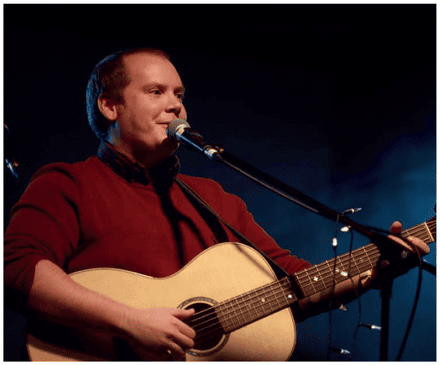 Christopher Ricketts is director of music and lead practitioner for teaching and learning at The Portsmouth Academy in Portsmouth, Hampshire, England.
Did this blog spur new ideas for your music program? Share them on Connect! Interested in reprinting this article? Please review the reprint guidelines.
The National Association for Music Education (NAfME) provides a number of forums for the sharing of information and opinion, including blogs and postings on our website, articles and columns in our magazines and journals, and postings to our Connect member portal. Unless specifically noted, the views expressed in these media do not necessarily represent the policy or views of the Association, its officers, or its employees.