NAfME BLOG
Advocates on Capitol Hill Unite in Support of Music Education
“United Through Music: Shaping Policy to Impact Futures”
By Amber Friel, NAfME Communications Manager, Advocacy and Public Policy
Music education has long played a vital role in public schools across the United States. Beyond teaching students how to sing, play instruments, or read music, research has shown these programs to support academic achievement, reduce absenteeism, and promote students’ overall development.
Despite widespread recognition of its value, access to music education is far from universal, with nearly four million students across the country still lacking access to music instruction in their schools. Especially in low-income and rural areas, these gaps often result in not just students but entire communities missing out on the many benefits of music education.
For federal policymakers tasked with shaping the future of education, understanding the full impact of music programs—and the importance of making access a national priority—is essential.
United Through Music
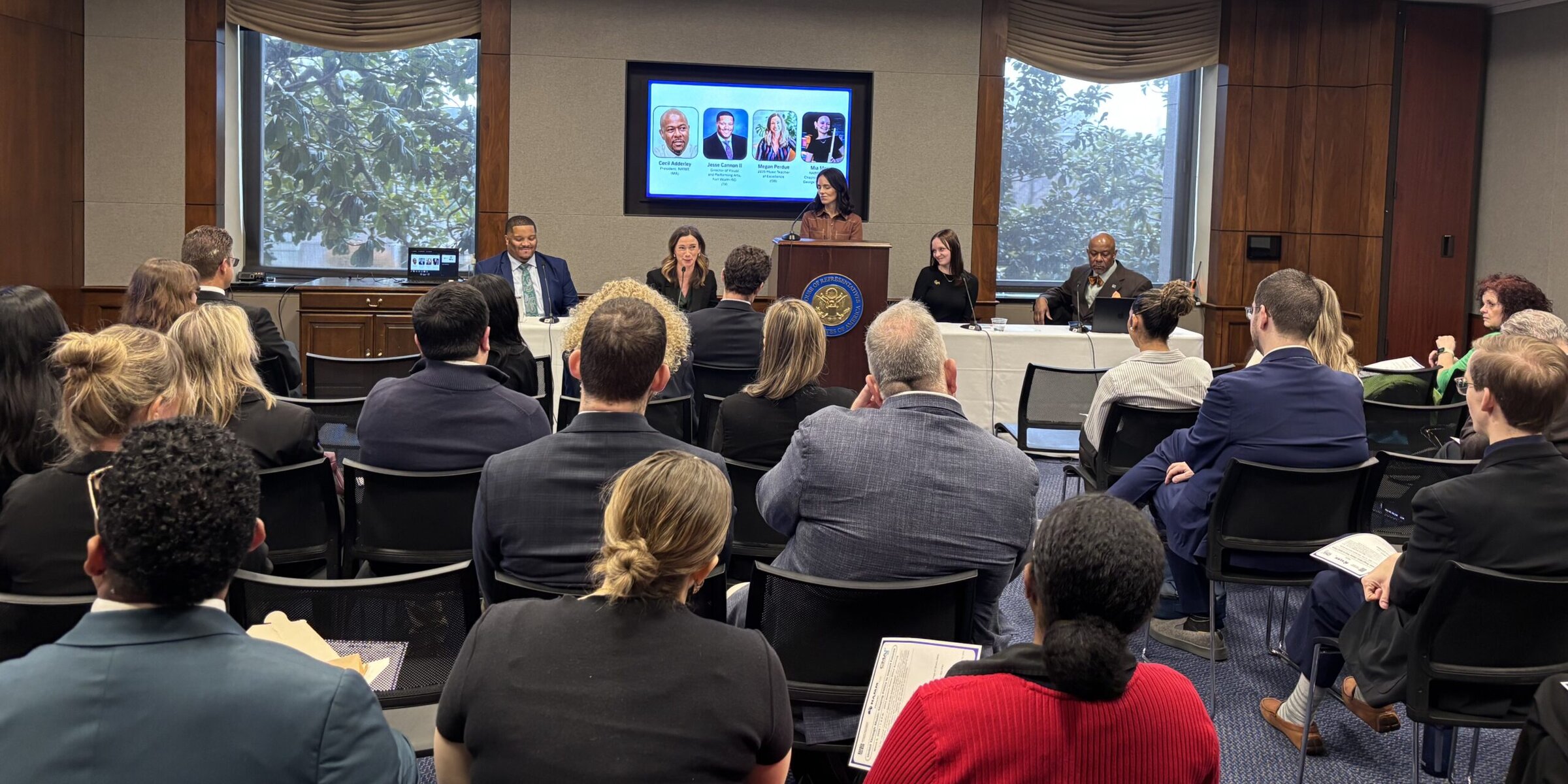
On Thursday, March 5, 2026, we joined forces with NAMM and the CMA Foundation on Capitol Hill to host “United Through Music: Shaping Policy to Impact Futures,” a congressional briefing celebrating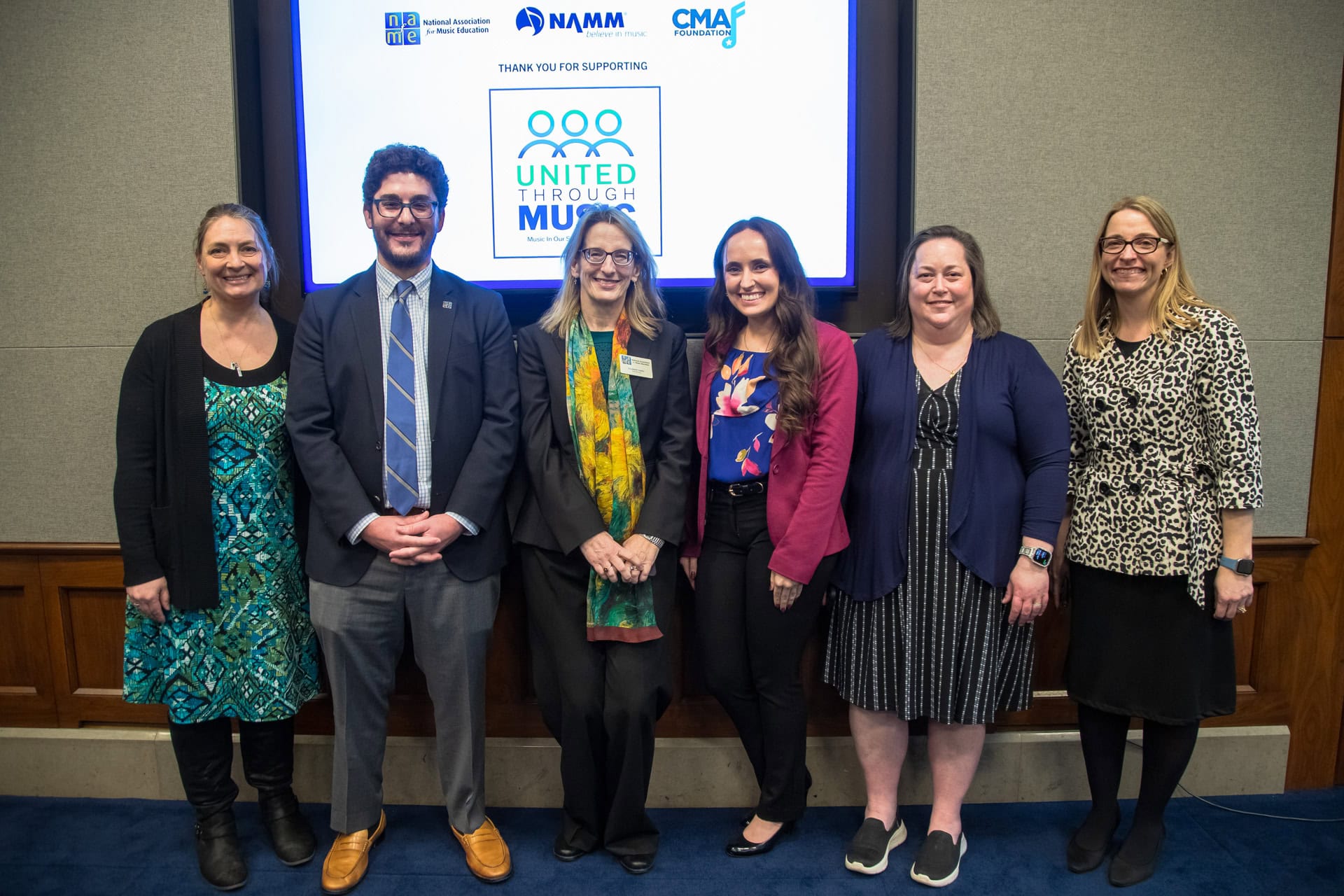 Music In Our Schools Month® (MIOSM®) and reaffirming the importance of music education nationwide.
On a bustling afternoon in the People’s House, a conference room quickly filled with congressional staff, policymakers, and music education advocates eager to learn how federal policy can help expand access to music education. The room buzzed with conversation as attendees gathered to hear firsthand how high-quality music programs benefit students of all ages and strengthen communities, as well as why a united front is essential in shaping a bright future for music education in schools nationwide.
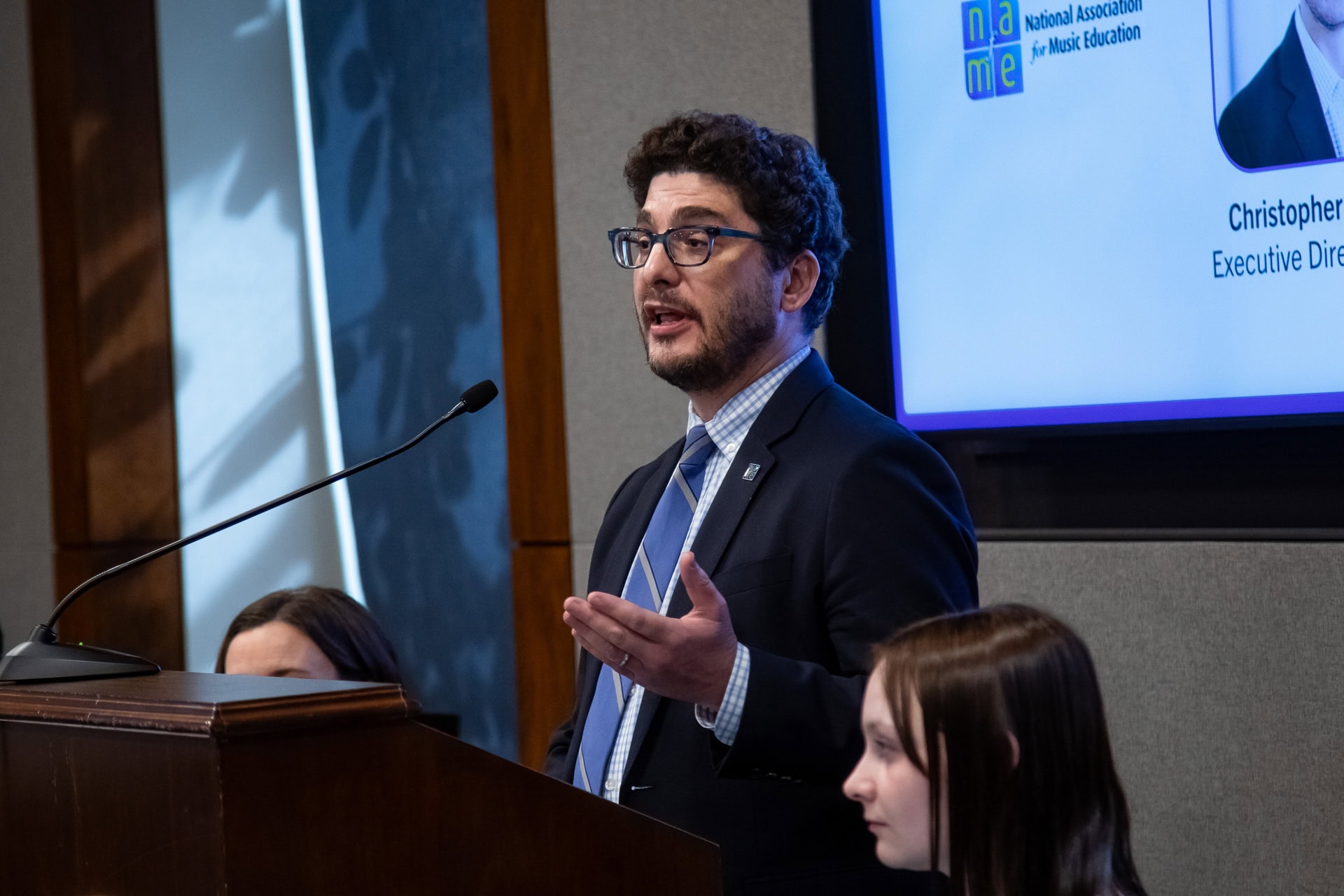 The event featured remarks from NAfME Executive Director Christopher Woodside and NAMM President and CEO John Mlynczak, who highlighted music education’s broader impact on communities and the workforce and emphasized the importance of sustained advocacy, encouraging attendees to “carry the torch” for music education not only during special observances but throughout the year.
Michelle Kirk, Senior Director of the CMA Foundation, moderated a panel discussion featuring current and future music educators who shared personal stories about what inspired them to enter the profession, how music programs positively impact students, and what decision makers can do to support classroom educators and expand access to high-quality music programs across the country.
One particularly powerful moment came when a panelist shared an excerpt from a student’s poem describing how participation in a school music program helped her discover her place in the world and build self-confidence. Around the room, advocates and listeners nodded in recognition, and many were visibly moved. For those who had participated in music programs themselves, the story was a powerful reminder of how music can shape a person’s path. For others, it offered a meaningful glimpse into why expanding access to music education for all students is more important than ever.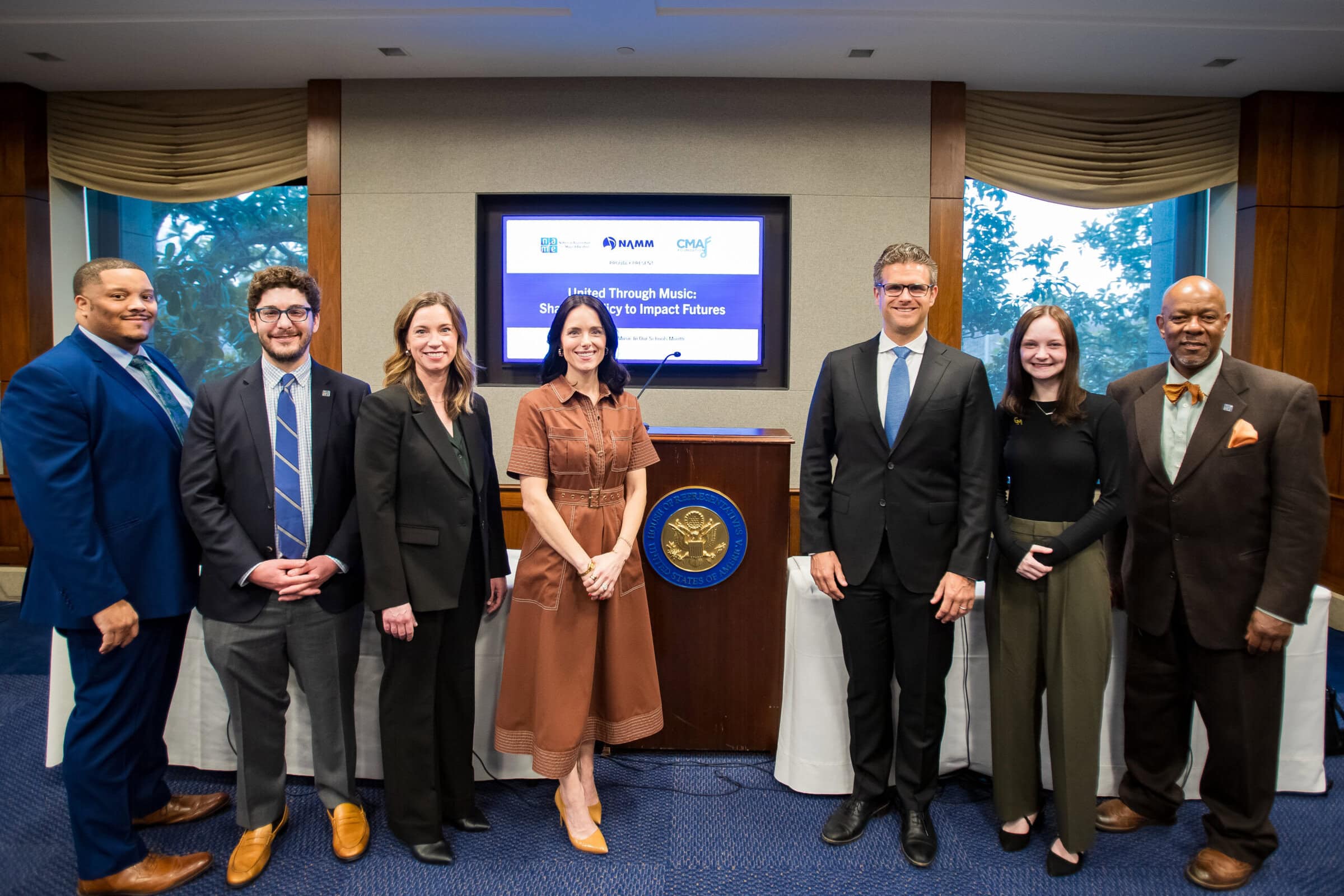
Panelists included:
- Cecil Adderley—President, NAfME; Music Education Department Chair, Berklee College of Music (MA)
- Jesse Cannon II—Director of Visual and Performing Arts, Fort Worth ISD (TX); Past-President, Texas Music Educators Association
- Megan Perdue—2025 Music Teacher of Excellence, Sheldon High School, Eugene School District 4J (OR)
- Mia Morrow—NAfME Collegiate Chapter Vice President, George Mason University (VA)
NAfME is grateful to each of these panelists for bringing their authentic voices to the conversation and sharing their passion for a topic so deeply meaningful to them and to the students they serve.
Federal Legislation Supporting Access to Music Education
Key contributors to making the event possible were Representative Nydia M. Velázquez (D-NY) and Senator Cory Booker (D-NJ), who not only provided staff assistance in planning the briefing, but also introduced key pieces of legislation supporting music education this month. Special thanks go to their staff members for their enthusiasm and support in organizing the event.
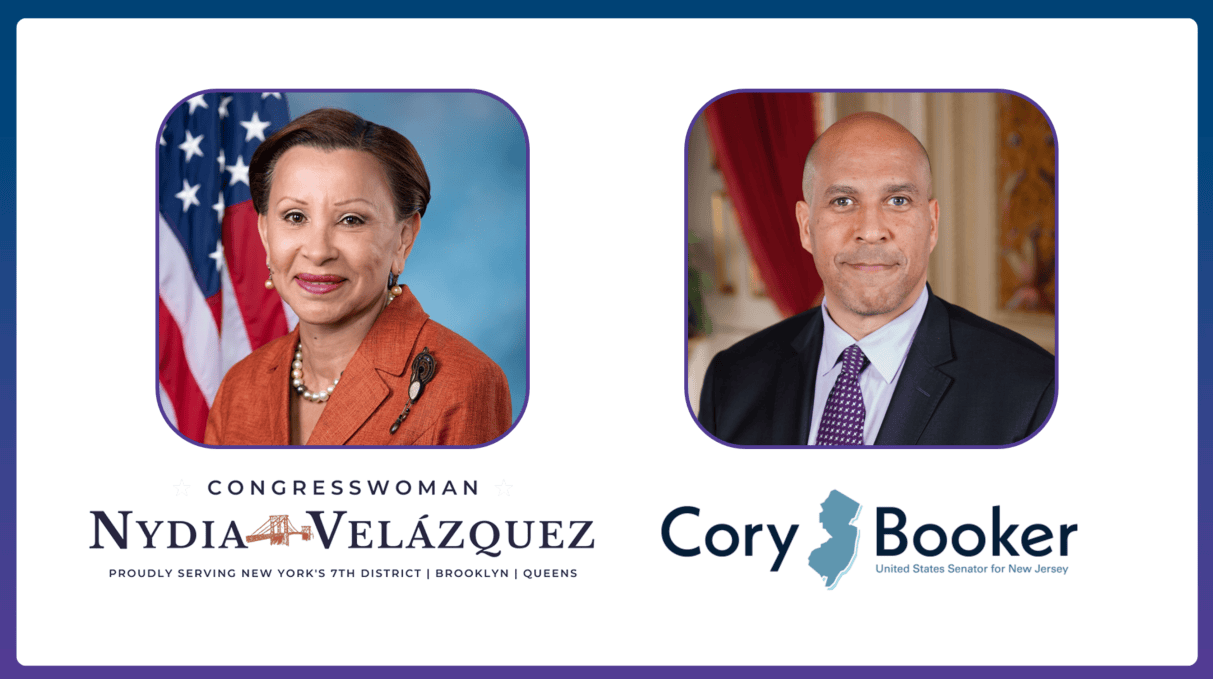
Reintroduced this Congress by Representative Velázquez and Senator Booker, the Guarantee Access to Arts and Music Education (GAAME) Act incentivizes the use of federal funds to expand access to music and arts education for disadvantaged and low-income students, taught by certified educators.
The bill amends the Elementary and Secondary Education Act (ESEA) to encourage Title I funds to increase the number of certified music and arts educators; purchase instruments, sheet music, and other equipment; provide professional development for certified music and arts educators; and expand access to sequential, standards-based music and arts programs.
The bill received additional support in both the House (H.R.7855) and the Senate (S.4018), with original co-sponsors including Rep. Yvette D. Clarke (D-NY), Rep. Danny K. Davis (D-IL), Rep. Dwight Evans (D-PA), Sen. Ben Ray Luján (D-NM), Rep. LaMonica McIver (D-NJ), Del. Eleanor Holmes Norton (D-DC-At Large), Sen. Alex Padilla (D-CA), and Rep. Dina Titus (D-NV).
Music In Our Schools Month Resolution
Representative Velázquez and Senator Booker also reintroduced the Music In Our Schools Month Resolution, which affirms the importance of music education, highlights its benefits to students, and recognizes the dedication of music educators nationwide.
Since 1985, the National Association for Music Education (NAfME) has designated March as Music In Our Schools Month to raise awareness of the importance of music education for all children and to remind communities that schools are where all students should have access to music. Building on the first Music In Our Schools Day celebrated in New York in 1973, the now month-long observance highlights the benefits of music education and the educators who make it possible, while encouraging communities and policymakers to expand access for every student.
A federal resolution designating March 2026 as Music In Our Schools Month reaffirms the nation’s commitment to music education, recognizes the extraordinary work of music educators, and underscores the essential role music plays in preparing students for lifelong success.
The resolution received additional support in both the House (H.Res.1108) and the Senate (S.Res.628), with original co-sponsors including Rep. Yvette D. Clarke (D-NY), Rep. Danny K. Davis (D-IL), Rep. Dwight Evans (D-PA), Rep. Maxwell Frost (D-FL), Sen. Ben Ray Luján (D-NM), Rep. LaMonica McIver (D-NJ), Del. Eleanor Holmes Norton (D-DC-At Large), Sen. Alex Padilla (D-CA), and Rep. Dina Titus (D-NV).
Reintroduction of both the Music In Our Schools Month Resolution and the GAAME Act serve as an important reminder that there are leaders in the federal government who are committed to supporting music education and expanding opportunities for students nationwide.
Urge Members of Congress to Support
As the celebrations continue throughout March, we’re calling on music education advocates nationwide to take action in support of both measures and help strengthen students’ access to high-quality school music programs.
Advocates are encouraged to contact your members of Congress today to request that they co-sponsor both the GAAME Act and the Music In Our Schools Month Resolution of 2026.
 We also urge advocates to get involved this Music In Our Schools Month by pursuing a resolution or proclamation recognizing Music In Our Schools Month in their state or community.
Together, advocates, educators, and policymakers can unite to ensure that every student can experience the transformative power of music education.
Interested in reprinting this article? Please review the reprint guidelines.