NAfME BLOG
How Do You Go about Planning Winter or Holiday Concerts?

Five Music Educators Share Their Ideas and Considerations
This article first appeared in the October 2026 issue of Teaching Music.
Katherine Prihoda

Band Teacher, Tomah Middle School, Tomah, Wisconsin. Chair, NAfME Council for Band Education
The winter or holiday concert can sometimes be the most stressful one, as it is often the first performance of the year. Here are some things I consider to ensure students have a successful winter concert.
Holiday Limitations
During the first year in my current position, I did not know that some students were not able to play holiday-themed music. By the time I found out, it was too late to change the repertoire I had selected. To ensure this wouldn’t happen again, I now program non-holiday music for the December concert and have received no complaints about the lack of holiday music.
Rehearsal Time
In my district, the seventh-grade band has three marching performances between late August and mid-October, so we spend the first two months of school preparing for those. When marching band season is complete, we typically have about 18 rehearsals to prepare for the winter concert. While this may seem like a lot of time, it does not account for snow days, assemblies, field trips, sports dismissals, sickness, or regular school-day interruptions. I try to plan rehearsals so that, should we miss three rehearsals, the students will still be confident enough to perform the music at a high level.
Ensemble Skill Level
In our middle school, having an expectation of practicing an instrument outside of school would decimate the band department. Knowing that most students will not have played their instruments over summer break, I plan to review all the skills that we learned last year that have potentially been forgotten over the summer. While skills often come back quickly, I encourage you to be patient with young musicians! As professional musicians, we use our musical skills on a regular basis, so it’s easy to forget that young musicians may not have played or sung a single note since our last concert in the spring.
Repertoire
I do not select winter concert repertoire before the school year begins. With our class rosters fluctuating during the first few weeks of school, I wait to select repertoire until I know for certain who will be in each ensemble. Once I have determined the strengths and weaknesses of each group, I then select repertoire that has limited challenges with notes and rhythms but presents opportunities to work on other musical concepts. I find that students are most successful if we start the year reviewing notes and rhythms we learned the previous year and focus our energy for the first concert on developing articulation, phrasing, dynamics, and musicality.

Photo: Jena Ardell/Moment Collection via Getty Images
One Final Piece of Advice
When looking at what other school music programs do for their winter concerts, use it as a space for ideas, not comparisons. Each school has a unique set of circumstances, students, and resources. Determine what works for you in your current teaching situation and take pride in knowing that you are working to provide the best possible experience for your students.
John Reynolds
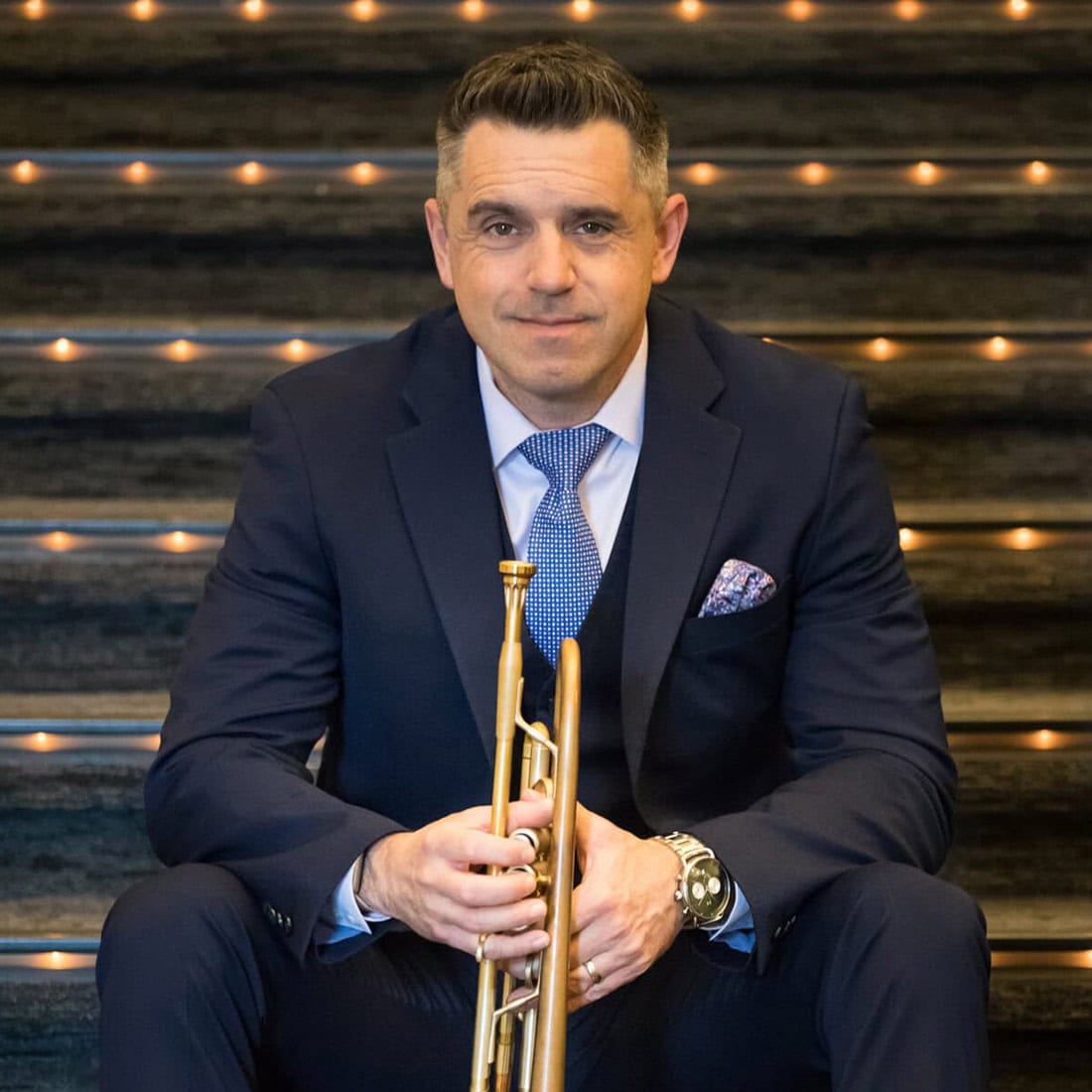
Director, Instrumental Music, Garn Family Jazz Studies Program, Frederick Fennell Wind Studies Program, Orange County School of the Arts, Santa Ana, California. Member-at-Large, NAfME Council for Jazz Education
First and foremost, my duty as an educator is to expose students to important musical repertoire. Our jazz curriculum is designed to root all students in the tradition of Swing, heavily leaning on repertoire from Duke Ellington, the Basie Orchestra, Mary Lou Williams, Thad Jones, Mel Lewis, and others.
At the Orange County School of the Arts, our Ambassador Jazz Orchestra performs the Ellington/Strayhorn Nutcracker Suite annually in tandem with our Symphony Orchestra performing the Tchaikovsky Suite. This collaboration has taken many shapes, incorporating visual and digital artistic elements and various forms of dance. In addition, we often begin or close the concert with holiday renditions of Christmas tunes arranged for Basie, Ellington, and the Jazz at Lincoln Center Orchestra.
Great repertoire, when performed well, is often inherently challenging. As a result of such programming, students are often pushed to address areas of growth such as doubling, range, velocity, dynamics, balance, and improvisational interaction. Directors should not shy away from these challenges. We must remember that our students’ capacity is often more than we can imagine.
When performing such immensely challenging repertoire, a strategic professional guest artist in a brass or woodwind section can elevate the performance and give the students in the section the tools they will need to enhance their own skillset. Over time, this experience allows students to find pathways to create their own musical success.
Sheila A. Smith

Elementary General Music Specialist, Avondale Elementary School, DeKalb County School District, Georgia
Cue the jingling bells and let the winter program planning begin! To make the process manageable, I narrow the big picture by chunking it into four key areas: scope, participants, focus, and materials. First, I consider whether the winter program is the school’s main performance of the year or one of several. A single annual performance may call for a longer, more elaborate experience, while one of several programs may be shorter. Starting early gives me time to explore music that fits my timeline, voicing, instrumentation, and available rehearsal time.
Next, I determine who will perform and how often they can rehearse. A chorus that practices regularly has different needs from an entire grade level learning music during the school day. In my setting, I have found a balance: This year, students in grades 3–5 will present the winter musical, while the K–2 program will take place in the spring. I also choose a focus that reflects my students, families, and community. Depending on the school, a program might be holiday-specific, winter-themed, multicultural, curriculum-based, or centered on another inclusive theme. In past years, I have created International Nights, STEM-related performances, and other non-holiday programs.
Finally, I decide whether to purchase a ready-made program or create my own. Purchased musicals can save time by providing scripts, accompaniment tracks, and movement ideas, while teacher-created programs offer greater flexibility and personalization. Whatever the format, my most important strategy is to start early and move from big choices to small ones. Once the scope, participants, focus, and materials are clear, selecting music and preparing the performance becomes much more manageable.
Cleon Chai

Assistant Director of Bands, Mustang High School, Mustang, Oklahoma
When programming, I follow a three-point framework:
- What technical skills do the students develop through performing this music?
- What musical skills do the students develop through performing this music?
- How will the students’ lives be enriched through this performance of this music?
The first point is a prerequisite for the second point; musical skills rarely develop without sufficient technical skill. These two points then serve the third point, which is where the context of the performance ties in. The third point is one that our Fine Arts Director asks frequently and that I give the most importance.
For all performances, I try to program with consideration to the cross-curricular possibilities, usually as it relates to either contemporary or historical culture. We have performed music from the mid-1900s as well as new arrangements of songs performed by artists alive today. In years past, our jazz bands have performed arrangements by Latin Grammy-nominated Oklahoma composer and arranger Vince Norman, selections from Duke Ellington’s Nutcracker, and arrangements by Gordon Goodwin of the Big Phat Band. In concert band, standard orchestrations of holiday tunes are paired with evocative programmatic music such as Santa’s Big Adventure by David Shaffer, featuring music from around the world heard by Santa as he delivers presents to expectant children.
When multiple ensembles play on the same concert, I will program in a way that each group has its own musical focus and identity for the evening. If, for instance, the Jazz Collective is studying a single historical masterwork such as Glenn Miller’s Nutcracker, then the Jazz Orchestra will perform multiple modern arrangements composed for the Jazz at Lincoln Center Orchestra. This prevents the audience from being inundated with similar sounding music for an entire concert, and it allows the groups to be distinguishable and unique.
I program for holiday concerts with one summative consideration: The program should enrich the lives of the students through developing skills and exploring the cultural significance of the music. There should be a variety of styles and composers, and the music should be engaging for all participants, including performers and audience members. If these considerations are kept in mind, the program encourages lifelong learning and love of music in our communities.
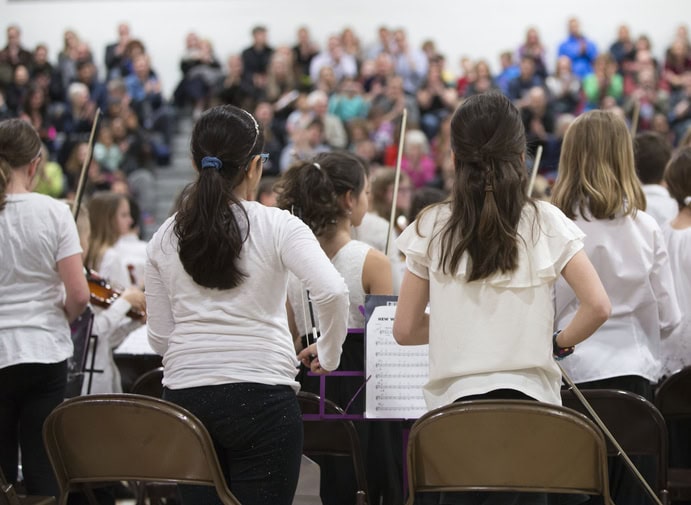
Photo: Jonathan Kirn/Photodisc Collection via Getty Images
Susan Meuse

Orchestra Director, Churchill Junior High School, East Brunswick, New Jersey. Eastern Division Representative, NAfME Council for Orchestral Education
As I begin the school year, I’m always thinking about what I would like to perform for the winter concert. I try to anticipate the ability level of the students based on their prior spring concert. After some review, I like to introduce the music quickly so that we can focus on the repertoire as much as we need. We typically have about three months to prepare for the winter concert, but there are many days off from school in the fall.
As far as choosing specific music, there are a lot of factors to consider. Aside from difficulty, I have to consider who my students are and what might interest them. I try to include music that offers practice in the skills they need and that includes quality musical elements. It is also important to include music from diverse composers and cultures. There are many cultures represented in my school, so I like to include something that might be familiar to some students and new to others. It is very important to me that my students enjoy the music itself as well as the experience of making music together.
Did this blog spur new ideas for your music program? Share them on Connect! Interested in reprinting this article? Please review the reprint guidelines.
The National Association for Music Education (NAfME) provides a number of forums for the sharing of information and opinion, including blogs and postings on our website, articles and columns in our magazines and journals, and postings to our Connect member portal. Unless specifically noted, the views expressed in these media do not necessarily represent the policy or views of the Association, its officers, or its employees.