NAfME BLOG
Modern Band Is More Than We Think
How Should We Define “Modern Band”?
By Shane Colquhoun, NAfME Council for Innovations Chair
In recent years, modern band has gained considerable momentum as music educators seek to broaden participation in school music and engage a wider range of students. By centering student choice, contemporary music, and collaborative music-making, modern band has emerged as one of the fastest-growing approaches for engaging students whose musical interests may not always be reflected in traditional ensembles. While momentum is growing, so has a misconception: that modern band has a fixed, distinct instrumentation and that its canon is centered primarily on rock and pop music.
The Trojan Horse
Founded by David Wish, Music Will, formerly Little Kids Rock, was not created to prescribe a particular ensemble, instrumentation, or repertoire. It was designed to create authentic musical experiences rooted in students’ interests and the music they engage with outside of school. Wish once described modern band to me as a “Trojan horse.” The term opens the door for schools to embrace the music of the students, but once inside, it should not be confined to guitars, drums, keyboards, and vocals. It should evolve into whatever best serves the students in that program. Modern band is the entry point, not the destination.
This idea has shaped my Pop Ensemble, Versatile, at Alabama State University.
Student-Driven Projects
When I arrived at Alabama State University four years ago, I was asked to start a Pop Ensemble. Over time, however, I intentionally moved beyond thinking about the course as simply another performing ensemble. Instead, it has become a popular music ecosystem where students develop as performers, songwriters, producers, engineers, educators, and creative professionals.
That philosophy was reflected in this semester’s final projects.

Photo: mediaphotos/iStock/Getty Images Plus
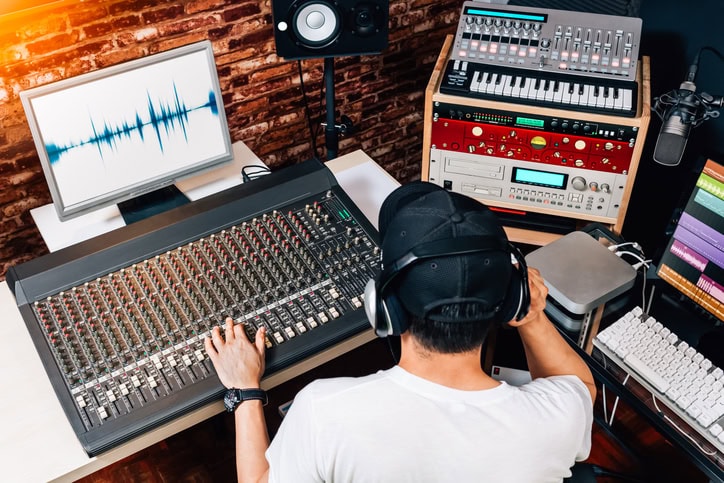
Two students collaborated to write, record, and produce their first original song for commercial release. Another student, recording artist Geejo Hero, continued developing material for his upcoming album while also serving as the recording engineer for several classmates. Rather than simply rehearsing, students engaged in authentic songwriting, production, recording, and collaboration, as in the music industry today.
Two piano students selected music they wanted to learn entirely by ear. One arranged and performed a piece written by Geejo Hero so they could eventually perform it together. Our bass player created a multi-song performance video displaying his musicianship, recording skills, and ability to both sing and play guitar.
Perhaps my favorite projects came from two music education majors, both of whom developed skills far beyond their primary instruments. One, whose primary instrument is the saxophone, used Music Will instructional resources to learn to sing while accompanying herself on guitar through a mashup of five popular songs. At the beginning of the semester, she insisted this was something she could never do. By the end of the course, she had accomplished exactly that. Another music education major, while working to refine his guitar skills, also served as the class videographer, capturing footage of every student’s final project and producing social media content documenting the ensemble’s work.

Photo: FRAME STUDIO/Moment Collection/Getty Images
Every music assignment was uniquely different. The end-of-the-year concert was not the goal. Instead, each student pursued a meaningful musical goal aligned with their interests, whether writing and recording an original song, learning entirely by ear, producing video content, or developing proficiency on a secondary instrument, while contributing to a collaborative musical community. This is what a modern band can look like.
Defined by Philosophy
My takeaway is this: Modern band is a musical experience in which students actively create, perform, collaborate, experiment, and solve authentic musical problems rather than reproduce a predetermined repertoire. The goal is not to produce identical musicians but to provide meaningful experiences that reflect students’ interests, aspirations, and identities.
If we define modern band by instrumentation and genre, then we limit its possibilities. If we define it by philosophy, then the possibilities become endless.
Modern band is not defined by a drum set, electric guitar, or rock repertoire. It is defined by student agency, creativity, and relevance. In one school, that may look like a rock ensemble; in another, it may involve songwriting, beat making, audio production, or content creation. If we define modern band by instrumentation and genre, then we limit its possibilities. If we define it by philosophy, then the possibilities become endless.
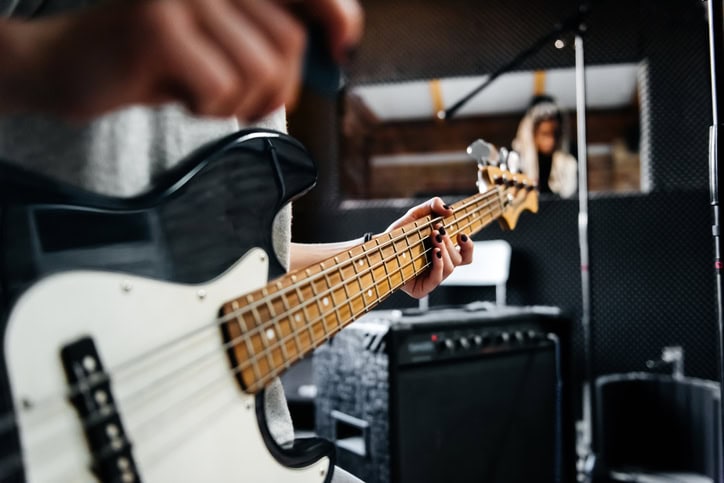
Photo: Hinterhaus Productions/DigitalVision Collection/Getty Images
At its core, modern band begins with a simple question: What musical experiences matter most to our students?
About the author:
 Shane Colquhoun, PhD., is a music educator, producer, and mentor dedicated to helping students discover their creative voice. An Assistant Professor of Music Technology and Contemporary Music Styles at Alabama State University, he blends traditional music education with modern approaches that highlight student creativity and innovation. He has years of experience as a successful band director, guiding ensembles to excellence while fostering inclusive, student-centered spaces. He has published in the Journal of General Music Education (formerly General Music Today) and the Media Journal in Music Education, and is the author of The Producers of Pop: A Comprehensive Plan for Studying Popular Music Producers. He also serves on the Editorial Board for the Journal of Music, Technology & Education. Dr. Colquhoun is Chair of the NAfME Council for Innovations, Research Chair for the Alabama Music Educators Association, and a Board Member for the Association of Popular Music Education.
Did this blog spur new ideas for your music program? Share them on Connect! Interested in reprinting this article? Please review the reprint guidelines.
The National Association for Music Education (NAfME) provides a number of forums for the sharing of information and opinion, including blogs and postings on our website, articles and columns in our magazines and journals, and postings to our Connect member portal. Unless specifically noted, the views expressed in these media do not necessarily represent the policy or views of the Association, its officers, or its employees.