
NAfME BLOG
Sustaining the Long Haul
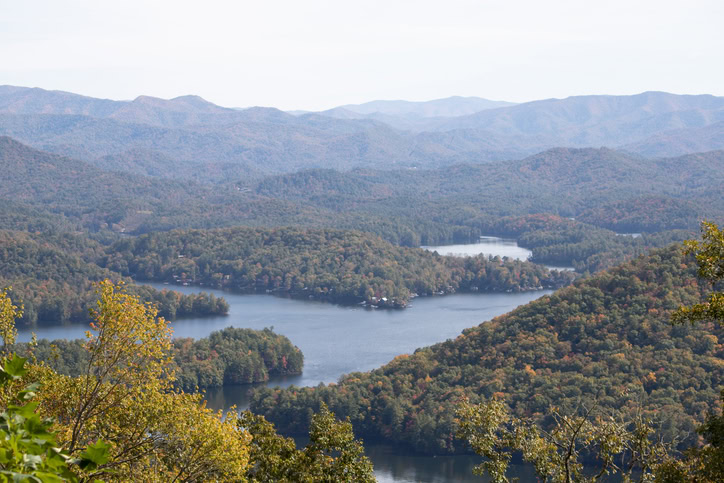
Enduring This Challenging Educational Landscape
By Carolina Perez Guerrero, President of the North Carolina Music Educators Association
This article was first published in the summer 2026 issue of the North Carolina Music Educator Journal.
I must admit, when I sat down to write this message, I procrastinated. Stalling is often my coping mechanism when a task feels overwhelming, and to be honest, I felt entirely inadequate addressing this topic. What advice could I possibly offer on sustaining a teaching career when I, too, have grown so weary over the last few years that I have considered leaving the profession? Yet, the fact that this topic scared me meant that I needed to lean in rather than run away. Once I pushed past the imposter syndrome, I realized these were the exact words I needed to hear. As we prepare to begin a new school year—one that feels as stormy and uncertain as ever—I hope this message provides you some encouragement. I see you, I hear you, and I am right there with you.💛
In our professional community, we often talk about teaching through “difficult seasons.” We use the language of weather, implying that if we just hunker down, the storm will pass, the sun will come out, and the educational ecosystem will return to a state of balance. But let’s be completely honest with one another: For many of us, this isn’t a passing storm. And it hasn’t been just one bad season.
For years now, the educational landscape has felt consistently draining. Administrative demands have steadily increased, and the day-to-day realities of our profession can feel like a never-ending uphill climb. Acknowledging this isn’t cynical; it is necessary. When an environment remains harsh for a long period, telling teachers to simply “stay positive” or “remember your why” isn’t always helpful; it overlooks the sheer magnitude of the weight they are carrying.
If you are a music educator who feels weary from the long haul, this is a reality check; but it is also a reminder of a profound truth: Trees that grow in chronically windy environments develop the densest, strongest wood.
So, as we prepare for a new school year, how do we continue to endure through this tough educational landscape while sustaining our students, ourselves, and our art?
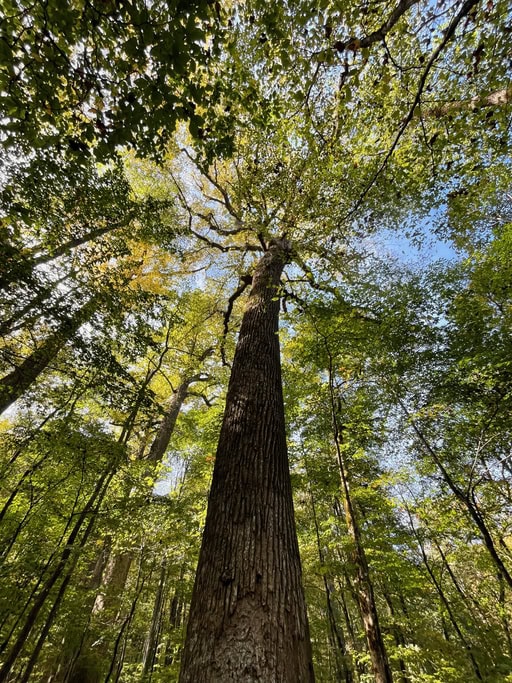
Huge old growth yellow poplar tree in the Joyce Kilmer Memorial Forest in the Nantahala National Forest in western North Carolina. Photo: Eifel Kreutz/iStock/Getty Images Plus
Embracing Radical Realism
Sustaining a career in a challenging climate requires us to abandon the myth of the “super teacher.” We cannot do it all, and we certainly cannot do it all perfectly while maintaining our well-being.
Surviving the long haul requires radical realism. This means actively choosing where to direct our limited energy so that we can protect what matters most. If administrative pressures are draining your reservoir, it is time to aggressively streamline.
A Practical Metric: When your time is limited, ask yourself: Is this task directly serving the musical and emotional growth of the human beings in front of me? If the answer is yes, pour into it. If the answer is no, give it your professional compliance, but do not give it your emotional currency. Save your energy for the music. Save your passion for the kids.
The Music Classroom as a Sanctuary
When external pressures make our days feel too overwhelming, our music classrooms provide a vital sanctuary of artistic purpose.
Think about what the modern world asks of our students in their academic classrooms daily—constant data tracking, rigid metrics, and endless digital noise. By contrast, think about what happens in a music rehearsal. We ask students to put down screens. We breathe together. We listen to one another. We make music. We connect.
By boldly prioritizing the human experience of music-making, we draw a protective boundary around our students. And for just a little while, the noise of the outside world is temporarily silenced. We aren’t just teaching a subject; we are creating a musical refuge—for our students and for ourselves—to experience beauty, vulnerability, and joy.
Strategies for Sustainability
When you’ve been navigating a heavy workload for years, long-term retention depends on changing how we approach our daily energy expenditure. Conserving your energy for the long haul requires a few intentional adjustments:
- Trade over-programming for deep programming. Instead of piling on repertoire to prove your program’s worth to the busy world around you, choose fewer pieces (or, dare I say, even fewer performances *gasp!*). Focus on slower, more meaningful artistic exploration. This directly lowers your administrative and rehearsal stress while teaching your students the immense value of depth over speed. Less is more.
- Stop trying to fix every institutional leak. It is exhausting to try to shield your program from every single scheduling friction, logistical hurdle, or facility limitation. Instead, focus entirely on controlling the controllable. Fiercely protect the standard of community and musical excellence inside your classroom, and leave the logistical anxieties outside your door. Protect your peace.
- Anchor your validation within the room. If you tie your professional joy entirely to external praise or institutional recognition, you will often find yourself disappointed. Instead, anchor your success solely on the quiet, human breakthroughs that happen in your room every single day. Keep a running log of these successes so you can remind yourself of the real impact you are having when the days get tough. Remember what, and who, truly matters.
- Reclaim your identity as an artist. As teachers, we give so much of our musical energy away to others that we often neglect our own artistic souls. You cannot pour from an empty cup, and you cannot inspire musical passion if your own has run dry. Make time to be a musician purely for yourself. Join a community ensemble, practice your primary instrument without the pressure of a performance deadline, or simply sit and listen to an album that moves you. Reminding yourself why you fell in love with music in the first place will deeply enrich your teaching. Pour into your own artistry.
The Legacy of an Old-Growth Forest
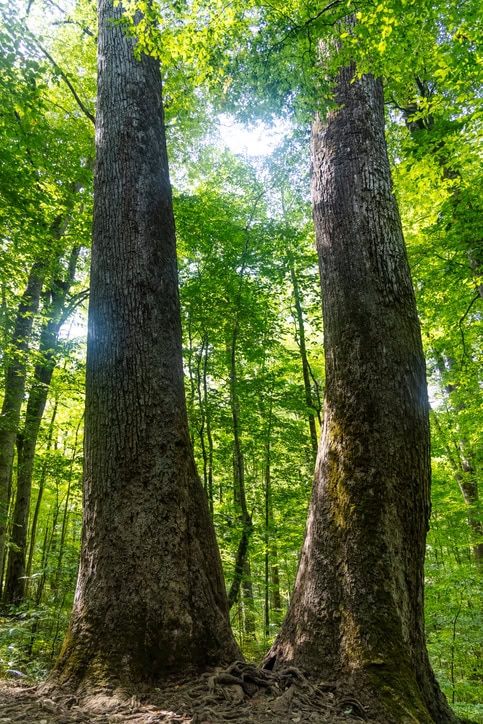
Big trees at Joyce Kilmer Memorial Forest, North Carolina, USA. Photo: Eifel Kreutz/iStock/Getty Images Plus.
There is a difference between fragile surface growth and the deep resilience of a mature forest. Plants with shallow roots might put on a massive, flashy show for a single season, but they struggle when the climate turns harsh. The oldest, strongest trees in the forest are different. They have spent decades weathering the elements, enduring relentless winds, and quietly building an unshakable underground root system. Above the ground, their branches may look shaped and pruned by the environment, but underneath, they are anchored deep into the earth. It is precisely the storms they have survived that have made their wood so remarkably dense and strong.
To the music educators who have been tending to the soil in our schools for five, ten, twenty, or thirty years: Your longevity is a quiet triumph.
You have chosen to stay, not because the conditions are always easy, but because you believe in the transformative power of music. You know that a generation of children still needs music, regardless of the challenges of the educational climate. Like those deeply anchored trees, you are building the dense, strong core of our profession. By refusing to let the daily weariness change the warmth of your classroom, you are keeping the music alive for the long haul.
About the author:
 NAfME member Carolina Perez Guerrero is an Instructor of Music at the North Carolina School of Science and Mathematics-Durham, where she directs the Wind Ensemble, Jazz Ensemble, and Pit Orchestra, teaches Modern Band, and oversees the Pep Band. A National Board Certified Teacher and 2023 Morehead-Cain Impact Educator, she serves as President of the North Carolina Music Educators Association and Chair of the Central District Bandmasters Association. She holds BM and MM degrees from UNC Greensboro and actively works nationwide as a guest conductor, clinician, and adjudicator. A solo cornetist with the Triangle Brass Band, Carolina lives in Morrisville, North Carolina, with her husband, Tony, and their sixty-pound “lapdog,” Elli.
Did this blog spur new ideas for your music program? Share them on Connect! Interested in reprinting this article? Please review the reprint guidelines.
The National Association for Music Education (NAfME) provides a number of forums for the sharing of information and opinion, including blogs and postings on our website, articles and columns in our magazines and journals, and postings to our Connect member portal. Unless specifically noted, the views expressed in these media do not necessarily represent the policy or views of the Association, its officers, or its employees.