NAfME BLOG
Growing Confident Leaders
Reflections from a Student Mentor
By Madeline Arigo and NAfME Member Lori Schwartz Reichl
“A mentor is someone who sees more talent and ability within you, than you see in yourself, and helps bring it out of you.” —Bob Proctor
Since October 2016, I have had the privilege of writing nearly one article each month for the National Association for Music Education. Over the past decade, several of those articles have been reprinted, with permission, by other education associations across the country. My most recent article, Adjudication—What’s the Point?, explored how constructive feedback, personal responsibility, and continuous improvement strengthen both musicianship and character while encouraging educators and students to view adjudication as an opportunity for growth.
Over the past decade, my work with MAKING KEY CHANGES has expanded beyond music education. I’ve had the opportunity to speak, lead, and collaborate with schools, organizations, and corporations across the country on topics including confidence, leadership, burnout prevention, and personal growth. My doctoral research explored the student voice and how young people experience learning, while my entrepreneurial journey led to the creation of The Confidence Camp for kids and The Confidence Retreat for adults—experiences designed to help individuals build confidence and strengthen their leadership.

Photo by sydney Rae on Unsplash
This summer, those passions came together in a meaningful way when my goddaughter, Madeline Arigo, served as a mentor at The Confidence Camp. A gifted musician, writer, and emerging leader, Maddie’s compassion and initiative made a lasting impact on our campers. After camp concluded, I realized that some of the most significant lessons weren’t my own—or even the campers’. They came from one of our mentors.
I invited Maddie to co-author this article with me to share her experience at camp. Her reflections capture confidence through the eyes of someone growing alongside the campers rather than simply leading them. Perhaps what is most remarkable is that, without ever reviewing the curriculum I designed for the camp, Maddie instinctively identified many of the lessons and outcomes I had hoped every camper would experience.
As a mentor, Maddie supported campers while fully engaging in every session and activity herself. Her perspective reminds us that whether in a classroom, rehearsal hall, athletic field, leadership camp, or any environment where young people are learning and growing, they thrive when adults create spaces where they feel safe to ask questions, take risks, encourage one another, and discover strengths they never knew they had.
I am honored to share Maddie’s perspective with you. I hope her reflections inspire you as much as they inspired me.
Madeline Arigo is a 12th grader at Arundel High School in Anne Arundel County, Maryland. She serves as the leader of the trumpet section in her school’s marching band and is also a member of the jazz band. After graduation, she plans to pursue a degree in English with the goal of becoming a teacher and writer. This is her first published article.
When my Aunt Lori asked if I would like the opportunity to serve as a mentor at The Confidence Camp, I was really hesitant for a few reasons. It was a brand-new experience for me, and I had no idea what to expect. Up until that week, I had never worked with elementary and middle schoolers, and I did not know any of the other high school or college mentors. I felt out of my element, and ironically, not very confident.
After the first day, however, I became more confident in myself and excited to continue the rest of the week. Seeing the campers learn and grow each day was very encouraging. Slowly, the girls left their comfort zone through daily activities and chances to put themselves out there, which was wonderful to be a part of.
Through this experience, I noticed several changes that can be made for anybody to be more confident in themselves. I have many of the guest speakers and activity facilitators to thank for that.
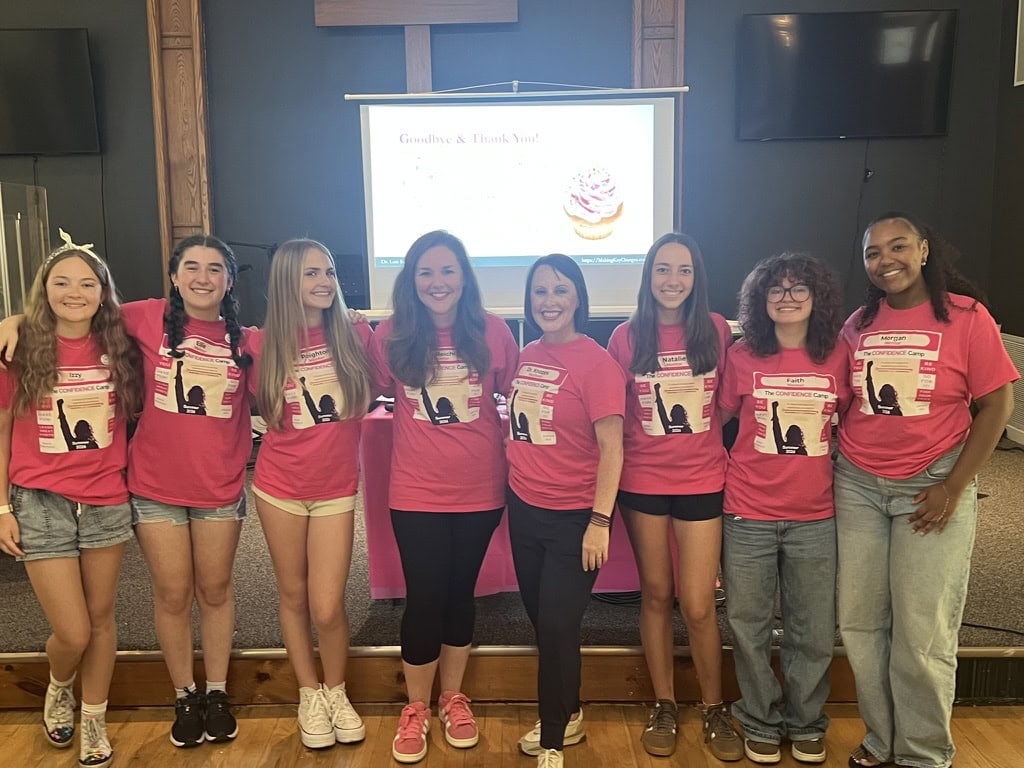
Pictured above is the leadership team from Week 1 of The Confidence Camp, held June 15–19, 2026, in Eldersburg, Maryland. From left to right: Isabelle McKay (mentor), Elliana Silva (mentor), Peighton Daniels (mentor), Dr. Lori Schwartz Reichl (founder & lead facilitator), Dr. Amy M. Knopps (assistant & facilitator), Natalie Correa (mentor), Faith McHenry (mentor), and Morgan Howard (mentor).
Be Mindful
One of the first lessons given was about executive functioning and how it can affect our confidence. Heidi Shoemaker-Burnett led this session. The thing that stuck out to me the most from this presentation was the “four mental parking spots” in the brain’s working memory, which affect how much a person can focus on at one time.
A main point that the facilitator made was that if we try to pile on too many tasks and things to keep track of, our brains will get overloaded and be unable to perform each task to our best ability. This would hinder one’s confidence. Therefore, knowing how to organize tasks in a way that does not overwhelm you and helps you complete things efficiently is a very easy way to gradually build confidence.
In high school, work is constantly being assigned, and it is very easy to get overwhelmed. Learning about how to take advantage of your executive functioning is something that I wish I could have learned when I was younger. This presentation encouraged me to go easier on myself, especially as I get closer to college. I learned that there are only so many things my brain can easily focus on before it gets overloaded.
My aunt also contributed to this through small periods of time that were completely dedicated to mindfulness. The campers and mentors had the option to read, write in a journal, or color to decompress and relax. This gave everyone the opportunity to quietly reflect on their day and prepare their minds to learn.
Teaching kids to practice mindfulness in this way each day really stood out to me too. We learned the value of taking time for ourselves to peacefully get ready for any task that was next. Learning about these tactics alongside the awareness of your brain’s limits was incredibly beneficial, and something that I hope to keep practicing even outside of camp.
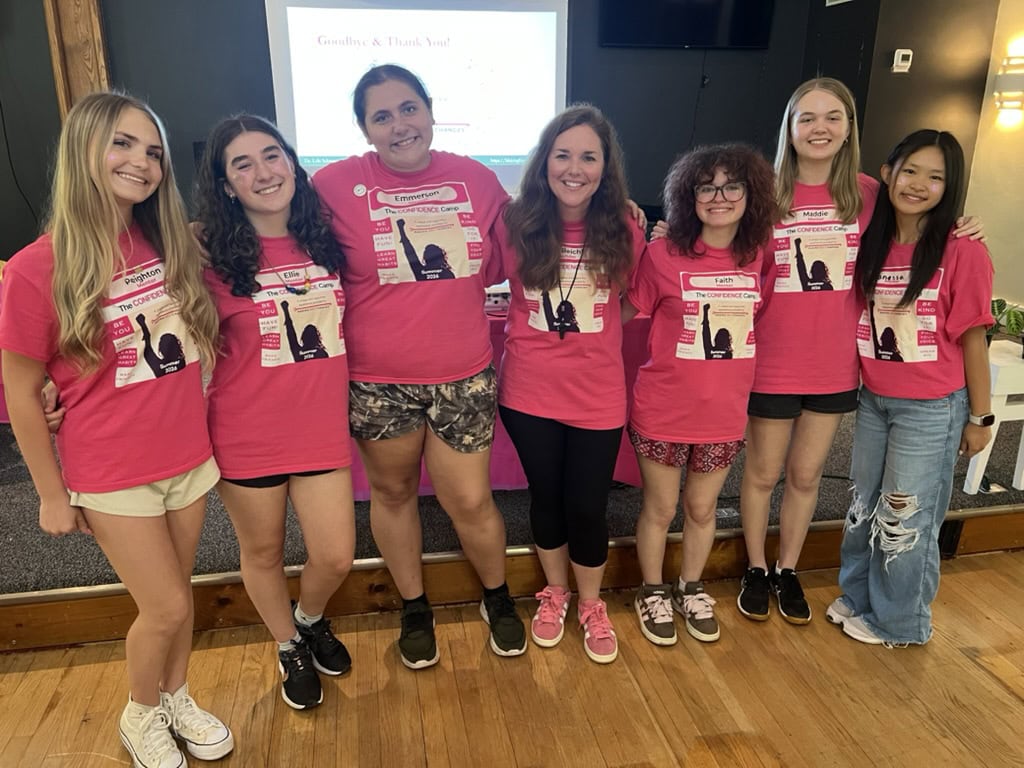
Pictured above is the leadership team from Week 2 of The Confidence Camp, held June 22–26, 2026, in Eldersburg, Maryland. From left to right: Peighton Daniels (mentor), Elliana Silva (mentor), Emmerson Miller (mentor), Dr. Lori Schwartz Reichl (founder & lead facilitator), Faith McHenry (mentor), Madeline Arigo (mentor), and Vanessa Sauw (mentor).
Take Risks
This is the thing I struggled with the most during my time as a mentor. Since I was so out of my comfort zone already, I did not want to make it worse or embarrass myself. I did not realize that I needed something (or someone) to encourage me to take a risk.
Luckily, there were many opportunities that both the campers and the mentors had to be brave and put themselves out there. For example, everyone was encouraged in the last three days to create a presentation or performance to give to the rest of the group. I was impressed by the amount of young girls who got up in front of everyone to sing, talk about their life, or showcase their talents in such areas as gymnastics, art, music, and writing.
The Confidence Camp provided a safe space for the kids to be themselves and show off their passions, which I believe is a great way to build public speaking skills. Even though I was very nervous to present too, I told myself I would do it to set an example for the campers. Because I went through with it, I was able to grow my confidence in presenting, even as a mentor.
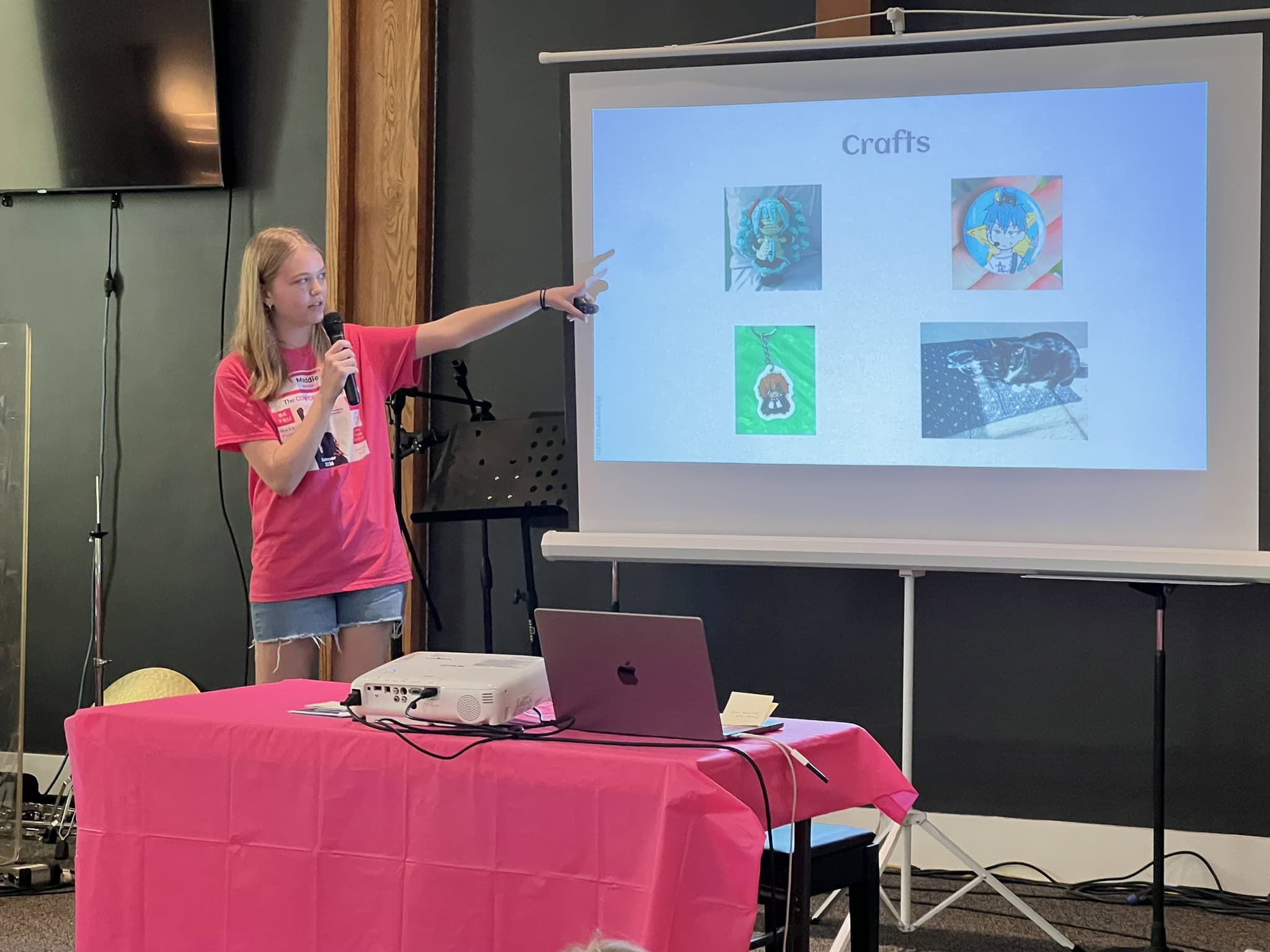
Madeline Arigo embraces the opportunity to share her “This Is ME!” presentation with confidence.
We had the first female drum major from Penn State University, Ellie Sheehan, give a presentation over Zoom telling her story. Through her experiences, she demonstrated the importance of taking risks, persevering, and having the courage to try again. I could tell many of the girls were inspired by her accomplishments, even if they were not involved in their school’s band.
I was also inspired by this speaker, as a rising section leader in my school’s marching band. Because Ellie had worked so hard to complete her goal of becoming drum major, I started to realize that being a great section leader is totally attainable. If I try my best and be myself, that is enough. I think that her achievements can motivate any teenage girl, regardless of their goals, to work hard and chase after them.
Be Curious
The week was full of engaging learning opportunities that encouraged the campers to ask questions, regardless of how nervous they were. One facilitator whom the girls found particularly fun was a middle school science teacher, Casey Reed, who showed everyone wild experiments and was willing to answer any question that someone might have had.
Having a judgment-free learning environment like this is super important to me because it kept the campers’ attention, and they were able to be confident even when they did not understand what was going on. Many times I noticed that whenever someone seemed hesitant to raise their hand, their question was actually pretty insightful, and helped the whole group learn something new because of their bravery.
Teaching young girls that it’s okay to be curious and have questions is necessary to build confidence. This skill is especially important as kids grow older in school, and learning becomes harder. They have to be okay with asking questions and not being afraid of what other students may think.
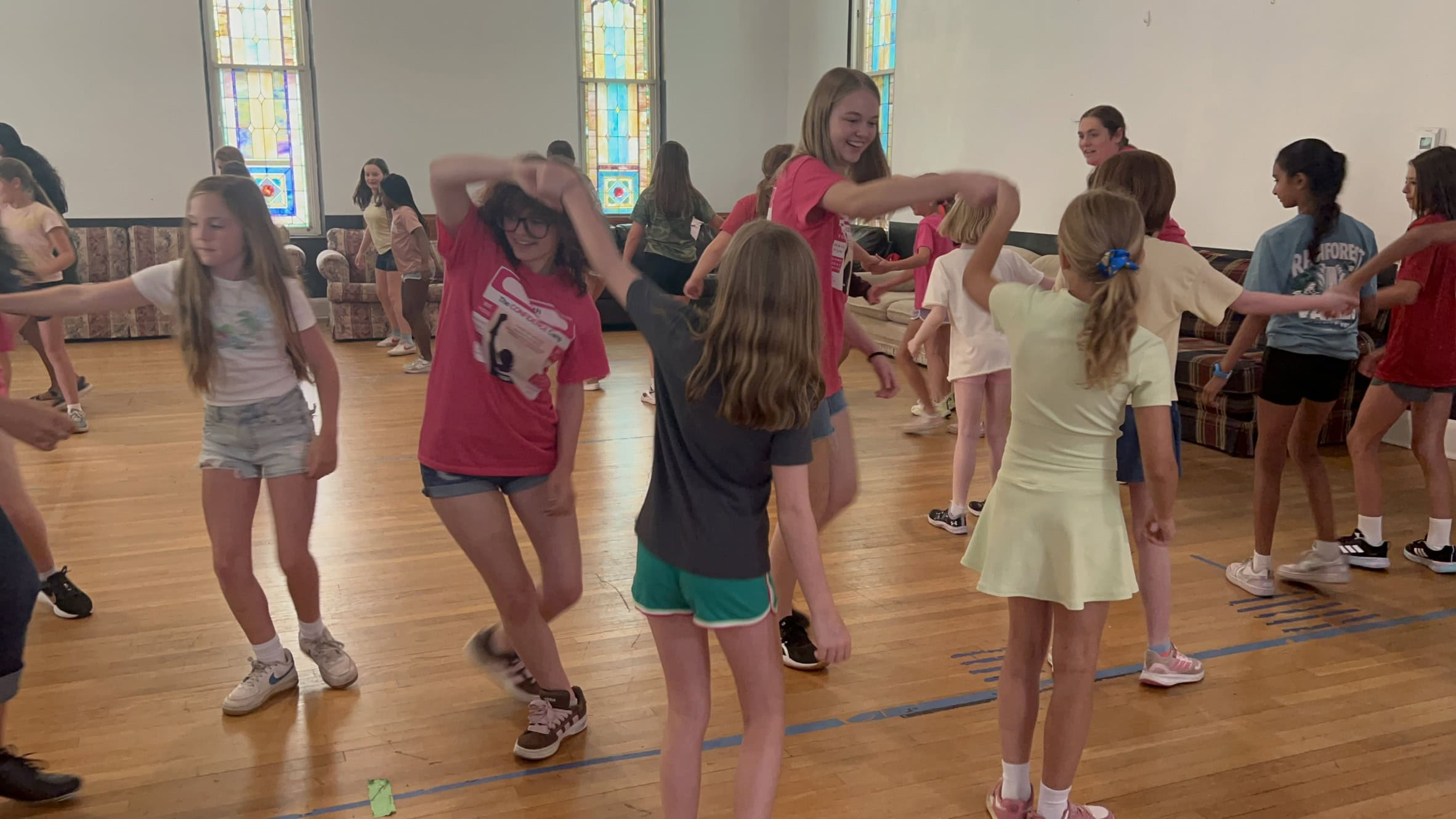
Madeline Arigo and fellow mentors dance with campers.
Be Thankful
From the very first day of camp, both mentors and campers were encouraged to write thank you cards. The importance of gratitude was emphasized a lot, and each day had specific time slots for writing at least two cards. I think that this idea helped build a community between the girls, even though our time together was so short.
Receiving a gratitude card from someone builds confidence on both ends. The person who made the card took time to reflect on their relationship with the other person and write their thanks down on paper, which makes the receiver feel loved and appreciated. Kind gestures that require a lot of thought strengthen relationships and help both parties become more confident.
Throughout the week, seeing mentors and campers receive cards from each other was very heartwarming. A simple hand-written note instantly improved the girls’ days.
On the last day of camp, I received a few of these gratitude cards. The campers who made them for me were a little shy, but after I expressed my appreciation, they felt more confident in themselves.
Final Reflection
Even though I went into this camp thinking that I was only there to build other girls’ confidence, I quickly learned this was not the case. I realized that The Confidence Camp helped me grow as a mentor as well. Confidence is not something you can master in one day. It is actually quite the opposite. It must be continuously built over time through several key changes, like being more mindful, thankful, curious, and willing to take risks.
I am extremely grateful that I had the opportunity to serve as a mentor at this camp because it was such a meaningful learning experience for everyone involved. I left camp with so much more than I expected. I gained greater confidence in myself and lessons I know I will carry with me for years to come.
Resources
If this article resonated with you, share it with someone who might need it—particularly another student or a parent, teacher, or supervisor. Share it at your work, in your professional sphere, or somehow in your community. If you would like to bring The Confidence Camp to your community, let’s connect!
Subscribe to the MAKING KEY CHANGES weekly newsletter. This learning community includes people from many areas of life, and both the podcast and newsletter are about making key changes in our lives alongside those we love, serve, and lead.
If you are planning a leadership retreat (for adults or students), conference, professional development session, or future adjudication or guest conducting opportunity and want to guide your people toward confident, compassionate leadership, let’s partner!
How are we making key changes to grow confident leaders?
About the author:

Photo by Richard Twigg Photography
NAfME member Dr. Lori Schwartz Reichl is the visionary leader behind MAKING KEY CHANGES, LLC, a consultancy dedicated to mentorship and motivation. She also founded The Confidence Camp for Kids and The Confidence Retreat for Adults—experiences that empower youth and adults to grow as confident, compassionate leaders.
An accomplished author, educator, podcaster, and former public school band director, Lori focuses her work on transformation through leadership and human connection.
Today, she leads a global classroom—guiding organizations and teams to unlock their potential, strengthen their people, and make key changes that help them grow alongside those they love, serve, and lead.
A sought-after speaker and consultant, Lori has delivered hundreds of workshops and keynote addresses worldwide. Her dynamic programs inspire audiences to align around a shared vision, boost confidence, overcome burnout, promote engagement, and embrace change as a catalyst for growth.
Lori hosts the MAKING KEY CHANGES podcast and produces its companion newsletter, sharing weekly, actionable insights to inspire continuous learning and leadership.
Lori lives in Maryland with her husband and their two active children.
Learn more at MakingKeyChanges.com.
Did this blog spur new ideas for your music program? Share them on Connect! Interested in reprinting this article? Please review the reprint guidelines.
The National Association for Music Education (NAfME) provides a number of forums for the sharing of information and opinion, including blogs and postings on our website, articles and columns in our magazines and journals, and postings to our Connect member portal. Unless specifically noted, the views expressed in these media do not necessarily represent the policy or views of the Association, its officers, or its employees.